




The words, Gar firdaus bar roo-e zameen ast, hameen asto, hameen asto, hameen asto (If there is a paradise on Earth, it is here, it is here, it is here) are often spoken in praise of Jammu & Kashmir. However, delving into its
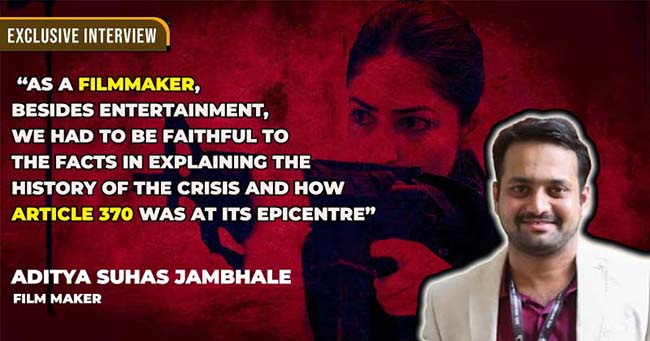
history, it has consistently been in the news for wrong reasons. But things have changed after August 5, 2019. Thanks to the abrogation of Article 370 by the Narendra Modi Government, Jammu & Kashmir is now thriving. It now genuinely resembles paradise and is undergoing significant development. ‘Article 370’, the recently released Hindi film is captivating the audience and is being applauded nationwide. Organiser Sub-Editor Yatharth Sikka spoke to film Director Aditya Suhas Jambhale about the importance and timing of the movie, his creative journey, and his upcoming projects. Excerpts:
Why did you feel it was important for cinema to reveal the backstory behind the abrogation of Article 370?
I believe the abrogation of Article 370 on August 5, 2019, stands as one of the most historical decision in Indian history. Initially, many doubted the possibility of its abrogation, yet it happened against all odds and in a highly secretive manner. Importantly, it was achieved without any innocent blood being spilled on the streets of Kashmir. During our research, we discovered that over 95 per cent of the information regarding how this historic decision was taken after consulting Armed Forces and the National Investigation Agency, were not in the public domain. This realisation compelled us to believe that this story is essential for the audience to know. It represents one of the most successful missions in our history. It is vital for every Indian to understand how this mission was executed because, from that day onwards, Kashmir truly became a part of unified India.
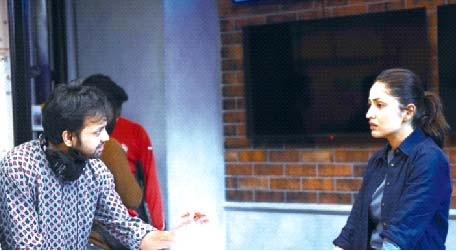
“We wanted actors on board who believed in the politics and the cause of the film. We sought actors who were not afraid to be political about it; after all, how can you make a political drama while keeping politics out of it”
Recently, Prime Minister Narendra Modi mentioned the film in one of his speeches. How do you see this?
It is indeed an honour. It happened for the first time when PM was giving a speech in Jammu, and then later there was another brief reference to the film. It’s a great honour that the leader of the country is referencing our film for the right reasons, emphasising its role in revealing the truth. As a new, first-time filmmaker with our debut film just released, it’s a massive compliment. I am grateful to PM Modi for acknowledging our film in the public arena. I am also thankful to everybody who has helped us, as the credit belongs to the entire team who worked tirelessly on the film.
A section of society and some political leaders criticised the movie, labelling it as a “violent, jingoistic, and agenda-driven film.” Additionally, some people are claiming that you are endorsing PM Modi.
The first question is, have they seen the film? Because I doubt how many people are doing that after watching the film. If you watch the film and then say something, there is validation to the comments being made. If I have not watched the film and I am commenting on it, then I would be doing injustice to my judgement. Views can only come across after you watch a film and then analyse the outcome and the underlying message. We cannot do much about those who only wish to engage with the film without watching it and term it as “propaganda”. Of course, we have depicted a landmark and historic political action of a particular political party, and people can perceive it as partisan. However, they should engage with the facts more and not with their own prejudices. I think our people, our audiences, are smart enough to understand the intricacies and sometimes hidden, sometimes open messaging of art. Look at what audiences are doing in the theatres—they love it. That kind of validity is our reward. If somebody thinks that a film is solely advocating for a political leader, and that audiences can be easily swayed, they underestimate the astuteness of our people. People know that we have made a political film, and as filmmakers, we have a certain opinion on our subject. As a filmmaker, I agree with what happened on August 5, 2019, and see it as a landmark in history. My work is to communicate it to my viewers, who are intelligent and astute, and know how to distinguish our opinion from facts. The accusations of advocating for a particular politics are being made only by those few who haven’t watched the film.
How did you overcome scepticism around the film and stay committed to bring this story, based on a true event, to the audience?
We had only one thought when we were making the film: it should be true and factual. For example, the scene where Zuni Haksar throws one of the separatist leaders out of the window. It is not fiction. Of course, as a creative filmmaker, I had to alter a few scenes according to the sequence of the drama and its build-up because we were not making a documentary. We have backed up every scene with critical research and stayed faithful to the facts.
With the movie facing a ban in Gulf markets, how do you and the team respond to such actions, especially considering the film’s message of peace and development in J&K?
I think it is extremely unfortunate. I was surprised that this has happened because as a filmmaker, I couldn’t fathom how a film carrying the core message of peace could be misjudged. Yes, we have taken an aggressive stand against terrorism, and we have called out those forces that are spreading mistrust and chaos in the Kashmir valley.
How do you believe the films portrayal of events in J&K contributes to a broader narrative of positivity and unity? What impact do you think it will have on the audiences and the locals of Kashmir?
One would have to first ask, what was the common Indian view of Kashmir before? So, if I ask a question like, “Tell me something about Kashmir,” people only know things on a superficial level. They know that there was chaos and conflict, and due to decades of insurgency and terrorism, it was not a safe place. We also had to make a connection showing how abrogating Article 370 brought about change. I have shot two films in Kashmir, and I can tell how things have changed. We shot our lengthiest schedule in Kashmir outdoors, with the support of locals. Today, the state is bustling with tourists, and the once deserted streets bear witness to traffic jams. People are bustling from Pahalgam to the Aru Valley and Dal Lake. Filmmakers from the South Indian industries are making rounds of the State to shoot as many films as possible. There is certainly an air of change, and it is for the betterment of the people.
“The movie Baramulla is set in Kashmir but has a different genre—it is a supernatural horror thriller. It features Kashmir but in a different Avatar. While it does have references to some real events and occurrences, but does not delve into the politics of Kashmir”
Why was Yami Gautam chosen in the lead, and what prompted the decision to feature a female lead
in the first place? What factors influenced other casting decisions?
If you look at Yami Gautam’s character, Zuni Haksar, she’s portraying the role of an intelligence agent. I believe with an intelligence agent, the character must always be sharp. It is inspired by a real character, a real female figure. Credit also goes to the producers Aditya Dhar, Lokesh Dhar and Jyoti Deshpande. The same holds true for the character of Rajeshwari Swaminathan played by Priyamani. One of the pitfalls of casting “superstars” in a content-driven script is that you may lose focus on substance for the sake of popularity. We wanted actors on board who believed in the politics and the cause of the film. We sought actors who were not afraid to be political about it; after all, how can you make a political drama while keeping politics out of it? The casting for both the Prime Minister and the Home Minister underwent extensive discussion. We aimed to cast actors who matched the personalities of our leaders. Working with actors like Arun Govil, who was thrilled after the first narration of the script, was a pleasure. One of the significant advantages of collaborating with sensitive actors like Arun Govil and Kiran Karmarkar is that you can easily avoid caricaturing or mimicking real characters. They portrayed these characters with outright honesty and sensitivity, which resonated well with the audiences. Thus, through a thorough process and rounds of dialogue, we finalised the casting of our actors.
Your upcoming project is ‘Baramulla’ which is also in context to J&K. Tell us something about that.
Baramulla is set in Kashmir but has a different genre—it is a supernatural horror thriller. It stars Manav Kaul and Basha Sumali in the lead roles. We completed this film after shooting it in -18 degrees for 24 days, which was an amazing experience. Wrapping up a film like Baramulla in 24 days was very challenging. It is one of its kind. As I mentioned earlier, it features Kashmir but in a completely different avatar of horror and the supernatural. While it does have references to some real events and occurrences, it does not delve into the politics of Kashmir. We are also exploring different ideas. I am considering either an action flick or a revenge drama for my next project.













Comments