Ayodhya: Ram Lalla Pran Pratishtha - Impact on Economy
August 4, 2026
  • Read Ecopy
  • Circulation
  • Advertise
  • Careers
  • About Us
  • Contact Us
Android AppiPhone AppArattai
Organiser
  • ‌
  • Bharat
    • Assam
    • Bihar
    • Chhattisgarh
    • Jharkhand
    • Maharashtra
    • View All States
  • World
    • Asia
    • Europe
    • North America
    • South America
    • Africa
    • Australia
  • Editorial
  • International
  • Opinion
  • RSS @ 100
  • More
    • Op Sindoor
    • Analysis
    • Sports
    • Defence
    • Politics
    • Business
    • Economy
    • Culture
    • Special Report
    • Sci & Tech
    • Entertainment
    • G20
    • Azadi Ka Amrit Mahotsav
    • Vocal4Local
    • Web Stories
    • Education
    • Employment
    • Books
    • Interviews
    • Travel
    • Law
    • Health
    • Obituary
  • Subscribe
    • Subscribe Print Edition
    • Subscribe Ecopy
    • Read Ecopy
  • ‌
  • Bharat
    • Assam
    • Bihar
    • Chhattisgarh
    • Jharkhand
    • Maharashtra
    • View All States
  • World
    • Asia
    • Europe
    • North America
    • South America
    • Africa
    • Australia
  • Editorial
  • International
  • Opinion
  • RSS @ 100
  • More
    • Op Sindoor
    • Analysis
    • Sports
    • Defence
    • Politics
    • Business
    • Economy
    • Culture
    • Special Report
    • Sci & Tech
    • Entertainment
    • G20
    • Azadi Ka Amrit Mahotsav
    • Vocal4Local
    • Web Stories
    • Education
    • Employment
    • Books
    • Interviews
    • Travel
    • Law
    • Health
    • Obituary
  • Subscribe
    • Subscribe Print Edition
    • Subscribe Ecopy
    • Read Ecopy
Organiser
  • Home
  • Bharat
  • World
  • Operation Sindoor
  • Editorial
  • Analysis
  • Opinion
  • Culture
  • Defence
  • International Edition
  • RSS @ 100
  • Magazine
  • Read Ecopy
Home Bharat

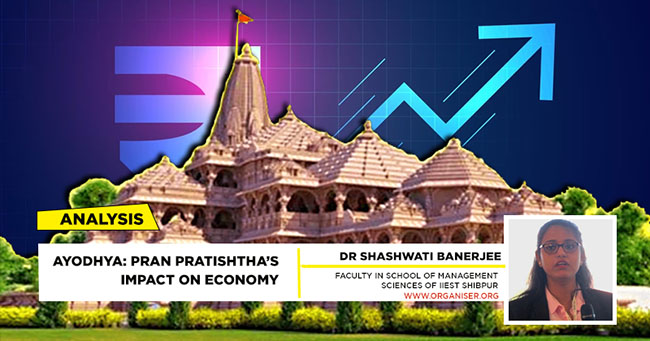
Ayodhya: Ram Lalla Pran Pratishtha – Impact on Economy

Dr Shashwati BanerjeeDr Shashwati Banerjee
Feb 27, 2024, 07:00 pm IST
in Bharat, Analysis
Follow on Google News
FacebookTwitterWhatsAppTelegramEmail

The Pran Pratishtha of Ram Lalla at the Ram Mandir in Ayodhya embodies various economic and developmental theories, each contributing to its far-reaching impact. From an economic perspective, the construction of the Ram Mandir aligns with classical economic theories, which posit that investments and capital injections stimulate economic growth. The funds directed towards the temple’s construction can have multiplier effects, creating employment opportunities and boosting demand for goods and services. This economic stimulus is particularly significant in the context of Ayodhya transforming into a pilgrimage destination, as religious tourism often brings substantial economic benefits to local communities.

The Pran Pratishtha of Ram Lalla in Ayodhya provides a unique opportunity to align with theories of sustainable development, cultural capital, institutional economics, and partnership theories, all contributing to the long-term economic and developmental goals set by the Sustainable Development Goals (SDGs). From a sustainable development perspective, the event can serve as a model for integrating eco-friendly infrastructure and conservation measures into the development plan. This aligns with sustainable economic growth principles, emphasising the importance of balancing economic progress with environmental stewardship. Additionally, Pran Pratishtha event holds significance in the context of cultural capital theories and institutional economics. Preserving cultural heritage and fostering an environment of peace and justice are integral components of sustainable development. Cultural assets, like the Ram Mandir, can serve as catalysts for economic growth by attracting tourists and generating revenue.

The collaborative efforts involving different stakeholders in the Pran Pratishtha align with partnership theories. The cooperation between Government bodies, private enterprises and local communities demonstrates the importance of collective action in achieving comprehensive economic and developmental goals. Such partnerships are vital for creating a conducive environment for economic growth, social progress, and the overall well-being of the community. As the event unfolds, Ayodhya has the potential to emerge as a beacon of sustainable development, cultural richness and collaborative governance, setting an example for other regions to follow in pursuit of the SDGs.

The discussion remains partial without the historical evidence from renowned religious sites worldwide, such as Mecca, the Vatican, and Bodh Gaya, which provides a scientific basis for understanding the economic impact of the Pran Pratishtha of Ram Lalla at the Ram Mandir in Ayodhya. The economic success observed around Mecca serves as a relevant example, showcasing how religious events and pilgrimage can stimulate economic growth. Another notable example is the Vatican in Rome, Italy. The Vatican, as the centre of the Roman Catholic Church, attracts millions of pilgrims and tourists annually. The economic impact is substantial, influencing various sectors such as hospitality, transportation, and local businesses. Additionally, Bodh Gaya in Bharat, where Gautama Buddha attained enlightenment, represents a case where religious significance has translated into economic development. Pilgrims from around the world visit Bodh Gaya, leading to increased economic activities in the local community. These examples support the scientific understanding that the Pran Pratishtha of Ram Lalla in Ayodhya has the potential to trigger economic benefits for the region, drawing parallels with historical instances of economic prosperity around religious sites. The historical successes of these religious sites affirm the scientific principle that cultural and religious events can be potent catalysts for economic expansion, supporting the notion that the Pran Pratishtha in Ayodhya has the potential to generate similar positive economic outcomes through increased tourism, job creation, and overall socio-economic development. In conclusion, the Pran Pratishtha of Ram Lalla at the Ram Mandir has the potential to be a transformative force, aligning with multiple SDGs and echoing the historical successes of religious sites in fostering economic growth. By integrating sustainable practices, preserving cultural education, and fostering peace and justice, Ayodhya can emerge as a model for inclusive and sustainable development, setting a precedent for future endeavours.


Topics: Ram Lalla in AyodhyaAyodhyaRam MandirSustainable Development GoalsPran Pratishtha
ShareTweetSendShareSend
✮ Subscribe Organiser YouTube Channel. ✮
✮ Join Organiser's WhatsApp channel for Nationalist views beyond the news. ✮
Previous News

Uttar Pradesh: Vishva Hindu Parishad concludes three-day meeting, aims for expansion in diamond jubilee year

Next News

Pakistan: Imran Khan’s PTI orchestrates ‘parallel ‘Punjab assembly session to elect CM, speaker

Related News

Paramedical student Sarfaraz detained after bomb-making information found in notebook at Rajarshi Dashrath Medical College

Ayodhya Shocker: Paramedical student Sarfaraz detained after bomb-making notes found at Rajarshi Medical College

Jagdish Aphale takes charge as first secretary of Ram Janmabhoomi Trust

From Architect of Ram Mandir to its Sentinel: Jagdish Aphale takes charge as first secretary of Ram Janmabhoomi Trust

Ayodhya: Three boatmen detained after viral video shows beer drinking, mutton consumption on sacred Saryu river

Ayodhya Ram Mandir

Ayodhya: Ram Mandir trust receives over 1,000 applications for first-ever CEO post as application deadline ends

Swami Govind Dev Giri

Ayodhya Donation Row: Swami Govind Dev Giri debunks claims of his resignation, slams Rs 14 crore theft claims

Supreme Court (Left), Ayodhya Ram Mandir (Right)

Ayodhya Ram Mandir Donation Row: Union, UP, Temple trust get notice as SC seeks SIT status report

Load More

Latest News

Keralam BJP VP KS Radhakrishnan alleges two Christian Bishops mobilised youths for CJP agitation

DRDO calls MSMEs to build swarm drones; The game-changing tech to consolidate India’s capabilities in next-gen warfare

Balochistan & Enthno-Nationalist Armed Resistance: A nightmare for the Pakistani Army

Tamil Nadu: Supreme Court refuses to stay HC order on Thiruparankundram Deepam; TVK govt faces legal setback

Beyond the “Gaumutra” jibe

FCRA and NGOs: Ensuring accountability, protecting sovereignty

Tamil Nadu: Hindu Munnani’s protest stops meat waste dumping at historic Shiva temple in Tiruvallur

Devotees throng Baba Baidyanath Dham in Deoghar

Jharkhand: Devotees throng Baba Baidyanath Dham in Deoghar on first Monday of Shravan

FCRA and NGOs: Rewriting the rulebook

India-China border trade resumes after 6 years; Himalayan routes of Nathu La, Shipki La & Lipulekh signal reset in ties

Load More
  • Privacy
  • Terms
  • Cookie Policy
  • Refund and Cancellation
  • Delivery and Shipping

© Bharat Prakashan (Delhi) Limited.
Tech-enabled by Ananthapuri Technologies

  • Home
  • Search Organiser
  • Bharat
    • Assam
    • Bihar
    • Chhattisgarh
    • Jharkhand
    • Maharashtra
    • View All States
  • World
    • Asia
    • Africa
    • North America
    • South America
    • Europe
    • Australia
  • Editorial
  • Operation Sindoor
  • Opinion
  • Analysis
  • Defence
  • Culture
  • Sports
  • Business
  • RSS @ 100
  • Entertainment
  • More ..
    • Sci & Tech
    • Vocal4Local
    • Special Report
    • Education
    • Employment
    • Books
    • Interviews
    • Travel
    • Health
    • Politics
    • Law
    • Economy
    • Obituary
  • Subscribe Magazine
  • Read Ecopy
  • Advertise
  • Circulation
  • Careers
  • About Us
  • Contact Us
  • Policies & Terms
    • Privacy Policy
    • Cookie Policy
    • Refund and Cancellation
    • Terms of Use

© Bharat Prakashan (Delhi) Limited.
Tech-enabled by Ananthapuri Technologies