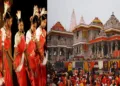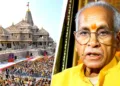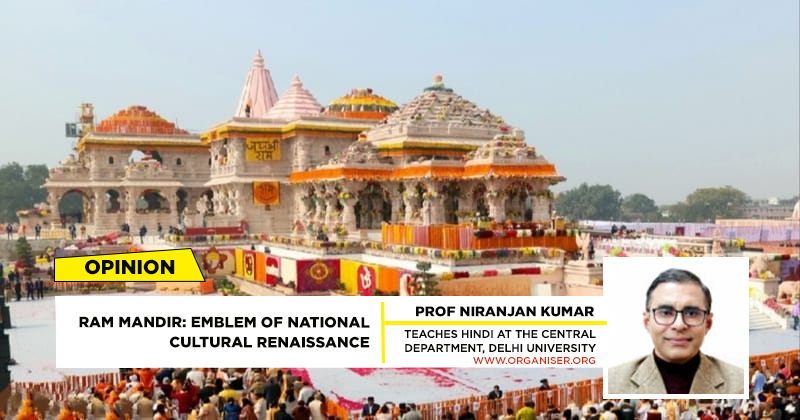
Bharat, after centuries of slavery, got political freedom on August 15, 1947. However, it had to wait even longer to get cultural independence, which was realised only on January 22, 2024.
The Pran Pratishtha of Ram Lalla at the newly built Ram Mandir at Ayodhya took place amidst an atmosphere of joy and fervour across Bharat and beyond. People associated with Bharat living in different parts of the world also celebrated with as much enthusiasm. The momentous occasion has heralded the much-awaited cultural renaissance of Bharat. Bharat’s icon, Sri Ram, is the focal point of this renaissance.
UNIVERSAL RAM
Sri Ram is not only a Bhagwan, an incarnation of Bhagwan Vishnu, but also a great religious and cultural icon, influencing, for ages, not just Bharat but various regions of the world. The Ramcharitra (character of Ram) is not only universal and timeless but also all-inclusive and beyond all creeds and castes. It’s not without reason that people of all regions, languages, castes and creeds have narrated Ramkatha (the story of Ram) in their own ways. Besides Valmiki’s Adi Ramayana and Tulsi’s Ramcharitmanas revered by Hindus, in Buddhism, there are Jataka stories related to Ram like Dasaratha Jatak, Anamak Jatak and Dasaratha Kathanak. is also available in Jain literature as in Paumchariyam written by Vimalsuri, Paumchariyu written by Swayambhu.
Sri Ram also has an important place in Sikhism, where he is referred to as ‘Avtaar Ram’ or ‘Raja Ram’. The word Ram has been used more than two-and-a-half thousand times in Guru Granth Sahib. Ram has been
mentioned as one of the 24 divine incarnations of Bhagwan Vishnu in Twenty-four Avatars under the Dasham Granth written by Guru Gobind Singh.
Muslim poet Rahim, a contemporary of Tulsidas, has praised the greatness of Ram. Urdu poet Iqbal goes on to say that “the cup of Hindustan (i.e. Bharat) is full of truth, and all the philosophers who have lived in the ‘Maghrib’ (West) are extensions of Sri Ram”. According to Father Camille Bulcke, a Belgian Jesuit missionary known to be the most renowned scholar and researcher of Ram Katha, “the ideals, values and social harmony for which Sri Ram lived and fought are deeply ingrained in the Indian mind, life and culture”. Needless to say, Sri Ram is a cultural icon beyond all sects and creeds who appears to be the true symbol of the terminology ‘secular’ used in the Preamble of the Constitution of Bharat.
In Bharat, Ram Katha resonates in every nook and corner – from East to West and from North to South. In the North, there is Valmiki Ramayana and Ramcharitmanas, while in the south, there is Kamb Ramayana and Ranganatha Ramayanam. In the East, there is ‘Kritivasa Ramayana’ or various Ramayanas of the North-East, while in Maharashtra, in the western part, there is Bhavartha Ramayana.
Among various Indian languages, 11 Ramayanas are found in Hindi, 8 in Marathi, 25 in Bengali, 12 in Tamil, 12 in Telugu and 6 in Oriya. Apart from this, Ramkatha has also been composed in Gujarati, Malayalam, Kannada, Assamese, Kashmiri, Urdu, Arabic, Persian, Santhali and many languages of the North-East. It’s noteworthy that literature based on Ramcharitra transcends the boundaries of Bharat, and is available in many countries. In Indonesia Kakabinramayana, in Java Seratram, Sairiram, Ramkeling, Pataniramkatha, in Thailand Ramkien, in Tibet Tibetan Ramayana, in Turkistan Khotaniramayana, in Indo-China Ramkerti, Khamai Raramayana, in Myanmar’s Utoki Ramayana are some of the instances of the universality of Sri Ram.
Shri Ram is a true symbol of Samrasta (social harmony) and all-inclusiveness. It is noteworthy that apart from the so-called upper castes, people who are called ‘OBCs’, Dalits and Tribal communities are also fond of Ram or Ramcharitra. In the medieval period, during the Muslim and Mughal rules, saint Kabir, of Julaha (weaver) caste, celebrated his devotion in his poetry saying Hum Ghar Aaye Raja Ram Bharatar (Let’s celebrate that King Ram has come to my house), Saint Raidas of the Charmkar (cobbler) caste sang Jab Mann Milo Ram-Sagar So (when my heart and mind immersed in the Ocean that is Ram), the tailor caste saint poet Namdev penned Dahdisi Ram Rahya Bharpuri (Ram exists in all the directions), while the saint poet Sen of the barber caste authored Ram Naam Bhaj Ley (Let’s chant the name of Ram).
BRAVE AND VALIANT
Sri Ram, thus, is a symbol of social harmony. Despite belonging to the royal lineage, he was empathetic towards all communities, all castes, all classes ranging from the representatives of the now recognised as OBC communities – Kevat and Nishadraj, or the Kol, Kirat, Bhil etc., the tribal people. He also did not shy away from partaking in the offerings of the leftover berries of Bhil devotee Shabari Mata.
In today’s context, the life and character of Ram present a loud and clear message to those vested interests who try to divide the Hindu society in the name of caste and class or tribal and non-tribal. Where Sri Ram is seen as compassionate and kind, he is also brave and valiant, ending the terror of demons and annihilating the ‘Rakshasas’ (demons), conveying the several facets of goodness against prevailing evil and the strength to overcome it. This face of Sri Ram is a global message also, in a world plagued by various forms of terrorism and extremism.
Such a universally revered and great character, Sri Ram influenced not only the ancient sages, saints, devotees, and poets but also great thinkers and leaders of modern era like Swami Vivekananda, Maharishi Aurobindo, Tilak, Rabindranath Tagore, Mahatma Gandhi, Vinoba Bhave and Ram Manohar Lohia etc., who made Ram the subject of their writings.
LESSON FOR THE NAYSAYERS
It is unfortunate and sad that some politicians, political parties, and so-called secularists with vested interests continuously created obstacles in the construction of the temple for the Purushottam (the greatest among men) Sri Ram, adored by all Bharatiyas. Some raised questions on the very existence of Sri Ram. Even today, these people create fake narratives with regard to the newly constructed Ram Mandir and the Pran Pratishtha ceremony of Sri Ram in the name of caste and religion, auspicious date and time, location of the Mandir or Ram’s place of birth… the list is endless. They even boycotted the Pran Pratishtha with various excuses. Not only that, in order to mislead and misguide the public, some political parties also announced parallel programs to the ‘Ram Mandir programme’ of Ayodhya organised by ‘Shri Ram Janmabhoomi Teerth Kshetra’ Trust.
These people need to understand that Ram is present in the Jana Gana Mana (minds of the people) of Bharat. It is worth noting that not only Jain, Buddhist, Sikh communities, but also Muslims, Christians and Parsis have generously contributed in the construction of the current Ram Mandir. Bharat will be indebted to every person, organisation and leader who made the dream of Ram Mandir come true – because it is not simply a Ram Mandir but also an emblem of national cultural renaissance.