





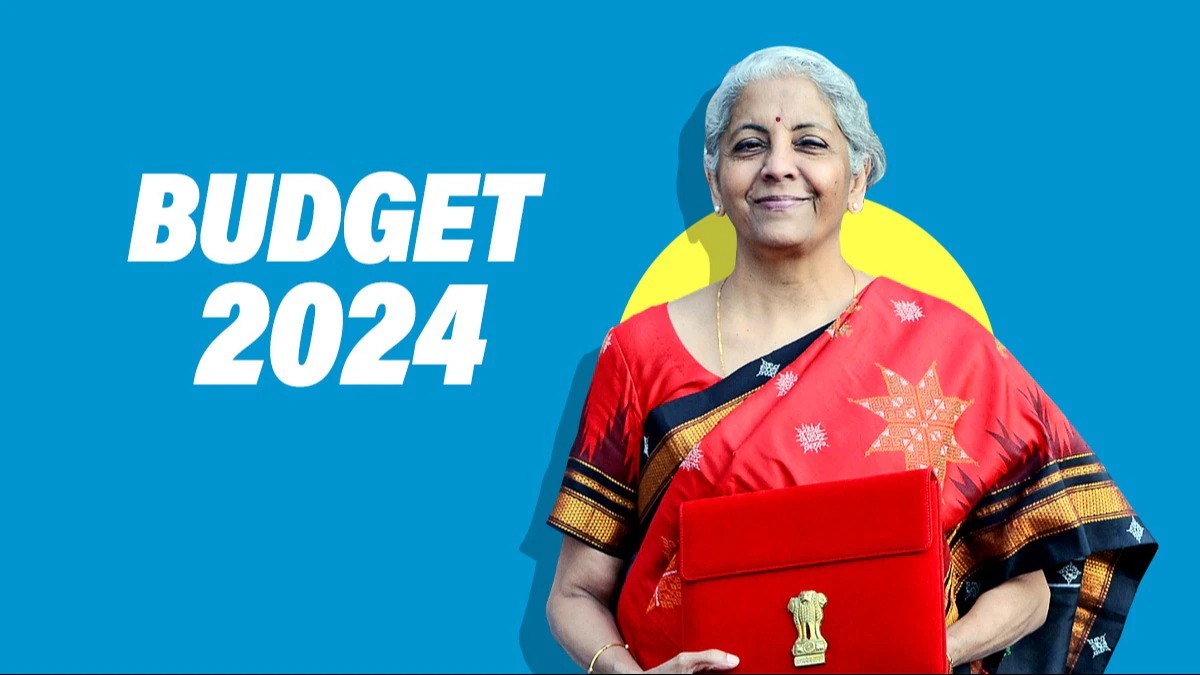
Union Finance Minister Nirmala Sitharaman made various announcements in the Interim Union Budget on Thursday, February 1. Some of the key highlights from the speech are:
Inclusive Development and Growth: Sitharaman stated, that the government has embraced a compassionate and inclusive approach to development, departing from previous methods focused mainly on village-level provisions. Key initiatives like ‘housing for all’, ‘har ghar jal’, universal electricity access, cooking gas distribution, and financial inclusion through bank accounts have been rapidly implemented, targeting every household. Addressing concerns about food security, free rations have been distributed to 80 crore people. Regular adjustments to minimum support prices for agricultural produce have bolstered rural incomes, alleviating economic hardships, and creating employment opportunities.
Social Justice: Aiming to transform Bharat into a ‘Viksit Bharat’ by 2047, the government emphasises empowerment across all castes and levels. Social justice, once a political slogan, is now a governance model, ensuring fair distribution of resources and opportunities. Prioritising the welfare of the ‘Garib‘ (Poor), ‘Mahilayen‘ (Women), ‘Yuva‘ (Youth), and ‘Annadata‘ (Farmer), the government’s inclusive approach addresses systemic inequalities crucial for the nation’s progress.
Garib Kalyan, Desh ka Kalyan: The government’s focus on empowering the poor has lifted 25 crore people out of multi-dimensional poverty in the past decade. Initiatives like ‘Direct Benefit Transfer’ via PM-Jan Dhan accounts have prevented leakages, saving `2.7 lakh crore for ‘Garib Kalyan.‘ PM-SVANidhi has assisted 78 lakh street vendors, with 2.3 lakh benefiting multiple times. PM-JANMAN Yojana targets vulnerable tribal groups, while PM-Vishwakarma Yojana supports artisans, highlighting the commitment to inclusivity.
Welfare of Annadata: Under PM-KISAN SAMMAN Yojana, 11.8 crore farmers, including marginal and small farmers, receive direct financial assistance annually. Additionally, 4 crore farmers benefit from crop insurance under PM Fasal Bima Yojana. Farmer-centric policies, income support, and technology promotion drive inclusive growth and productivity in the sector.
Empowering Amrit Peedhi, the Yuva: Transformative changes in education through initiatives like PM Schools for Rising India (PM SHRI) and Skill India Mission, alongside schemes like PM Mudra Yojana, are empowering youth entrepreneurship. Record-breaking performances in sports and increased female participation underscore India’s progress in empowering the youth.
Momentum for Nari Shakti: Women’s empowerment efforts include supporting women entrepreneurs through schemes like Mudra Yojana, legal reforms, and increased enrollment in higher education and STEM courses. Policies like PM Awas Yojana and reservation of seats in legislative bodies further bolster women’s dignity and economic independence.
Track Record of Governance, Development, and Performance (GDP): The government’s citizen-centric approach has ensured macroeconomic stability, robust investments, and improved living standards. Initiatives like GST and the strengthening of the financial sector contribute to economic growth and stability.
Global Context: India navigated global challenges effectively, offering solutions and building consensus amidst geopolitical complexities and the aftermath of the Covid pandemic. Initiatives like the India-Middle East-Europe Economic Corridor signify India’s strategic and economic significance.
Vision for ‘Viksit Bharat’ and Strategy for ‘Amrit Kaal’: The vision for ‘Viksit Bharat’ aims at prosperity, sustainability, and equal opportunities for all citizens. Guided by the principles of ‘Reform, Perform, and Transform,’ economic policies focus on sustainable growth, productivity enhancement, and energy security.
Aspirational Districts Programme: Sitharaman expressed the Centre’s readiness to assist states in the faster development of aspirational districts and blocks including the generation of “ample economic opportunities”.
PM Awas Yojana: Despite COVID challenges, PM Awas Yojana (Grameen) implementation persisted, nearing the goal of three crore houses. An additional two crore houses will be initiated in the next five years to accommodate growing family numbers.
Rooftop solarization and muft bijli: Through rooftop solarization, the initiative aims to provide up to 300 units of free electricity per month to one crore households. This program aligns with the Prime Minister’s commitment made during the historic consecration of the Ram Mandir in Ayodhya. Anticipated benefits include annual savings of fifteen to eighteen thousand rupees for households through free solar electricity and selling surplus power to distribution companies, facilitating electric vehicle charging, creating entrepreneurship opportunities for vendors supplying and installing solar panels, and generating employment for youth skilled in manufacturing, installation, and maintenance.
Housing for middle class: The government plans to introduce a scheme to assist deserving middle-class individuals residing in rented accommodations, slums, chawls, and unauthorised colonies to purchase or construct their own homes.
Medical Colleges: Many ambitious youth aspire to become doctors and contribute to enhancing healthcare services. The government intends to establish additional medical colleges by repurposing existing hospital infrastructure across different departments. A committee will be formed to assess the requirements and propose the necessary recommendations for this initiative.
Maternal and child health care: Multiple maternal and child care schemes will merge into a unified program to streamline implementation efforts. The enhancement of Anganwadi centers through “Saksham Anganwadi and Poshan 2.0” will be accelerated to improve nutrition delivery and early childhood development. Additionally, the newly developed U-WIN platform will facilitate efficient management of immunisation efforts, complemented by intensified Mission Indradhanush initiatives nationwide.
Ayushman Bharat: Healthcare cover under Ayushman Bharat scheme will be extended to all ASHA workers, Anganwadi Workers and Helpers.
Agriculture and food processing: Efforts to enhance value addition in the agricultural sector and increase farmers’ income will be intensified. Initiatives like the Pradhan Mantri Kisan Sampada Yojana, benefiting 38 lakh farmers and generating 10 lakh jobs, and the Pradhan Mantri Formalisation of Micro Food Processing Enterprises Yojana, aiding 2.4 lakh SHGs and sixty thousand individuals with credit linkages, are underway. To accelerate sector growth, the government will encourage private and public investment in post-harvest activities such as aggregation, modern storage, efficient supply chains, processing, and marketing.
Atmanirbhar Oil Seeds Abhiyan: A strategy will be formulated to achieve self-resilience in oilseeds such as mustard, groundnut, sesame, soybean, and sunflower. Research for high-yielding varieties and crop insurance will be done.
Dairy Development: A comprehensive plan to assist dairy farmers is in the works, with efforts underway to combat foot and mouth disease. Despite being the world’s largest milk producer, India’s milch-animal productivity remains low. The program will leverage existing successful schemes like the Rashtriya Gokul Mission, National Livestock Mission, and Infrastructure Development Funds for dairy processing and animal husbandry.
Matsya Sampada: The Government established a dedicated Fisheries Department, recognising the importance of supporting fishermen, leading to a doubling of both inland and aquaculture production. Seafood exports have also doubled since 2013-14. The implementation of the Pradhan Mantri Matsya Sampada Yojana (PMMSY) will be intensified to increase aquaculture productivity from the current 3 to 5 tons per hectare, double exports to Rs1 lakh crore, and create 55 lakh employment opportunities in the near future. Additionally, five integrated aquaparks will be established.
Lakhpati Didi: Eighty-three lakh Self-Help Groups (SHGs) comprising nine crore women are reshaping the rural socio-economic fabric through empowerment and self-reliance. Their accomplishments have helped nearly one crore women achieve financial success, earning them the title of “Lakhpati Didi.” Their achievements will be celebrated and honoured, serving as an inspiration to others. Encouraged by their progress, the target for Lakhpati Didi has been increased from 2 crore to 3 crore.
Technological Changes: Cutting-edge technologies and data are revolutionising lives and commerce, offering fresh economic prospects and delivering top-notch services at accessible rates, even to those at the base of the socioeconomic pyramid. India’s global opportunities are broadening, with the nation pioneering solutions through its people’s innovation and entrepreneurial spirit.
Research and Innovation for catalysing growth, employment and development: PM Shastri initiated “Jai Jawan Jai Kisan”; PM Vajpayee expanded it to “Jai Jawan Jai Kisan Jai Vigyan”; PM Modi added “Jai Anusandhan” to emphasise the importance of innovation in development. A 50-year interest-free loan corpus of Rs. 1 lakh crore will be established to support research and innovation, empowering the tech-savvy youth for a golden era of technological advancement. A new scheme will bolster deep-tech technologies for defence, accelerating self-reliance initiatives.
Infrastructure Development: The capital expenditure outlay, which tripled in the past four years, has had a significant impact on economic growth and employment. Now, it’s being increased by 11.1 per cent to Rs. 11,11,111 crore for the next year, amounting to 3.4 per cent of the GDP.
Railways: Three major economic railway corridor programmes will be implemented. These are energy, mineral and cement corridors, port connectivity corridors, and high-traffic density corridors. 40,000 normal rail bogies will be converted to the Vande Bharat standards to enhance safety, convenience and comfort of passengers.
Aviation Sector: Over the past decade, the aviation sector has seen significant growth. The number of airports has doubled to 149, and air connectivity to tier-two and tier-three cities has expanded under the UDAN scheme, with 517 new routes serving 1.3 crore passengers. Indian carriers have ordered over 1000 new aircraft, and efforts to expand existing airports and develop new ones will continue swiftly.
Metro and NaMo Bharat: With a growing middle class and rapid urbanisation, Metro Rail and NaMo Bharat are poised to drive urban transformation. Expansion of these systems, with a focus on transit-oriented development, will be supported in major cities to meet the needs of urban growth.
Green Energy: To achieve our ‘net-zero’ commitment by 2070, these steps will be taken: Providing viability gap funding to harness offshore wind energy potential, starting with an initial capacity of one gigawatt. Establishing coal gasification and liquefaction capacity of 100 million tonnes by 2030 to reduce imports of natural gas, methanol, and ammonia. Mandating phased mandatory blending of compressed biogas (CBG) in compressed natural gas (CNG) for transport and piped natural gas (PNG) for domestic use. Offering financial assistance for the procurement of biomass aggregation machinery to support collection efforts.
Bio-manufacturing and Bio-foundry: To boost green growth, a new bio-manufacturing and bio-foundry scheme will be introduced. It aims to offer eco-friendly alternatives like biodegradable polymers, bio-plastics, bio-pharmaceuticals, and bio-agri-inputs. Additionally, the scheme will facilitate a shift from current consumptive manufacturing practices to regenerative principles.
Comprehensive development of tourist centres: States will be encouraged to take up comprehensive development of iconic tourist centres, branding and marketing them at global scale. A framework for rating of the centres based on quality of facilities and services will be established.
Promoting Investments: To encourage sustained foreign investment, the government is negotiating bilateral investment treaties with our foreign partners, in the spirit of ‘first develop India’.
Reforms in the States for ‘Viksit Bharat’: To achieve the vision of ‘Viksit Bharat’, states require numerous growth and development-enabling reforms. To support these reforms, a provision of Rs. 75,000 crore as a fifty-year interest-free loan is proposed this year for State Governments.
Amrit Kaal as Kartavya Kaal: The government is dedicated to bolstering and broadening the economy to achieve high growth and enable people to fulfill their aspirations. In his Independence Day speech marking the 75th year of our Republic, the Hon’ble Prime Minister emphasised our commitment to national development, emphasising new inspirations and resolutions as the country embraces vast possibilities. It’s our ‘Kartavya Kaal’.
Revised Estimates 2023-24: The revenue receipts at Rs 30.03 lakh crore are expected to be higher than the Budget Estimate, reflecting strong growth momentum and formalisation in the economy. The Revised Estimate of the fiscal deficit is 5.8 per cent of GDP, improving on the Budget Estimate.
Budget Estimates 2024-25: In 2024-25, total receipts excluding borrowings and total expenditure are projected at 30.80 and 47.66 lakh crore, respectively, with tax receipts estimated at 26.02 lakh crore. The scheme offering fifty-year interest-free loans for state capital expenditure will continue this year with a total outlay of 1.3 lakh crore. Fiscal consolidation remains a priority, aiming to reduce the fiscal deficit below 4.5 percent by 2025-26, with an estimated fiscal deficit of 5.1 percent of GDP in 2024-25, as per the path outlined in the 2021-22 Budget Speech. Gross and net market borrowings through dated securities in 2024-25 are forecasted at 14.13 and 11.75 lakh crore, respectively, both lower than in 2023-24. This reduction in central government borrowings is expected to enhance credit availability for the private sector amid increased private investments.
Tax benefits: While there are no changes in direct taxes and indirect taxes including import duties, certain tax benefits to start-ups and investments made by sovereign wealth or pension funds are extended till 31 March 2025.
Relief to taxpayers: Sitharaman proposed to withdraw outstanding direct tax demands up to Rs 25,000 pertaining to the period up to financial year 2009-10 and up to Rs 10,000 for financial years 2010-11 to 2014-15.













Comments