Study finds how body respond to high or low oxygen levels
June 24, 2026
  • Read Ecopy
  • Circulation
  • Advertise
  • Careers
  • About Us
  • Contact Us
Android AppiPhone AppArattai
Organiser
  • ‌
  • Bharat
    • Assam
    • Bihar
    • Chhattisgarh
    • Jharkhand
    • Maharashtra
    • View All States
  • World
    • Asia
    • Europe
    • North America
    • South America
    • Africa
    • Australia
  • Editorial
  • International
  • Opinion
  • RSS @ 100
  • More
    • Op Sindoor
    • Analysis
    • Sports
    • Defence
    • Politics
    • Business
    • Economy
    • Culture
    • Special Report
    • Sci & Tech
    • Entertainment
    • G20
    • Azadi Ka Amrit Mahotsav
    • Vocal4Local
    • Web Stories
    • Education
    • Employment
    • Books
    • Interviews
    • Travel
    • Law
    • Health
    • Obituary
  • Subscribe
    • Subscribe Print Edition
    • Subscribe Ecopy
    • Read Ecopy
  • ‌
  • Bharat
    • Assam
    • Bihar
    • Chhattisgarh
    • Jharkhand
    • Maharashtra
    • View All States
  • World
    • Asia
    • Europe
    • North America
    • South America
    • Africa
    • Australia
  • Editorial
  • International
  • Opinion
  • RSS @ 100
  • More
    • Op Sindoor
    • Analysis
    • Sports
    • Defence
    • Politics
    • Business
    • Economy
    • Culture
    • Special Report
    • Sci & Tech
    • Entertainment
    • G20
    • Azadi Ka Amrit Mahotsav
    • Vocal4Local
    • Web Stories
    • Education
    • Employment
    • Books
    • Interviews
    • Travel
    • Law
    • Health
    • Obituary
  • Subscribe
    • Subscribe Print Edition
    • Subscribe Ecopy
    • Read Ecopy
Organiser
  • Home
  • Bharat
  • World
  • Operation Sindoor
  • Editorial
  • Analysis
  • Opinion
  • Culture
  • Defence
  • International Edition
  • RSS @ 100
  • Magazine
  • Read Ecopy
Home World

Study finds how body respond to high or low oxygen levels

The study sheds light on the human body's reactions to both high and low levels of oxygen. While a shortage of oxygen is well-known for its detrimental effects on health, the research suggests that excessive oxygen intake beyond the body's requirements could also lead to health issues or potentially fatal consequences

WEBDESKWEBDESK
Dec 13, 2023, 11:00 pm IST
in World, Health
Follow on Google News
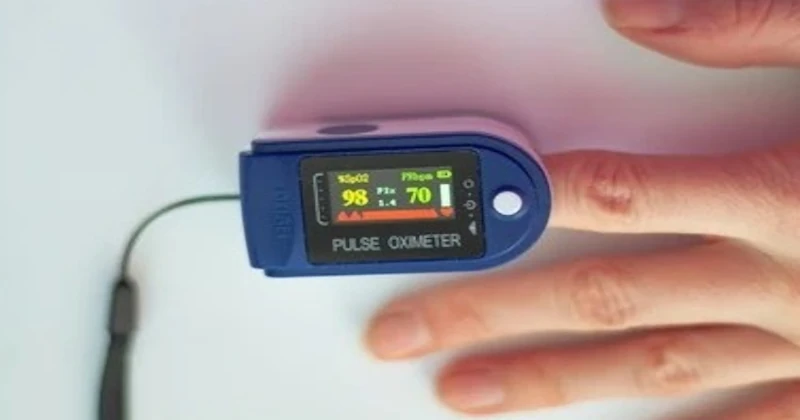
Representative Image

Representative Image

FacebookTwitterWhatsAppTelegramEmail

It simply takes a few seconds of holding your breath to realise that not getting enough oxygen is bad for you. But is it possible to have too much? Indeed, breathing air with more oxygen than your body requires might result in health problems or even death.

But with scant research on the topic, scientists have known little about how the body senses too much oxygen. Now, a new study from Gladstone Institutes has greatly expanded the scientific body of knowledge about the mechanisms at play, and why it matters for health.

Their findings, reported in the journal Science Advances, explain how breathing air with different levels of oxygen–from too little, to just right, or too much–affects the creation and degradation of different proteins in the lungs, heart, and brain of mice. Notably, the study also highlights a particular protein that may play a central role in regulating how cells respond to hyperoxia.

“These results have implications for many different diseases,” says Gladstone Assistant Investigator Isha Jain, PhD, senior author of the new study. “More than 1 million people in the US breathe supplemental oxygen every day for medical reasons, and studies suggest it could be making things worse in some cases. That’s just one setting where our work is starting to explain what’s happening and how the body responds.”

Understanding oxygen’s effects

Most prior research on oxygen levels has examined the molecular effects of too little oxygen. And even in that realm, most of the focus has been on how low oxygen affects which genes are turned on or off.

“Our study enters uncharted territory by using mice and looking downstream of gene expression at which proteins abnormally accumulate or degrade in response to different oxygen concentrations,” says Kirsten Xuewen Chen, first author of the new paper and a graduate student at UC San Francisco.

The research builds on the team’s prior work, which revealed that in response to too much oxygen, certain proteins containing iron and sulfur clusters become degraded, leading cells to malfunction.

“Now, we wanted to get a more dynamic picture of how proteins are regulated when oxygen levels are too high or too low,” Chen says.

To do so, the team exposed mice for several weeks to air with oxygen level of 8 percent, 21 percent (the usual level we breathe in Earth’s atmosphere), or 60 percent. Meanwhile, they gave the mice food containing a distinct form of nitrogen that the animals’ bodies incorporated into new proteins. This nitrogen isotope acted as a “label” that enabled the researchers to calculate protein turnover rates–the balance between protein synthesis and degradation–for thousands of different proteins in the lungs, heart, and brain.

“We’re grateful to our collaborators who are the experts in this technique, known as stable isotope labeling of amino acids in mice,” Jain says. “Without it, we could not have done this study.”

A key protein builds up

The researchers found that oxygen levels more dramatically affected proteins in the lungs of mice than the heart or brain. They identified certain proteins with abnormal turnover rates under high- or low-oxygen conditions.

One particular protein that accumulated in high-oxygen conditions, MYBBP1A, piqued their attention. MYBBP1A is a transcription regulator, meaning it directly affects gene expression.

“This caught our eye because prior research has shown that other transcription factors called hypoxia-inducible factors, or HIFs, play a big role in cells’ response to low oxygen,” Chen says. “Our work nominates MYBBP1A for a related role in hyperoxia signaling.”

MYBBP1A is involved in the production of ribosomes–cellular “machines” that build proteins. Further experiments surfaced clues that, in response to high oxygen levels, accumulation of this protein in the lungs may affect production of ribosomal RNA, a key component of ribosomes.

Jain’s team is now examining the precise molecular role of MYBBP1A during hyperoxia, including whether its response is protective or harmful. This work could set the stage for novel treatments that target the MYBBP1A protein or associated molecules in ways that counter the bad effects of hyperoxia–similar to widespread research efforts targeting HIF proteins in low-oxygen conditions.

First-of its-kind dataset

The new study presents a first-of-its kind dataset of protein turnover rates in different tissues of mice exposed to different oxygen levels. The team hopes its results will inspire other researchers to further investigate the effects of too much or too little oxygen on the body, which could transform the way we treat disease.

(with inputs from ANI)

Topics: OxygenOxygen levelsHuman BodyOxygen effects
ShareTweetSendShareSend
✮ Subscribe Organiser YouTube Channel. ✮
✮ Join Organiser's WhatsApp channel for Nationalist views beyond the news. ✮
Previous News

Assam: Pobitora Wildlife Sanctuary welcomes early surge of migratory birds, anticipates record numbers this winter

Next News

Delhi: JNU VC clears air over rules banning protests on campus and students being expelled for flouting restrictions

Related News

Gut bacteria generate neurotransmitters that shape the neonatal immune system: Study

Research finds properties of renewable carbon can be used to create more sustainable products

Patients with brain damage might ‘dramatically improve’ with simple oxygen intervention: Study

Load More

Latest News

Rani Durgawati

Remembering Rani Durgavati: A woman can be a mother, an empress and an embodiment of an immortal resolve

Karan Singh Kept in Dark: Sheikh Abdullah Never Informed J&K’s Sadr-e-Riyasat of Syama Prasad Mookerjee’s Death (This image is generated by AI)

Syama Prasad Mookerjee Death Mystery: Karan Singh says Sheikh Abdullah never informed him

On the occasion of Dr Syama Prasad Mookerjee’s State-Level Balidan Diwas , Chief Minister Shri Mohan Charan Majhi and others at an event organized at Jayadev Bhawan on June 23, 2026

“Article 370 abrogation fulfilled Dr Syama Prasad Mookerjee’s dream,” says Odisha CM Majhi at Balidan Divas programme

Prakash Raj in Fresh Controversy as Court Issues NBW in Voter Registration Case (This image is generated by AI)

Karnataka: Prakash Raj faces legal scrutiny over alleged multiple voter IDs; Bengaluru Court issues NBW

The fall of Keir Starmer highlights a broader crisis in British governance, where leadership changes have failed to reverse long-term national decline

From Brexit to Starmer: Why Britain’s crisis lies beyond changing leaders in Westminster

Tribute to Rani Durgawati on her Martyrdom Day

Rani Durgavati Martyrdom Day: Immortal Warrior rani, defender of Tribal Pride, national honour & Sanatan values

President Droupadi Murmu confers the Padma Shri on former civil servant R.V.S. Mani on June 23, 2026.

Former MHA official RVS Mani honoured with Padma Shri for contributions to internal security

Tamil Nadu: Temple funds only for temple property; TVK govt concedes before Madras High Court

Keralam’s former Industries Secretary, Mohammed Haneesh IAS (Right Side)

Keralam Cashew Scam: Former Industries Secretary Md Haneesh apologises before High Court after contempt proceedings

Tamil Nadu: Assembly Speaker directs all bureaucrats to strictly follow warrant of precedence after Mayor-MLA row

Load More
  • Privacy
  • Terms
  • Cookie Policy
  • Refund and Cancellation
  • Delivery and Shipping

© Bharat Prakashan (Delhi) Limited.
Tech-enabled by Ananthapuri Technologies

  • Home
  • Search Organiser
  • Bharat
    • Assam
    • Bihar
    • Chhattisgarh
    • Jharkhand
    • Maharashtra
    • View All States
  • World
    • Asia
    • Africa
    • North America
    • South America
    • Europe
    • Australia
  • Editorial
  • Operation Sindoor
  • Opinion
  • Analysis
  • Defence
  • Culture
  • Sports
  • Business
  • RSS @ 100
  • Entertainment
  • More ..
    • Sci & Tech
    • Vocal4Local
    • Special Report
    • Education
    • Employment
    • Books
    • Interviews
    • Travel
    • Health
    • Politics
    • Law
    • Economy
    • Obituary
  • Subscribe Magazine
  • Read Ecopy
  • Advertise
  • Circulation
  • Careers
  • About Us
  • Contact Us
  • Policies & Terms
    • Privacy Policy
    • Cookie Policy
    • Refund and Cancellation
    • Terms of Use

© Bharat Prakashan (Delhi) Limited.
Tech-enabled by Ananthapuri Technologies