





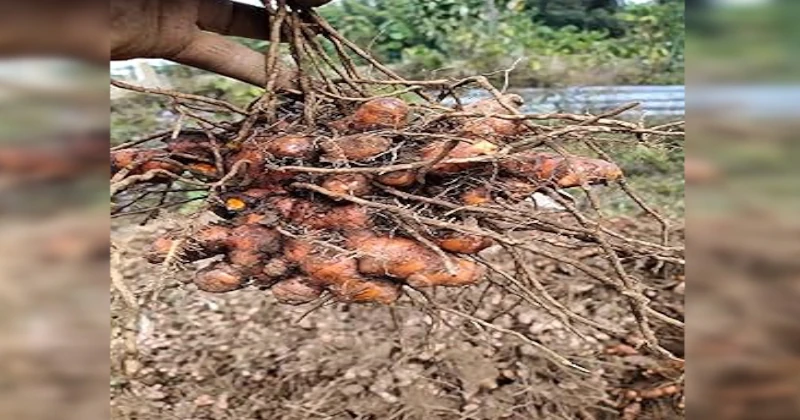
Shillong: In a landmark achievement for Meghalaya’s cultural and agricultural landscape, Lakadong turmeric has been bestowed with the prestigious Geographical Indication (GI) tag, marking a significant milestone for the State. State Agriculture Minister Ampareen Lyngdoh made the momentous announcement, also revealing that other cultural treasures – Garo Dakmanda (traditional dress), Larnai pottery, and Garo Chubitchi (an alcoholic beverage) – have received the coveted GI tag.
Minister Lyngdoh said that sharing the accolades is an excellent achievement for the State and our dearest farmers of Lakadong Turmeric. Finally, Meghalaya’s Lakadong Turmeric gets a Tag of GI (Geographical Indication).
The focus of this accolade is undoubtedly the Lakadong turmeric, a spice renowned for its high curcumin content. Found exclusively in the Lakadong area of Jaintia Hills, this variety is distinguished by its deep, dark colour and is cultivated organically without using fertilisers. Minister Lyngdoh emphasised the transformative impact of the GI tag on the marketing opportunities for Lakadong turmeric, providing consumers with assurance regarding the product’s authenticity.
Considered one of the world’s premier turmeric varieties, Lakadong turmeric boosts an impressive curcumin content ranging from 6.8 to 7.5 per cent. The recognition is a boon for approximately 14,000 farmers from 43 Lakadong villages who cultivate this prized spice on 1,753 hectares. Minister Lyngdoh believes that the GI tag will serve as a badge of authenticity and give the farmers a unique selling point, ensuring a favourable market price.
Trinity Saioo, a Padma Shri awardee celebrated for her efforts in encouraging more farmers to take up Lakadong turmeric cultivation, expressed her joy and gratitude to Chief Minister Conrad K Sangma for his support in promoting this valuable spice. Saioo envisions the GI tag as a catalyst that will propel Lakadong farmers to greater heights in domestic and international markets, ultimately creating more livelihood opportunities for the community.
Beyond recognising Lakadong turmeric, the GI tag has also been extended to Garo Dakmanda, a handwoven ankle-length lower garment integral to the traditional attire of Garo women in Meghalaya. This recognition preserves cultural heritage and promises economic benefits for local communities.
Garo Chubitchi, an alcoholic beverage deeply rooted in Garo tradition, and Larnai pottery, crafted from black clay in Larnai village, have also been granted the GI tag. Acknowledging these cultural and artisanal treasures amplifies the rich tapestry of Meghalaya’s heritage, opening up avenues for economic growth and sustainability.
This collective recognition underscores the diverse offerings of Meghalaya and positions the State as a custodian of unique traditions and agricultural practices. The GI tag not only bestows legal protection to these products but also enhances their marketability, ensuring that the benefits trickle down to the grassroots level.
As Meghalaya basks in the glory of these accolades, it is not merely a celebration of individual products but a testament to the resilience and vibrancy of the State’s cultural and agricultural heritage. The GI tag is a beacon, guiding consumers towards authenticity while empowering local communities and fostering sustainable practices.
















Comments