





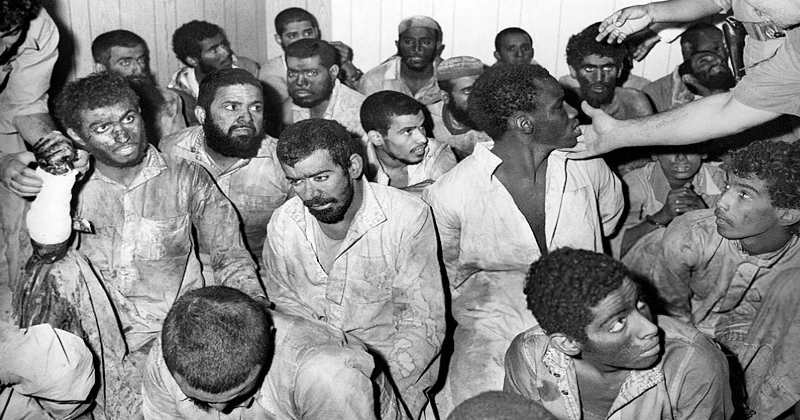
The 1979 seizure of the Grand Mosque in Mecca had a profound impact on the global Muslim community and Islamic nations. This event, considered one of the most significant in recent Islamic history, sparked widespread outrage and contributed to the rise of extremist groups like Al-Qaeda. The incident’s legacy continues to reverberate today, influencing the political and religious landscape of many Muslim-majority countries.
On November 20, 1979, a group of armed individuals forcibly occupied the Grand Mosque in Mecca, Saudi Arabia, during the first day of Muharram, the first month of the Islamic calendar. As thousands of worshippers gathered for morning prayers, the militants barricaded the gates and seized control of the sacred site, causing widespread fear and panic among the Muslims.
The insurgents abandoned the foreigners in the mosque and arrested the Arabs. Insurgents established bases in minarets and defensive positions on the mosque’s top floors. The patrolling police officers were shot. After confirming that the entire mosque premises were in their possession, they told the outside community via phone that those who came for Namaz had been arrested.
This news caused an outcry across the country. The world’s Muslim community was shocked to learn of the siege of Mecca. The news was sent to the King, who was on a foreign visit, by the Government machinery and police officials who were on the scene. King Fahd returned to Saudi Arabia that evening, realising the gravity of the incident.
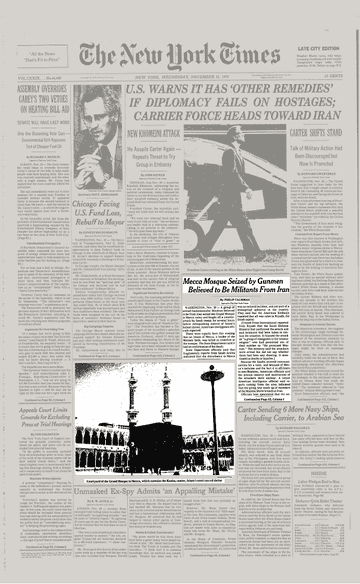
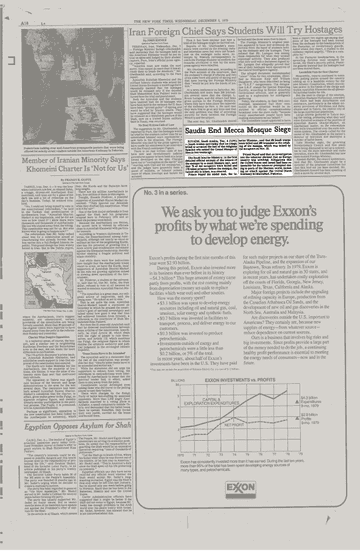
The next day, reports of the siege of the Mecca Masjid began to circulate among the international media, including the New York Times. The following day, the New York Times published a front-page report claiming that Iranian terrorists had captured the Mecca Mosque. On the day following the seizure of the Grand Mosque in Mecca, news of the incident began to spread rapidly across international media outlets, including The New York Times. The following day, The New York Times published a prominent report on its front page, alleging that Iranian-backed militants had taken control of the sacred site.
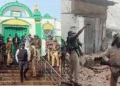
As these statements spread among Muslims, tense situations erupted in several nations. A fanatic mob in Pakistan assaulted and set fire to the American Embassy in Islamabad, saying that America was engaged in the Mecca attack. This attack killed two American soldiers and two Pakistani embassy staffers. The people of Tripoli also set fire to the American embassy. There have also been tense situations in the Philippines, Turkey, Bangladesh, Eastern Saudi Arabia, and the United Arab Emirates, in addition to Pakistan.
It was an Arab named Juhaiman al-Otaibi who led the assault on the grand mosque. He claimed to be the Mahdi, a figure in Islam believed to bring justice and salvation to the world. Once the siege was confirmed, Al-Otaibi criticised the Saudi Arabian government over the mosque’s speakers, charging it with corruption and a betrayal of Islamic principles. He demanded an end to Western influences and a return to a more traditional way of life.
Juhaiman al-Otaibi raised concerns about the growing influence of Western culture in Saudi Arabia, particularly in the realms of entertainment, gender roles, and societal norms. He criticised the introduction of Western media, such as movies, television, and sports, questioning their compatibility with Islamic values and traditions. He also expressed reservations about the increasing participation of women in public spaces and the perceived erosion of traditional gender roles. Additionally, he voiced opposition to the rapid modernisation of Saudi Arabia, which he viewed as being driven by external influences, particularly from the United States.
Earlier, A hundred guards tried to take the Makkah Masjid from Juhayman’s troops. Nonetheless, ulema members and religious authorities contend that Prophet Muhammad made it clear that fighting was not permitted in Makkah Masjid. As a result, the authorities called a conference with King Fahd bin Abdullah and the Ulema. Members of the Ulema cautioned the King that a fatwa confirming the legitimacy of the fighting would be required. King Fahd bin Abdullah instructed the Ulema to issue the fatwa immediately. Ulema nevertheless informed the King that it would take some time to issue the fatwa.
Before issuing the fatwa, state security personnel used surveillance planes to assess the situation over the mosque. Every rebel has an automatic weapon. Weapons, ammunition, and food were found to be smuggled into the mosque in coffins in large quantities. In addition, the authorities learned that certain former National Guard members supported Al Otaibi’s army. On November 23, the third day of the attack, there was no sermon for the first time in the mosque’s history.
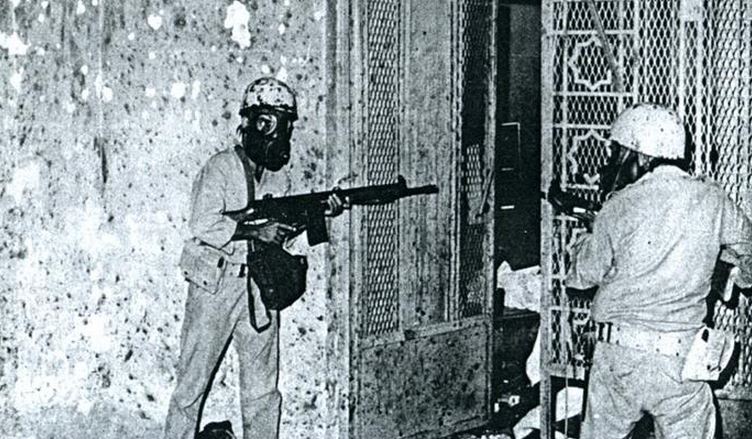
Initially, security personnel used loudspeakers to announce the order to surrender in line with the fatwa, making Juhayman’s army aware of it. Nevertheless, rockets were fired at the mosque’s minarets since Zuhaiman did not respond. Also, through the already-demolished gates, Saudi security personnel entered the mosque armed. Following several hours of intense combat, Juhayman rebelled and took the initiative.
Upon the request of Saudi King Khalid, the French President dispatched three counterterrorism experts to Saudi Arabia. Due to religious restrictions, the French consultants could not enter the Grand Mosque directly. As a result, the operation was carried out based on their recommendations.
On December 3, Saudi security forces initiated a trench-digging operation, creating 50-meter intervals leading up to the Grand Mosque’s upper chambers. After 15 days of intense conflict, over 100 militants from Juhayman’s group were apprehended. Among the captured individuals was Zuhaiman al-Otaibi, the rebel leader. Muhammad al-Qahtani, who had proclaimed himself the Mahdi, was killed in the fighting. The seizure lasted for about two weeks, from November 20 to December 4, 1979.
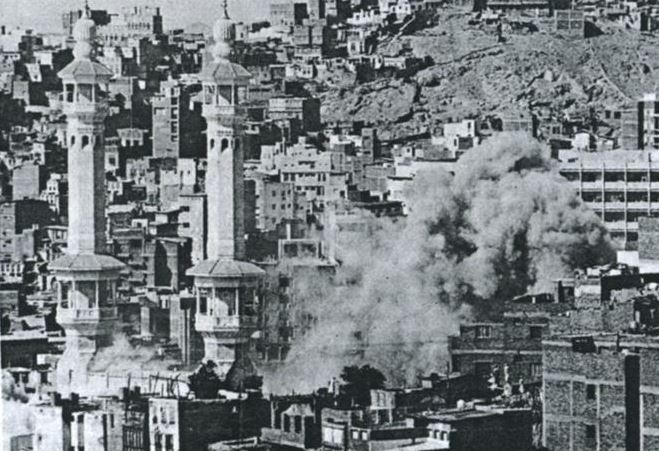
The total number of casualties included 117 militants and 127 Saudi security personnel. Additionally, 451 individuals sustained injuries, including over 100 pilgrims, of whom 26 succumbed to their wounds. On January 9, 1980, the Saudi Ministry of Interior stated that 63 insurgents had been executed in eight different localities. It was also claimed that Zuhaiman Al Otaibi was involved.
The Saudi Government, after a comprehensive investigation, concluded that all of the rebels were Saudi citizens and took corrective actions.
In the aftermath of the siege of the Grand Mosque, the Saudi royal family, which was on the path towards modernisation, became cautious. Saudi King Fahd bin Abdulaziz Al Saud granted significant authority over the kingdom’s governance to members of the ulema elite.
Under the Ulema’s influence, Saudi Arabia witnessed a stricter enforcement of 7th-century Sharia law, which hindered its progress towards modernisation. Women’s rights were curtailed, with restrictions on their employment, mobility, and representation in media.
Music stores and movie theatres were closed, and textbooks were revised to focus solely on Islamic religious topics, eliminating non-Islamic history. To enforce religious customs, a system of religious police was established, leading to increased harassment, particularly towards women.
In response to pressure from the Ulema, the Saudi authorities began promoting the House of Saud’s Wahhabist beliefs internationally. They offered favourable policies and financial assistance to other Islamic nations, funding the construction of mosques and other religious buildings. This led to a gradual shift from modernisation towards a more conservative religious outlook in these countries.
Sharia law, an Islamic political structure, and opposition to modernity became prevalent. This incident fueled the belief that the West and America were misguided in their approach to Islam.
Despite its reputation for conservatism and religious adherence, the Middle East is not immune to the influence of Western lifestyles and values. As the world evolves, religious freedom and individual choice are gaining prominence. Saudi Arabia’s Crown Prince Mohammed bin Salman (MBS) is keen to keep pace with these global shifts.
Israel’s military operations against Hamas in Gaza, as well as the larger events happening in the Middle East, depict a dynamic and ever-changing terrain.











Comments