





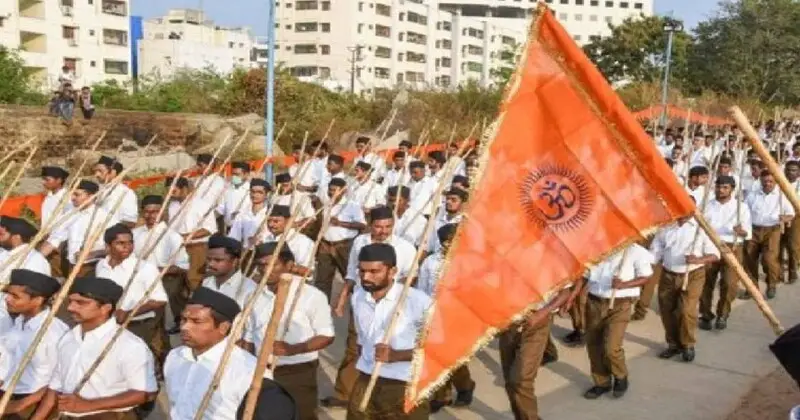
The reversal of the Dravida Munnetra Kazhagam (DMK)-led government’s decision to grant permission for the Path Sanchalan’ of the Rashtriya Swayamsevak Sangh is a major victory for the RSS, which was grappling with opposition and legal hurdles to carry out its annual procession.
The RSS, an organisation with a nearly century-old history, has been seeking permission to hold its route march in Tamil Nadu as part of commemorating the 99th foundation year of the RSS and celebrating the 200th birth anniversary of Saint Ramalinga Swamigal, also known as Vadalur Vallalar. Furthermore, the march aims to remember the nationalistic ideas of Swami Vivekananda and Dr BR Ambedkar.
This development comes after a series of legal battles and administrative resistance. Initially, the Madras High Court granted permission for the RSS to conduct its rally on October 22 and October 29. However, instead of appealing against the High Court’s decision, the DMK government chose to escalate the matter by challenging the Madurai Bench of the High Court of Madras order at the Supreme Court.
The Madras High Court, on November 1, issued statutory notices to various government officials, including the Home Secretary and the Director General of Police, in connection with contempt petitions filed for their failure to grant permission to RSS route marches at various locations in Tamil Nadu. The court directed these officials to appear in person during the next hearing to explain their stance.
The Supreme Court, presided over by a bench comprising Justice Surya Kant and Justice Dipankar Datta, expressed its readiness to pose challenging and uncomfortable questions regarding the merits of the case to the Tamil Nadu Government. As a result, it adjourned two Special Leave Petitions (SLPs) challenging the Madras High Court’s decisions to grant permission to the RSS for conducting route marches in the requested locations. The matter is now scheduled to be reconsidered on November 6, 2023.
The petition challenging the RSS’s route march argued that the High Court’s order was passed without due consideration of the history of violent incidents, the potential impact on law and order, and other religious congregations taking place during the Navratri festival and Thevar Jayanti across Tamil Nadu. It further contended that the RSS, being neither a citizen of India nor a corporate entity, should not be vested with the fundamental rights guaranteed under Article 19 of the Indian Constitution, which are exclusive to Indian citizens.
However, in a dramatic turn of events, the Tamil Nadu government, during the subsequent court proceedings, announced its decision to allow the RSS to conduct its annual route march on either November 19 or 26. This unexpected change of stance raises questions about the motivations behind the government’s about-face.
Many are speculating whether the government had ulterior motives, such as potentially creating or instigating issues during the march to mar the event and justify denying permission in the coming years. Only time will reveal the true reasons behind this sudden shift in policy.
The DMK-led Tamil Nadu government’s reversal on allowing the RSS’s ‘Path Sanchalan’ is a significant development in the ongoing legal battle. The Supreme Court’s upcoming review of the case will shed further light on the intricacies surrounding this matter and determine the future of the RSS’s annual route marches in the state.














Comments