





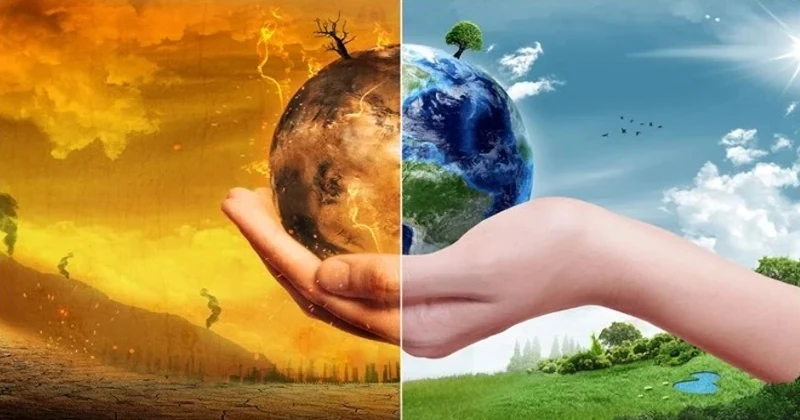
As the world warms at a faster rate than at any point in recorded history, human health is on the frontline.
Climate change threatens to reverse decades of progress towards better health and well-being, particularly in the most vulnerable communities. Scientific know-how and resources can help redress the balance, but are not sufficiently accessible or utilised, according to a new multi-agency report coordinated by the World Meteorological Organisation (WMO).
WMO’s annual State of Climate Services report this year focuses on health. It highlights the need for tailored climate information and services to support the health sector in the face of more extreme weather and poor air quality, shifting infectious disease patterns and food and water insecurity.
“Practically the whole planet has experienced heatwaves this year. The onset of El Nino in 2023 will greatly increase the likelihood of breaking temperature records further, triggering more extreme heat in many parts of the world and in the ocean – and making the challenge even greater,” says WMO Secretary-General, Prof Petteri Taalas.
“It is clear that by channelling investment and boosting collaboration, there is huge potential to go further and faster by enhancing the impact of climate science and services so that health partners get the support they need at a time when unprecedented changes to our climate are having an increasing impact,” add Prof. Taalas.
The report, which includes input from more than 30 collaborating partners, features case studies from around the world showcasing how integrated climate and health action makes a very real difference in people’s daily life. This includes early warning systems for extreme heat, pollen monitoring to help allergy sufferers and satellite surveillance for climate-sensitive diseases.
“The climate crisis is a health crisis, driving more severe and unpredictable weather events, fuelling disease outbreaks, and contributing to higher rates of noncommunicable diseases,” said Tedros Adhanom Ghebreyesus, WHO Director-General. “By working together to make high-quality climate services more accessible to the health sector, we can help to protect the health and well-being of people facing the perils of climate change.”
Nearly three quarters of National Meteorological and Hydrological Services (NMHS) provide climate data to the health sector, but the uptake is limited. Less than one quarter of Ministries of Health have a health surveillance system that utilises meteorological information to monitor climate-sensitive health risks.
Early warnings for all
The number of medium- or large-scale disaster events is projected to reach 560 a year – or 1.5 each day – by 2030. Countries with limited early warning coverage have disaster mortality that is eight times higher than countries with substantial to comprehensive coverage, according to figures cited in the report.
A special section is devoted to extreme heat, which causes the greatest mortality of all extreme weather. However the impacts are underestimated as heat-related mortality could be 30 times higher than what is currently recorded. Heat warning services are provided to health decision makers in only half of the affected countries, but are expected to rapidly increase by 2027 under the international Early Warnings for All initiative.
Between 2000 and 2019, estimated deaths due to heat were approximately 489,000 per year, with a particularly high burden in Asia (45 per cent) and Europe (36 per cent). Extreme heat conditions during the summer of 2022, were estimated to have claimed over 60,000 excess deaths in 35 European countries.
Heatwaves also exacerbate air pollution, which is already responsible for an estimated 7 million premature deaths every year and is the fourth biggest killer by health risk factor.
Climate change is exacerbating risks of food insecurity. In 2012-2021, 29 per cent more global land area was affected by extreme drought for at least one month per year than in 1951-1960. The compounding impacts of droughts and heatwave days were associated with 98 million additional people reporting moderate to severe food insecurity in 2020 than annually in 1981-2010, in 103 countries analysed, according to figures cited in the report.
The changing climatic conditions are also enhancing the transmission of many climatically sensitive infectious vector-, food-, and water-borne diseases. For example, dengue is the world’s fastest-spreading vector-borne disease, whilst the length of the malaria transmission season has increased in parts of the world.
Some of the most significant challenges to health are in the nexus of water, food security and nutrition, the nexus of infectious diseases (food-, water-, airborne and vector-borne diseases), and the nexus of extreme weather and air quality, particularly in urban areas, says the report.
Key messages: Climate change undermines health determinants and increases pressures on health systems threatening to reverse decades of progress to promote human health and well-being, particularly in the most vulnerable communities.
The Intergovernmental Panel on Climate Change (IPCC) concludes, with very high confidence, that future health risks from injury, disease, and death will increase due to more intense and frequent temperature extremes, cyclones, storms, floods, droughts, and wildfires. It is anticipated that over 50 per cent of the excess mortality resulting from climate change by the year 2050 will occur in Africa.
Health protection is a priority in almost all countries and requires high-quality information to better inform decision-making. Climate information and services are fundamental for better understanding how and when health systems and population health can be impacted by climate extremes and a changing climate, and for managing climate-related risks.
Climate information and services are fundamental for better understanding how and when health systems and population health can be impacted by climate extremes and a changing climate, and for managing risks. Tailored climate products and services can enhance the evidence and information available to health partners to detect, monitor, predict, and manage climate-related health risks.
There is huge potential for enhancing the benefits of climate science and climate services for the health sector and for increasing accessibility, relevance and uptake. Only 31 per cent of NMHSs provide climate services at a ‘full’ or ‘advanced’ level of capacity. A large range of academic, private sector, and government partners are also working to fill the gap, and this needs to be put on a sustainable and coordinated footing.
Extreme heat causes the greatest mortality of all extreme weather, yet heat warning services are provided to health decision makers in only half of the affected countries. According to the Lancet Countdown on Health and Climate Change, rising temperatures and the growing over-65 population have triggered an increase in heat-related mortality in this age group of approximately 68 per cent between 2017-2021, compared to 2000-2004.
According to the IPCC, there is “high confidence” that Central and South America, southern Europe, southern and Southeast Asia and Africa will be the most affected by climate change in terms of heat-related mortality by 2100, based on 1.5°C, 2°C and 3°C increases in the global temperature.
The IPCC also notes with “very high confidence” significant impacts of heat are expected from the combination of future urban development and the more frequent occurrence of heatwaves, with more hot days and warm nights adding to heat stress in cities.
Concerns relating to air quality, climate change, and health are interlinked. Climate mitigation action leading to reducing air pollution can save lives. Despite this, only 2 per cent of climate finance commitments made by international development funders in developing and emerging countries is explicitly aimed at tackling air pollution (in 2015-2021), even though it is the most dangerous environmental threat to health.
In 2019, air pollution moved up from the fifth to the fourth place in the scale of leading risk factors for death globally, continuing to exceed the impacts of other widely recognised risk factors for chronic disease like obesity, cardiovascular disease, and malnutrition.
There is insufficient investment to improve the capabilities of the health sector, leaving it ill-prepared to safeguard the most vulnerable. Currently, just 0.2 per cent of total bilateral and multilateral adaptation finance supports projects that identify health as the primary focus, and the investment in the capacity for multisectoral and effective climate science and services is miniscule.” Most hydrometeorological investments are not clearly designed to support health outcomes. This needs to change.
To fully harness the potential of climate services for health, transformational change in institutional development and integration across the health and climate sectors are needed. In the wake of the global COVID-19 pandemic, all countries have experienced the social and economic losses and damages which can occur when the health of society is compromised. More must be done to prepare the health community for future shocks and pressures they may experience due to climate variability and the damaging effects of climate change.
(with inputs from ANI)














Comments