Lokmanya Bal Gangadhar Tilak: Father of the Indian Renaissance
December 5, 2025
  • Read Ecopy
  • Circulation
  • Advertise
  • Careers
  • About Us
  • Contact Us
Android AppiPhone AppArattai
Organiser
  • ‌
  • Bharat
    • Assam
    • Bihar
    • Chhattisgarh
    • Jharkhand
    • Maharashtra
    • View All States
  • World
    • Asia
    • Europe
    • North America
    • South America
    • Africa
    • Australia
  • Editorial
  • International
  • Opinion
  • RSS @ 100
  • More
    • Op Sindoor
    • Analysis
    • Sports
    • Defence
    • Politics
    • Business
    • Economy
    • Culture
    • Special Report
    • Sci & Tech
    • Entertainment
    • G20
    • Azadi Ka Amrit Mahotsav
    • Vocal4Local
    • Web Stories
    • Education
    • Employment
    • Books
    • Interviews
    • Travel
    • Law
    • Health
    • Obituary
  • Subscribe
    • Subscribe Print Edition
    • Subscribe Ecopy
    • Read Ecopy
  • ‌
  • Bharat
    • Assam
    • Bihar
    • Chhattisgarh
    • Jharkhand
    • Maharashtra
    • View All States
  • World
    • Asia
    • Europe
    • North America
    • South America
    • Africa
    • Australia
  • Editorial
  • International
  • Opinion
  • RSS @ 100
  • More
    • Op Sindoor
    • Analysis
    • Sports
    • Defence
    • Politics
    • Business
    • Economy
    • Culture
    • Special Report
    • Sci & Tech
    • Entertainment
    • G20
    • Azadi Ka Amrit Mahotsav
    • Vocal4Local
    • Web Stories
    • Education
    • Employment
    • Books
    • Interviews
    • Travel
    • Law
    • Health
    • Obituary
  • Subscribe
    • Subscribe Print Edition
    • Subscribe Ecopy
    • Read Ecopy
Organiser
  • Home
  • Bharat
  • World
  • Operation Sindoor
  • Editorial
  • Analysis
  • Opinion
  • Culture
  • Defence
  • International Edition
  • RSS @ 100
  • Magazine
  • Read Ecopy
Home Bharat

Lokmanya Bal Gangadhar Tilak: Father of the Indian Renaissance

The Tilak compound at the time was a simple affair: a double-storey house where Tilak and his family lived, and a few single-storey tenements, where he had his press and staff. Now it has been modernised, if that is the right word, and consists of a four or five-storey block of buildings, along with a museum and library, where you see Tilak?s books, clothes including the traditional chappals, and also the low table at which he sat and wrote his famous editorials, including the one which the British seized

Jay DubhashiJay Dubhashi
Aug 1, 2023, 12:45 am IST
in Bharat
Follow on Google News
FacebookTwitterWhatsAppTelegramEmail

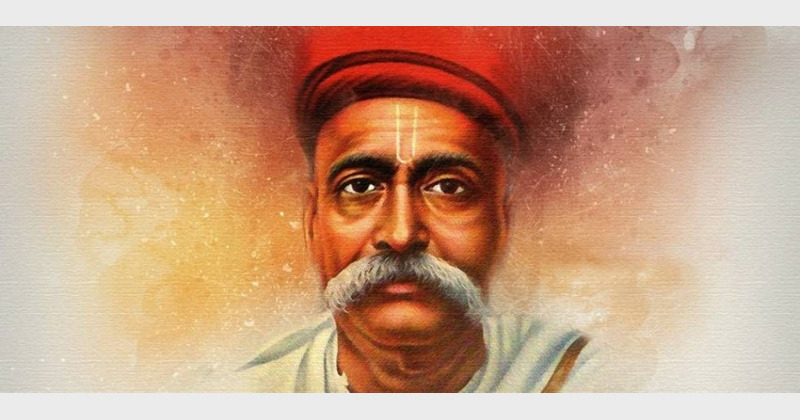
For the first time since his death nearly a hundred years ago, Lokmanya Bal Gangadhar Tilak’s voice echoed through the streets of Pune last week, when a recording of his speech was played at the Ganesh festival in his residence. It was big news in Pune, a city forever linked with the Lokmanya, and crowds thronged to the Tilak residence to listen to the recording. I did not go there myself but listened to the hundred-year-old recording, the first of its kind, on the TV.

 
It is a typical Tilak speech, short, terse and to the point. Tilak had invited a few prominent vocalists, all of them classical singers, to participate in his Ganesh festivities. Halfway through the programme, there was a commotion, which naturally upset the host. He went to the dias, admonished the audience and asked them to behave. “Listen to them,” he said, “These people are my guests. If you do not wish to listen, leave.” It was a voice the British knew too well. Tilak had just returned to India after six years in detention in Mandalay in Burma, but the voice was as firm as ever, though he was sixty at the time.
 
The Tilak compound at the time was a simple affair—a double-storey house where Tilak and his family lived, and a few single-storey tenements, where he had his press and staff. Now it has been “modernised”, if that is the right word, and consists of a four or five-storey block of buildings, along with a museum and library, where you see Tilak’s books, clothes including the traditional chappals, and also the low table at which he sat and wrote his famous editorials, including the one which the British seized on and used to sentence him to what was then known as “Kala Pani”.
 
I have seen the editorial, or rather a copy of the editorial with Tilak’s hand-written remarks on it. Incidentally, the editorial was not actually written by him, but by one of his assistant editors, who was also a famous playwright.
 
The recording, the only such recording in existence, was made by a businessman from Sind, now in Pakistan, but at the time very much a part of India. The man, a devotee of Tilak, had improted the machine from Europe or America, and was using it for recording classical singers. He had brought the machine to Pune for the Ganesh festival, which Tilak had just started in the city. The recording of Tilak’s speech, a short five or six minutes affair was a happy accident.
 
I first arrived in Pune, or Poona as it was then known, in 1942, to enroll in the engineering college, the only one such college in the presidency. On my second day in the city, I visited the Tilak compound in Narayan Peth, named after the young Peshwa, Narayanrao, who was killed by his own bodyguards. The compound was a small affair at the time, but so was Poona. Tilak’s paper, Kesari, was still being published, but under Tilak’s successors, it had become a tame affair and did not toe the Gandhian line. Gandhi, of course, would be in Poona, a few months later, after being arrested in Bombay following the Quit India Movement.
 
In the August of 1942, when the Movement erupted, we were still teenage students and had no idea what to do, after we heard that the Britishers had come down heavily on the leaders, and, of course, followers, and were arresting everyone in sight. We took out a procession and crossed what was then known as Lakdi Bridge on one of the rivers, to join another big procession in the town. This must have been on 10th or 11th August. Lakdi Bridge links old Poona with the new one and is about a kilometre or so from the Tilak compound.
 
We crossed the bridge and, for some reason, I found myself opposite the Tilak compound, right across the road from a police post, whose main job was to keep an eye on the compound. When the Lokmanya was alive, it kept an eye on Tilak himself. When we reached the police post, we were promptly arrested, but not before we somehow got involved in shooting – we did not do the shooting, the police did! – and were thrown into a bus and taken to the famous, or infamous, Yeravda Jail. A bullet had grazed my ankle – I still have the sear – and the doctors in the jail took me to the jail dispensary and treated the wound with what was then known as tincture, a pungent alcohol-like liquid which was then in use for treating wounds.
 
A week later, we were let off with a warning by a judge who looked like Alec Guinness, the actor. He told me that I was too young to get involved in such extra-curricular activities instead of doing my engineering exercises, but we were in no mood to listen to judges, particularly British judges who had no business to be in India, though we kept our mouths shut and said nothing. Two months later, I was back in jail again, but that is another story.
 
We were Tilak’s followers, not Gandhi’s, and jail-going was not on the cards. A day or two after being released some of us visited the Tilak compound again, which, for some reason, was closed.
 
We thought of Lokmanya Tilak as just another politician and had no idea who he really was. It was during London days that I realised Tilak was not just the father of unrest, as the British government called him, but the father of Indian revolution, for what he had started, was indeed more revolutionary in character than anything that had gone before. Tilak was the first Indian statesman, or rather Hindu statesman, who had successfully tried to meld religion with nationalism, in which both played equal parts. Tilak, in my view was among the first to visualise the struggle for freedom as a holistic activity combining nationalism with religion, which is what the so-called Arab Spring is all about.
 
A century before the Arab Spring, Lokmanya Tilak who along with Chhatrapati Shivaji, laid the foundation of Indian Independence, was the real father of India, who messed up the entire freedom movement by ignoring the essential Hindu character of the movement and unnecessarily emphasising the Muslim element in Indian politics. If Chhatrapati Shivaji was the greatest Hindu warrior of modern time, Lokmanya Bal Gangadhar Tilak was the greatest Hindu statesman. Those who have followed him have been pigmies and have made pigmies of us all.
 
(From Organiser Archives)
Topics: Lokmanya Bal Gangadhar TilakHistoryIndependence struggleSwarajBharatiya freedom movementdeath anniversaryLokmanya TilakLokmanya Tilak National AwardLokmanya Tilak Death Anniversary
Share1TweetSendShareSend
✮ Subscribe Organiser YouTube Channel. ✮
✮ Join Organiser's WhatsApp channel for Nationalist views beyond the news. ✮
Previous News

Haryana’s Nuh violence: 2 dead, several policemen injured; CM Khattar appeals for peace

Next News

Lokmanya Tilak Death Anniversary: Revisiting Tilak’s Nationalism

Related News

150 years of "Vande Mataram", national song that fuelled the spirit of swaraj and swadeshi

150 years of “Vande Mataram”, national song that fuelled the spirit of swaraj, swadeshi and environmental awareness

150 years of Vande Mataram

Vande Mataram to trigger ‘Swa’

150 Years of Vande Mataram: Eternal Mantra of Matriotosm

Swadeshi: Restoring the soul of Swaraj

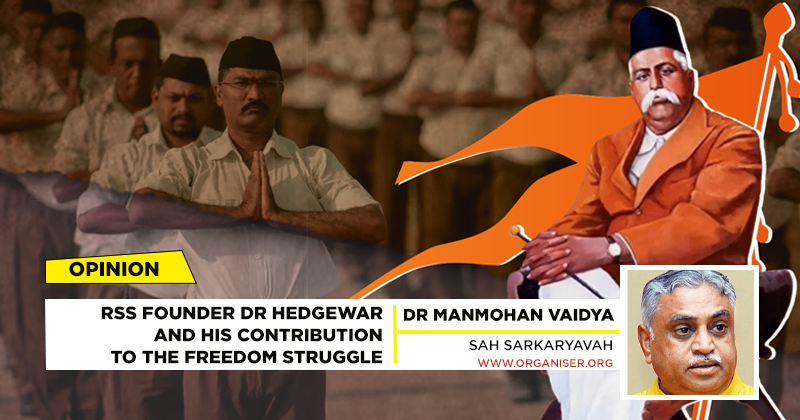
RSS at 100: Sangh founder Dr Hedgewar & his contribution to the freedom struggle

Lokmanya Tilak legacy of Hindutva: How Ganesh Chaturthi united Hindus, defied the British, and lit the flame of Swaraj

Load More

Comments

The comments posted here/below/in the given space are not on behalf of Organiser. The person posting the comment will be in sole ownership of its responsibility. According to the central government's IT rules, obscene or offensive statement made against a person, religion, community or nation is a punishable offense, and legal action would be taken against people who indulge in such activities.

Latest News

DGCA orders probe into IndiGo flight disruptions; Committee to report in 15 days

BJYM leader Shyamraj with Janaki

Kerala: Widow of BJP worker murdered in 1995 steps into electoral battle after three decades at Valancherry

Russian Sber bank has unveiled access to its retail investors to the Indian stock market by etching its mutual fund to Nifty50

Scripting economic bonhomie: Russian investors gain access to Indian stocks, Sber unveils Nifty50 pegged mutual funds

Petitioner S Vignesh Shishir speaking to the reporters about the Rahul Gandhi UK citizenship case outside the Raebareli court

Rahul Gandhi UK Citizenship Case: Congress supporters create ruckus in court; Foreign visit details shared with judge

(L) Kerala High Court (R) Bouncers in Trippoonithura temple

Kerala: HC slams CPM-controlled Kochi Devaswom Board for deploying bouncers for crowd management during festival

Fact Check: Rahul Gandhi false claim about govt blocking his meet with Russian President Putin exposed; MEA clears air

Union Minister for Road Transport and Highways Nitin Gadkari (Right)

India set for highway overhaul as Union Minister Nitin Gadkari unveils nationwide shift to MLFF electronic tolling

RSS Akhil Bharatiya Prachar Pramukh Shri Sunil Ambekar

When Narrative Wars result in bloodshed, countering them becomes imperative: Sunil Ambekar

Ministry of Civil Aviation mandates emergency action: IndiGo ordered to stabilise flight operations by midnight

Chhattisgarh CM Vishnu Deo Sai at Panchjanya Conclave, Nava Raipur, Image Courtesy - Chhattisgarh govt

Panchjanya Conclave: Chhattisgarh CM Sai shares views on development projects in Maoist hotbed, women empowerment

Load More
  • Privacy
  • Terms
  • Cookie Policy
  • Refund and Cancellation
  • Delivery and Shipping

© Bharat Prakashan (Delhi) Limited.
Tech-enabled by Ananthapuri Technologies

  • Home
  • Search Organiser
  • Bharat
    • Assam
    • Bihar
    • Chhattisgarh
    • Jharkhand
    • Maharashtra
    • View All States
  • World
    • Asia
    • Africa
    • North America
    • South America
    • Europe
    • Australia
  • Editorial
  • Operation Sindoor
  • Opinion
  • Analysis
  • Defence
  • Culture
  • Sports
  • Business
  • RSS @ 100
  • Entertainment
  • More ..
    • Sci & Tech
    • Vocal4Local
    • Special Report
    • Education
    • Employment
    • Books
    • Interviews
    • Travel
    • Health
    • Politics
    • Law
    • Economy
    • Obituary
  • Subscribe Magazine
  • Read Ecopy
  • Advertise
  • Circulation
  • Careers
  • About Us
  • Contact Us
  • Policies & Terms
    • Privacy Policy
    • Cookie Policy
    • Refund and Cancellation
    • Terms of Use

© Bharat Prakashan (Delhi) Limited.
Tech-enabled by Ananthapuri Technologies