





As per a release on July 27, 2023, researchers, and scientists from the Indian Institute of Science (India) and Niigata University (Japan) have jointly found and discovered droplets of water trapped in mineral deposits that were likely left behind from an ancient ocean that existed 600 million years ago.
The Discovery
According to Sajeev Krishnan, the professor at the Center of Earth Sciences and a corresponding author of the study mentioned that “The joint research team from the IISc and Niigata University have been working on a study on the tectonic evolution of the Himalayan and Nagaland Belt for the last five years.” The team included three researchers from IISC, including Sanjeev and two students and a professor and student from Japan
During this study, the team made the discovery and gained knowledge about these rocks. So far, scientists have not fully understood how these events were connected due to the lack of well-preserved fossils and the disappearance of all past oceans that existed in the earth’s history. The exposure of marine rocks in the Himalayas can provide some answers.
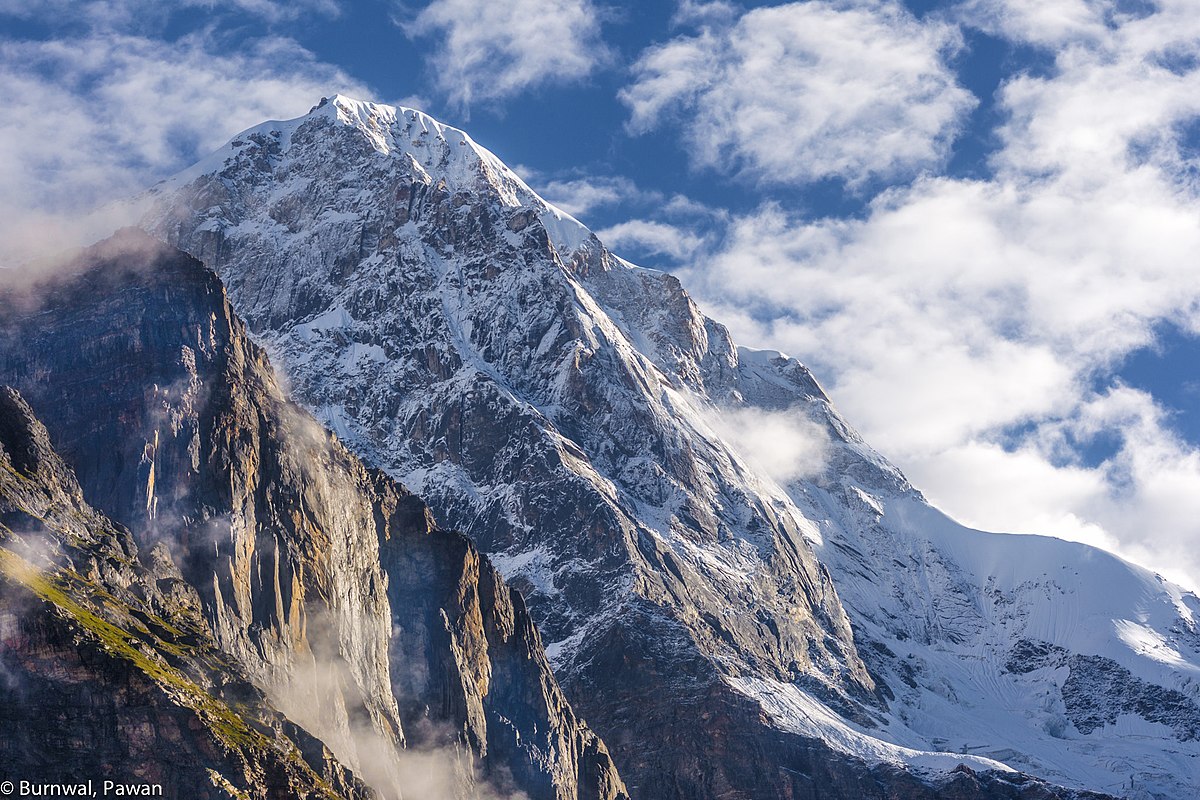
The team hunted for these deposits across a long stretch of the Western Kumaon Himalayas extending from Amritpur to Milam Glacier and Dehradun to Gangotri Glacier and found the droplets of water in the rocks
Results
After analyzing these water droplets through extensive laboratory analysis, it was revealed that the deposits are a product of precipitation from ancient ocean water and not from other places such as the Earth’s interior (Volcanic activity). These deposits contained calcium and magnesium carbonates as well.
Time Capsule
“We have found a time capsule for paleo oceans,” Prakash Chandra Arya, a PhD (doctoral) student at the Center of Earth Science in IISc, and first author of the study published in Precambrian Research, said. “We don’t know much about past oceans,” Prakash said. “How different or similar were they compared to present-day oceans? Were they much more acidic or basic, nutrient-rich or deficient, warm or cold, and what was their chemical and isotopic composition?” Such insights can also provide more clues about the Earth’s past climate, and this information can be useful for climate modelling, he added.
Causes and Explanations
Scientists believe that between 700 to 500 million years ago, thick sheets of ice covered the Earth for an extended period called the Snowball Earth Glaciation (this refers to one of the major glacial events in Earth’s history). It was followed by an increase in the amount of oxygen in the Earth’s atmosphere called the Second Great Oxygenation Event, which led to the formation and evolution of new life forms.
The deposits found by the team date back to around the time of Snowball Earth Glaciation and revealed that sedimentary basins were deprived of calcium for an extended period, probably due to low riverine input. “
During this time, there was no flow in the oceans and hence no calcium input. When there is no flow or calcium inputs, more calcium precipitates, and the amount of magnesium goes up,” explains Sanjeev Krishnan. The calcium deprivation also led to a nutrient deficiency, making it conducive for slow-moving photosynthetic cyanobacteria, which could have started spewing out more oxygen into the atmosphere. “Whenever there is an increase in the oxygen level in the atmosphere, you will have biological radiation or evolution,”
The magnesium deposits formed at this time were able to trap paleo ocean water in the pore space as they crystallized, then researchers suggest.















Comments