Time for India to safeguard and Boost its semiconductor ecosystem
July 8, 2026
  • Read Ecopy
  • Circulation
  • Advertise
  • Careers
  • About Us
  • Contact Us
Android AppiPhone AppArattai
Organiser
  • ‌
  • Bharat
    • Assam
    • Bihar
    • Chhattisgarh
    • Jharkhand
    • Maharashtra
    • View All States
  • World
    • Asia
    • Europe
    • North America
    • South America
    • Africa
    • Australia
  • Editorial
  • International
  • Opinion
  • RSS @ 100
  • More
    • Op Sindoor
    • Analysis
    • Sports
    • Defence
    • Politics
    • Business
    • Economy
    • Culture
    • Special Report
    • Sci & Tech
    • Entertainment
    • G20
    • Azadi Ka Amrit Mahotsav
    • Vocal4Local
    • Web Stories
    • Education
    • Employment
    • Books
    • Interviews
    • Travel
    • Law
    • Health
    • Obituary
  • Subscribe
    • Subscribe Print Edition
    • Subscribe Ecopy
    • Read Ecopy
  • ‌
  • Bharat
    • Assam
    • Bihar
    • Chhattisgarh
    • Jharkhand
    • Maharashtra
    • View All States
  • World
    • Asia
    • Europe
    • North America
    • South America
    • Africa
    • Australia
  • Editorial
  • International
  • Opinion
  • RSS @ 100
  • More
    • Op Sindoor
    • Analysis
    • Sports
    • Defence
    • Politics
    • Business
    • Economy
    • Culture
    • Special Report
    • Sci & Tech
    • Entertainment
    • G20
    • Azadi Ka Amrit Mahotsav
    • Vocal4Local
    • Web Stories
    • Education
    • Employment
    • Books
    • Interviews
    • Travel
    • Law
    • Health
    • Obituary
  • Subscribe
    • Subscribe Print Edition
    • Subscribe Ecopy
    • Read Ecopy
Organiser
  • Home
  • Bharat
  • World
  • Operation Sindoor
  • Editorial
  • Analysis
  • Opinion
  • Culture
  • Defence
  • International Edition
  • RSS @ 100
  • Magazine
  • Read Ecopy
Home Bharat

Time for India to safeguard and Boost its semiconductor ecosystem

The world continues to be dependent on modern technology. Considering the current dynamics of geopolitics, it is relevant for India to safeguard its interest and boost its semiconductor ecosystem

Prasoon SharmaPrasoon Sharma
Jul 17, 2023, 09:00 am IST
in Bharat, World, Sci & Tech
Follow on Google News
FacebookTwitterWhatsAppTelegramEmail

While geographic specialism has served the business well, it also creates susceptibilities that each country needs to gauge in a manner specific to its own economic and security concerns. As per Boston Consulting Group (BCG), There are more than 50 points across the supply chain where one area controls over 65 per cent of the worldwide market share, although the threat related to each varies. Manufacturing appears as a key focal point regarding the pliability of the global semiconductor supply chain. About 75 per cent of semiconductor manufacturing capability and numerous suppliers of key materials—such as silicon wafers, photoresists, and other speciality chemicals—are based in China and East Asia, a region considerably open to high seismic activity and geopolitical strains. Moreover, the world’s utmost advanced semiconductor manufacturing ability—in nodes below 10 nanometers—is in South Korea (8%) and Taiwan (92%).

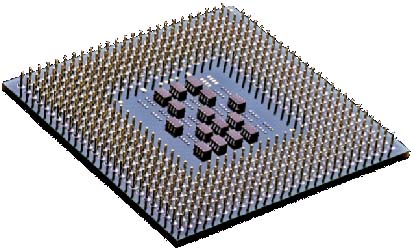
The semiconductor is a really global supply chain with designs in the UK with the support of US design software manufactured by US technicians in Taiwan with the assistance of silicon wafers and specialised gases obtained from Japan. A tremor to the semiconductor supply chain will impact every electronic goods supply chain, from cars, trucks, aeroplanes, industrial machinery, consumer electronics, and military weapons. Semiconductors is a grid of millions/ billions of transistors in a chip squeezed into a square inch of silicon, involving multiple stages.

Fabrication plants (also called fabs or foundries) turn silicon into microchips. There are about 170 commercial foundries globally, but there isn’t one in India. After the Modi government’s semiconductor scheme announcement with an outlay of Rs 76,000 crore (approximately $10 billion) worth of benefits, The Vedanta-Foxconn joint venture has submitted its application to set up an electronic chip manufacturing plant. Two months after India announced its semiconductor scheme, in February 2022, the European Union (EU) declared its semiconductor initiative, organising €43 billion in incentives to strengthen its chip industry. Following the trend, in August 2022, the United States, the global leader in chip manufacturing, announced a subsidy plan amounting to approximately $52 billion. With such a stiff race, it can be fathomable why India’s semiconductor mission needs more aggressive support and push to attract major fabs like TSMC, and Intel.

HIGHLIGHTS

  • Government has proposed Rs 76,000 crore to encourage chip manufacturing
  • The Centre has earmarked Rs 1,200 crore to support semiconductor design startups
  • India’s semiconductor market was $22.7 billion in 2019
  • India’s semiconductor market will touch $64 billion by 2026
  • Centre will invest $2 billion in the Semiconductor Laboratory (SCL) in Mohali, Punjab
  • In 2022, semiconductor sales reached 580.13 billion US dollars worldwide

India also faces challenges in its supply chain due to the supremacy of various countries. The United States leads in microchip manufacturing with companies like Intel, GlobalFoundries, Qualcomm, AMD, and NVIDIA. Taiwan, particularly TSMC, dictates the outsourcing segment. China holds a substantial position in Rare Earth Elements mining, generating 85 per cent of the world’s supply of valuable semiconductor materials. Additionally, Japan and Korea play vital roles in the supply chain. Global players are strengthening their positions to counterbalance China’s increasing influence in the semiconductor sector. The Biden administration has restricted chip sales and manufacturing equipment to hinder China’s advancements.

Currently, India has a little stake in the Semiconductor Supply chain. For the Semiconductor mission, India needs to start from level zero . Many steady efforts will be required to fulfil the purpose. India Semiconductor Mission (ISM) aims to build a vibrant semiconductor and display ecosystem to make India Global Hub for electronics manufacturing and design.

USA and Japan are overall Champs of the Semiconductor Industry, but China though deficient in each aspect of the Semiconductor value chain, holds a major share in the assembly of semiconductors. Therefore, to fully gain the China+1 plan in favour of India, we will have to work on all facets of Semiconductor supply chains. As per SBI research, the following facets may be deliberated to incentivise ISM in India. Raw materials used in the Semiconductor supply chain, like silicon, germanium, Gallium Arsenide, and Indium Phosphide may be imported duty-free. The same has presently 5 per cent, 10 per cent, 10 per cent, and 10 per cent import tariffs, respectively at MFN Rate. China lacks in nearly everything in the semiconductor supply chain except the materials and chemicals. Europe is very important for materials for the Semiconductor supply chain.

CURRENT SCENARIO

More than 90 per cent of global semiconductor companies have their R&D centers in India, and as per the Department of Electronics and Information Technology, more than 2,000 chips are designed every year.

Most of the production occurs in the final assembly units in India. The idea is that focussing on assembly units, that is, ‘last-mile industries’, would eventually help cultivate deep backward linkages, thus inducing industrialisation. This was a hint advocated by economist Albert O Hirschman in his theory of ‘Unbalanced Growth’. The Economic Survey 2019-20 also promotes this by suggesting “assembly in India for the world”, especially in “networked products”, to generate four crore well-paid jobs by 2025 and eight crore jobs by 2030.

During Prime Minister Modi’s recent US visit, several noteworthy announcements were made for the semiconductor sector in India. Micron Technology announced to invest $825 million in a new semiconductor assembly and test facility, aiming to create thousands of job opportunities. Lam Research plans to upskill 60,000 Indian engineers through its virtual fabrication platform, contributing to India’s semiconductor education goals. Applied Materials aims to launch a Semiconductor Centre for Commercialisation and Innovation with a $400 million investment. Additionally, India and the US have signed an MoU to promote collaboration in the semiconductor supply chain and innovation, fostering commercial opportunities and skill development.

Topics: Qualcommintelgeographic specialismSemiconductor Centre for CommercialisationPrime Minister Modi's recent US visitDepartment of Electronics and Information TechnologyUSA and JapanGlobalFoundriesAMDIndia and SemiconductorTaiwanMicron Technology in India
Prasoon Sharma
Prasoon Sharma
A Pentland-Churchill Fellow for Global Public Policy leadership at NYU and UCL, he represented India at India-China Strategic Economic Dialogue [Read more]
Share1TweetSendShareSend
✮ Subscribe Organiser YouTube Channel. ✮
✮ Join Organiser's WhatsApp channel for Nationalist views beyond the news. ✮
Previous News

To promote holistic well-being one needs to practise Ayurveda & yoga together: Dr Tanuja Nesari, Director, AIIA

Next News

Second meeting of Opposition parties in Bengaluru from today; AAP to join after Congress’ backing on Ordinance fight

Related News

President Xi Jinping's loyalty drive and military purges deepen uncertainty within China's PLA leadership

China’s Deepening PLA Crisis: Xi expands purges with loyalty tests to crush dissent among top generals

Chinese President Xi Jinping

From Economic Miracle to Authoritarian Revival: Why Xi is rewriting China’s social contract

In China's strategic map of threats, geography continues to give India a significance that cannot be overlooked

The Rival China Cannot Ignore: Why India matters more than Beijing admits

Representative image

US-Iran-China-Taiwan: The paradox of conflicts

India’s expanding Indo-Pacific footprint takes shape through quiet support to Taiwan’s submarine program and deepening defence alignment with Japan.

India’s quiet Indo-Pacific strategy spans Taiwan subs, Japan defence shift, reshaping China calculus

Venezuela is seen as part of a broader US effort to curb Chinese leverage over key resources, energy routes, and strategic resources worldwide.

Venezuela turmoil reveals wider US strategy to secure Taiwan and counter Chinese use of rare earth pressure tactics

Load More

Latest News

NIA Cracks Down on Cambodia Human Trafficking Racket

Cambodia-linked human trafficking, cyber slavery case: NIA raids six places in Bihar, UP, Delhi

ASI declares Telangana’s Palampet Shiva Temple, Andhra Pradesh’s Gottiprolu site monuments of national importance

Allahabad High Court opens the door to the Tejo Mahalaya inquiry; First step in reclaiming civilisational glory

Tibetan man self-immolates outside the UN, protesting the repressive policies of China & Xi Jinping

Tibetan man self-immolates outside UN: Protests against repressive Chinese policies & demands independence from Beijing

The Constitution remains the supreme legal framework governing equality, affirmative action, and executive power in Bharat

Religious Conversion in Tamil Nadu: Restoring the fundamental

Keralam: Tiruvananthapuram Corporation official attacked while stopping illegal waste dumping in Amayizhanjan Canal

RSS Sarsanghchalak Dr Mohan Bhagwat

Karnataka: Red zone declared in Belagavi as RSS Sarsanghchalak Mohan Bhagwat arrives for eight-day visit

From Left - Vikram Malkani (son of KR Malkani, former Editor, Organiser), former Editor R Balashankar, former Editor Seshadri Chari, RSS Sarkaryavah Dattatreya Hosabale, Daughter of Organiser's first Editor AR Nair - Vijaya Lakshmi, great- granddaughter of , AR Nair, Hon'ble Vice President of Bharat CP Radhakrishnan, Managing Editor, BPDL Arun Kumar Goyal, RSS Delhi Prant Sanghchalak Anil Agarwal, Daughter of Organiser's former Editor LK Advani - Pratibha Advani and Organiser Editor Prafulla Ketkar

80 Years of Organiser: Voice of the nation’s soul

Dr Syama Prasad Mookerjee

Inspiring Generation Z: The ideals of Dr Shyama Prasad Mookerjee

Prime Minister Narendra Modi and Indonesia President Prabowo Subianto

PM Modi addresses Indonesia Parliament; Malacca Strait, critical minerals, cultural diplomacy power strategic ties

Load More
  • Privacy
  • Terms
  • Cookie Policy
  • Refund and Cancellation
  • Delivery and Shipping

© Bharat Prakashan (Delhi) Limited.
Tech-enabled by Ananthapuri Technologies

  • Home
  • Search Organiser
  • Bharat
    • Assam
    • Bihar
    • Chhattisgarh
    • Jharkhand
    • Maharashtra
    • View All States
  • World
    • Asia
    • Africa
    • North America
    • South America
    • Europe
    • Australia
  • Editorial
  • Operation Sindoor
  • Opinion
  • Analysis
  • Defence
  • Culture
  • Sports
  • Business
  • RSS @ 100
  • Entertainment
  • More ..
    • Sci & Tech
    • Vocal4Local
    • Special Report
    • Education
    • Employment
    • Books
    • Interviews
    • Travel
    • Health
    • Politics
    • Law
    • Economy
    • Obituary
  • Subscribe Magazine
  • Read Ecopy
  • Advertise
  • Circulation
  • Careers
  • About Us
  • Contact Us
  • Policies & Terms
    • Privacy Policy
    • Cookie Policy
    • Refund and Cancellation
    • Terms of Use

© Bharat Prakashan (Delhi) Limited.
Tech-enabled by Ananthapuri Technologies