Patients with brain damage might 'dramatically improve' with simple oxygen intervention: Study
July 14, 2026
  • Read Ecopy
  • Circulation
  • Advertise
  • Careers
  • About Us
  • Contact Us
Android AppiPhone AppArattai
Organiser
  • ‌
  • Bharat
    • Assam
    • Bihar
    • Chhattisgarh
    • Jharkhand
    • Maharashtra
    • View All States
  • World
    • Asia
    • Europe
    • North America
    • South America
    • Africa
    • Australia
  • Editorial
  • International
  • Opinion
  • RSS @ 100
  • More
    • Op Sindoor
    • Analysis
    • Sports
    • Defence
    • Politics
    • Business
    • Economy
    • Culture
    • Special Report
    • Sci & Tech
    • Entertainment
    • G20
    • Azadi Ka Amrit Mahotsav
    • Vocal4Local
    • Web Stories
    • Education
    • Employment
    • Books
    • Interviews
    • Travel
    • Law
    • Health
    • Obituary
  • Subscribe
    • Subscribe Print Edition
    • Subscribe Ecopy
    • Read Ecopy
  • ‌
  • Bharat
    • Assam
    • Bihar
    • Chhattisgarh
    • Jharkhand
    • Maharashtra
    • View All States
  • World
    • Asia
    • Europe
    • North America
    • South America
    • Africa
    • Australia
  • Editorial
  • International
  • Opinion
  • RSS @ 100
  • More
    • Op Sindoor
    • Analysis
    • Sports
    • Defence
    • Politics
    • Business
    • Economy
    • Culture
    • Special Report
    • Sci & Tech
    • Entertainment
    • G20
    • Azadi Ka Amrit Mahotsav
    • Vocal4Local
    • Web Stories
    • Education
    • Employment
    • Books
    • Interviews
    • Travel
    • Law
    • Health
    • Obituary
  • Subscribe
    • Subscribe Print Edition
    • Subscribe Ecopy
    • Read Ecopy
Organiser
  • Home
  • Bharat
  • World
  • Operation Sindoor
  • Editorial
  • Analysis
  • Opinion
  • Culture
  • Defence
  • International Edition
  • RSS @ 100
  • Magazine
  • Read Ecopy
Home World

Patients with brain damage might ‘dramatically improve’ with simple oxygen intervention: Study

WEBDESKWEBDESK
Jul 14, 2023, 11:00 pm IST
in World, Health
Follow on Google News
FacebookTwitterWhatsAppTelegramEmail

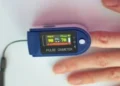
We utilise our motor learning abilities to teach ourselves how to run, pick up a drink, and walk so that we can get around in the world. But advancing years or illness might impair our capacity to develop motor skills. Scientists who are examining the effects of oxygen supplementation on motor learning have discovered a potentially effective method for helping people with neurological trauma regain their former abilities.

“A simple and easy-to-administer treatment with 100 per cent oxygen can drastically improve human motor learning processes,” said Dr Marc Dalecki, now at the German University of Health and Sports in Berlin, senior author of the study in Frontiers in Neuroscience. Our brains need a lot of oxygen. In low-oxygen contexts cognitive function decreases, while in high-oxygen contexts it recovers, and the delivery of 100 per cent oxygen is already used to help preserve as much of the brain as possible in patients with neurological injuries. Motor learning is particularly dependent on oxygen-reliant information processing and memory functions: humans learn by trial and error, so the ability to remember and integrate information from previous trials is critical to efficient and effective motor learning. So could supplementing oxygen while learning a motor task help people learn faster and more effectively, offering hope for neurorehabilitation patients?

“I had this idea in my mind for almost a decade and promised myself to investigate it once I got my own research lab,” said Dalecki, who led the experimental research at the School of Kinesiology at Louisiana State University. “And with Zheng Wang, now Dr Zheng Wang, I had the perfect doctoral student to run it – a keen physiotherapist with a clinical background and stroke patient experience.”

Hand-eye coordination: Dalecki and Wang recruited 40 participants, 20 of whom received 100 per cent oxygen at normobaric pressure and 20 of whom received medical air (21per cent oxygen) through a nasal cannula during the ‘adaptation’ or learning phase of a task. Dalecki and Wang selected a simple visuomotor task which involved drawing lines between different targets on a digital tablet with a stylus: the task was designed to test how quickly the participants were able to integrate information from the eye and hand, a crucial part of motor learning.

After the task had been learned, the alignment of the cursor and the stylus was altered to see how effectively the participants adapted to the inconsistency and then realigned for a final session to see how they adapted to the realignment.

“The oxygen treatment led to substantially faster and about 30% better learning in a typical visuomotor adaptation task,” said Wang, first author of the study and now at the Mayo Clinic in Rochester. “We also demonstrate that the participants were able to consolidate these improvements after the termination of the oxygen treatment.”

Oxygen improved learning by 30 per cent: The scientists found that the participants who had received oxygen learned faster and performed better, improvements which extended into later sessions of the task when oxygen was not administered. The oxygen group moved the pen more smoothly and more accurately, and when the cursor was adjusted in a deliberate attempt to throw them off, they adapted more quickly.

They also made bigger mistakes when the alignment of the stylus was corrected, suggesting they had integrated the previous alignment more thoroughly than the other group.

Dalecki and Wang plan to investigate the long-term effects of this supplementation on learning and test the intervention with other motor learning tasks: it is possible that the relevant brain functions for this task in particular benefit from high ambient oxygen levels, leading to the observed advantages in performance. They also hope to bring oxygen treatment to elderly and injured people, in the hope that it will help them re-learn motor skills.

“Our future plan is to investigate whether this treatment can also improve motor recovery processes following brain trauma,” said Dalecki. “Since it worked in the young healthy brain, we expect that the effects may even be larger in the neurologically impaired, more vulnerable brain.”

(with inputs from ANI)


Topics: brainBrain damageOxygenHand-eye coordinationNeurological trauma
Share28TweetSendShareSend
✮ Subscribe Organiser YouTube Channel. ✮
✮ Join Organiser's WhatsApp channel for Nationalist views beyond the news. ✮
Previous News

PM Modi in France: Here’s the list of gifts PM Modi received from President Macron

Next News

PM Modi bats for strengthening cooperation between India and France in Space-based Maritime Domain

Related News

Representative image

Researchers identify vascular changes in brain linked to Alzheimer’s disease

Representative image

Researchers discovered brain region involved in control of attention

Representative image

Fatty acids play key role in creating memories: Study

Representative Image

Study finds how body respond to high or low oxygen levels

Representative image

Plant-derived nutrients can have impact on gut, brain: Study

Representative image

How lack of sleep can harm brain, finds study

Load More

Latest News

Bhojshala Case: Supreme Court Declines Muslim Plea, No Namaz Allowed on Premises

Bhojshala: SC refuses to stay Madhya Pradesh HC order; No namaz allowed within premises, Bars structural changes by ASI

Tamil Nadu: Supreme Court stays Madras HC order directing state govt to ensure no cow slaughter

Pahalgam Terror Attack: NIA Court Issues Non-Bailable Warrant Against LeT Chief Hafiz Saeed

Pahalgam Terror attack: NIA court issues non-bailable warrant against LeT chief Hafiz Saeed, who resides in Pakistan

Akhil Bharatiya Karyakarini Sadasya Bhaiyyaji Joshi addressing the gathering

Pride of being a Hindu represents a life based on peace, truth and justice: Bhaiyyaji Joshi

India’s Minerva Academy wins Helsinki Cup in Finland

India’s Minerva Academy scripts history, beats defending champions HJK to win Helsinki Cup in Finland

Hindu leader Sagar Beg (Left), Pakistan-based gangster Shahzad Bhatti (Right)

Maharashtra: Pakistan based terror gangster syndicate publicly marks Hindu leader Sagar Beg for assassination

Indian Women Cricket Team beat England in test match at Lords

India scripts history at Lord’s, crushes England by 270 runs in first Women’s Test

PIB clarifies PM Modi said "wheat producer," not "beef producer"

Fact Check: Viral clip falsely claims PM Modi called India Beef producer; in original speech he said wheat producer

Tamil Nadu: Hindu Munnani seeks probe by HC judge-led panel in 3,084-acre Karur temple land row

(Source: PIB)

India commissions indigenous warships, strengthens multi-layered maritime defence under Aatmanirbhar Bharat

Load More
  • Privacy
  • Terms
  • Cookie Policy
  • Refund and Cancellation
  • Delivery and Shipping

© Bharat Prakashan (Delhi) Limited.
Tech-enabled by Ananthapuri Technologies

  • Home
  • Search Organiser
  • Bharat
    • Assam
    • Bihar
    • Chhattisgarh
    • Jharkhand
    • Maharashtra
    • View All States
  • World
    • Asia
    • Africa
    • North America
    • South America
    • Europe
    • Australia
  • Editorial
  • Operation Sindoor
  • Opinion
  • Analysis
  • Defence
  • Culture
  • Sports
  • Business
  • RSS @ 100
  • Entertainment
  • More ..
    • Sci & Tech
    • Vocal4Local
    • Special Report
    • Education
    • Employment
    • Books
    • Interviews
    • Travel
    • Health
    • Politics
    • Law
    • Economy
    • Obituary
  • Subscribe Magazine
  • Read Ecopy
  • Advertise
  • Circulation
  • Careers
  • About Us
  • Contact Us
  • Policies & Terms
    • Privacy Policy
    • Cookie Policy
    • Refund and Cancellation
    • Terms of Use

© Bharat Prakashan (Delhi) Limited.
Tech-enabled by Ananthapuri Technologies