Study finds new design of computer memory that reduce energy consumption
December 6, 2025
  • Read Ecopy
  • Circulation
  • Advertise
  • Careers
  • About Us
  • Contact Us
Android AppiPhone AppArattai
Organiser
  • ‌
  • Bharat
    • Assam
    • Bihar
    • Chhattisgarh
    • Jharkhand
    • Maharashtra
    • View All States
  • World
    • Asia
    • Europe
    • North America
    • South America
    • Africa
    • Australia
  • Editorial
  • International
  • Opinion
  • RSS @ 100
  • More
    • Op Sindoor
    • Analysis
    • Sports
    • Defence
    • Politics
    • Business
    • Economy
    • Culture
    • Special Report
    • Sci & Tech
    • Entertainment
    • G20
    • Azadi Ka Amrit Mahotsav
    • Vocal4Local
    • Web Stories
    • Education
    • Employment
    • Books
    • Interviews
    • Travel
    • Law
    • Health
    • Obituary
  • Subscribe
    • Subscribe Print Edition
    • Subscribe Ecopy
    • Read Ecopy
  • ‌
  • Bharat
    • Assam
    • Bihar
    • Chhattisgarh
    • Jharkhand
    • Maharashtra
    • View All States
  • World
    • Asia
    • Europe
    • North America
    • South America
    • Africa
    • Australia
  • Editorial
  • International
  • Opinion
  • RSS @ 100
  • More
    • Op Sindoor
    • Analysis
    • Sports
    • Defence
    • Politics
    • Business
    • Economy
    • Culture
    • Special Report
    • Sci & Tech
    • Entertainment
    • G20
    • Azadi Ka Amrit Mahotsav
    • Vocal4Local
    • Web Stories
    • Education
    • Employment
    • Books
    • Interviews
    • Travel
    • Law
    • Health
    • Obituary
  • Subscribe
    • Subscribe Print Edition
    • Subscribe Ecopy
    • Read Ecopy
Organiser
  • Home
  • Bharat
  • World
  • Operation Sindoor
  • Editorial
  • Analysis
  • Opinion
  • Culture
  • Defence
  • International Edition
  • RSS @ 100
  • Magazine
  • Read Ecopy
Home World

Study finds new design of computer memory that reduce energy consumption

The University of Cambridge-led team created a device that processes data in the same way that synapses in the human brain do

WEBDESKWEBDESK
Jun 27, 2023, 04:30 pm IST
in World, Sci & Tech
Follow on Google News
FacebookTwitterWhatsAppTelegramEmail

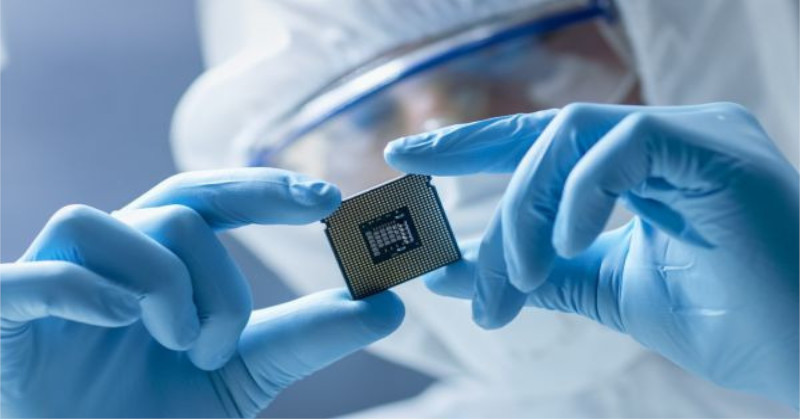
Researchers created a new design for computer memory that could improve performance while also lowering the energy demands of internet and communications technologies, which are expected to consume nearly a third of global electricity in the next ten years.

The study was published in the journal, ‘Science Advances.’

The University of Cambridge-led team created a device that processes data in the same way that synapses in the human brain do. The devices are made of hafnium oxide, a material that is already used in the semiconductor industry, and tiny self-assembled barriers that can be raised and lowered to allow electrons to pass through.

This method of altering the electrical resistance in computer memory devices and allowing information processing and memory to coexist could lead to the development of computer memory devices with significantly higher density, higher performance, and lower energy consumption. The findings were published in the journal Science Advances.

Our data-hungry world has led to a ballooning of energy demands, making it ever more difficult to reduce carbon emissions. Within the next few years, artificial intelligence, internet usage, algorithms and other data-driven technologies are expected to consume more than 30 per cent of global electricity.

“To a large extent, this explosion in energy demands is due to shortcomings of current computer memory technologies,” said first author Dr Markus Hellenbrand, from Cambridge’s Department of Materials Science and Metallurgy. “In conventional computing, there’s memory on one side and processing on the other, and data is shuffled back between the two, which takes both energy and time.”

One potential solution to the problem of inefficient computer memory is a new type of technology known as resistive switching memory. Conventional memory devices are capable of two states: one or zero. A functioning resistive switching memory device, however, would be capable of a continuous range of states – computer memory devices based on this principle would be capable of far greater density and speed.

“A typical USB stick based on the continuous range would be able to hold between ten and 100 times more information, for example,” said Hellenbrand.

Hellenbrand and his colleagues developed a prototype device based on hafnium oxide, an insulating material that is already used in the semiconductor industry. The issue with using this material for resistive switching memory applications is known as the uniformity problem. At the atomic level, hafnium oxide has no structure, with the hafnium and oxygen atoms randomly mixed, making it challenging to use for memory applications.

However, the researchers found that by adding barium to thin films of hafnium oxide, some unusual structures started to form, perpendicular to the hafnium oxide plane, in the composite material.

These vertical barium-rich ‘bridges’ are highly structured, and allow electrons to pass through, while the surrounding hafnium oxide remains unstructured. At the point where these bridges meet the device contacts, an energy barrier was created, which electrons can cross. The researchers were able to control the height of this barrier, which in turn changes the electrical resistance of the composite material.

“This allows multiple states to exist in the material, unlike conventional memory which has only two states,” said Hellenbrand.

Unlike other composite materials, which require expensive high-temperature manufacturing methods, these hafnium oxide composites self-assemble at low temperatures. The composite material showed high levels of performance and uniformity, making them highly promising for next-generation memory applications.

A patent on the technology has been filed by Cambridge Enterprise, the University’s commercialisation arm.

“What’s really exciting about these materials is they can work like a synapse in the brain: they can store and process information in the same place, like our brains can, making them highly promising for the rapidly growing AI and machine learning fields,” said Hellenbrand.

(with inputs from ANI)

Topics: Human brainscience and techTechnologyUniversity of Cambridgeenergy consumptionreduce energy consumption
ShareTweetSendShareSend
✮ Subscribe Organiser YouTube Channel. ✮
✮ Join Organiser's WhatsApp channel for Nationalist views beyond the news. ✮
Previous News

Bihar: Anti-Terrorist Squad forms SIT to investigate Bhagalpur blast case

Next News

Uttar Pradesh: Sikander Ahmed raped and bludgeoned 19-year-old woman to death; administration bulldozed his property 

Related News

Computers, the internet, mobile phones and related devices have reshaped how we work, learn and live

Digital technology — Boon or Bane?

RSS Sarsanghchalak Dr Mohan Bhagwat

100 Years of Sangh Yatra: Technology should not dominate us, and education must build character — Dr Mohan Bhagwat

Artificial Intelligence(AI) is a source of both aspirations and anxieties

Uncertainties of Artificial Intelligence

Microsoft leaves Pakistan

Microsoft abandons Pakistan after 25 years: Technology giant packs up from a failing state

Maha Kumbh: Combination of technology and spirituality

Representative image

Study observes possible foundations of human intelligence

Load More

Comments

The comments posted here/below/in the given space are not on behalf of Organiser. The person posting the comment will be in sole ownership of its responsibility. According to the central government's IT rules, obscene or offensive statement made against a person, religion, community or nation is a punishable offense, and legal action would be taken against people who indulge in such activities.

Latest News

PM Modi presents Putin with Bhagavad Gita, chess set, and silver horse

Cultural ties strengthened: PM Modi presents Putin with Bhagavad Gita, chess set, and silver horse

Image for representational purpose only, Courtesy Vocal Media

Bihar to get ‘Special Economic Zones’ in Buxar and West Champaran

Thirupparankundram Karthigai Deepam utsav

Andhra Pradesh: AP Dy CM Pawan Kalyan reacts to Thirupparankundram row, flags concern over religious rights of Hindus

23rd India-Russia Annual Summit

India-Russia Summit heralds new chapter in time-tested ties: Inks MoUs in economic, defence, tourism & education

DGCA orders probe into IndiGo flight disruptions; Committee to report in 15 days

BJYM leader Shyamraj with Janaki

Kerala: Widow of BJP worker murdered in 1995 steps into electoral battle after three decades at Valancherry

Russian Sber bank has unveiled access to its retail investors to the Indian stock market by etching its mutual fund to Nifty50

Scripting economic bonhomie: Russian investors gain access to Indian stocks, Sber unveils Nifty50 pegged mutual funds

Petitioner S Vignesh Shishir speaking to the reporters about the Rahul Gandhi UK citizenship case outside the Raebareli court

Rahul Gandhi UK Citizenship Case: Congress supporters create ruckus in court; Foreign visit details shared with judge

(L) Kerala High Court (R) Bouncers in Trippoonithura temple

Kerala: HC slams CPM-controlled Kochi Devaswom Board for deploying bouncers for crowd management during festival

Fact Check: Rahul Gandhi false claim about govt blocking his meet with Russian President Putin exposed; MEA clears air

Load More
  • Privacy
  • Terms
  • Cookie Policy
  • Refund and Cancellation
  • Delivery and Shipping

© Bharat Prakashan (Delhi) Limited.
Tech-enabled by Ananthapuri Technologies

  • Home
  • Search Organiser
  • Bharat
    • Assam
    • Bihar
    • Chhattisgarh
    • Jharkhand
    • Maharashtra
    • View All States
  • World
    • Asia
    • Africa
    • North America
    • South America
    • Europe
    • Australia
  • Editorial
  • Operation Sindoor
  • Opinion
  • Analysis
  • Defence
  • Culture
  • Sports
  • Business
  • RSS @ 100
  • Entertainment
  • More ..
    • Sci & Tech
    • Vocal4Local
    • Special Report
    • Education
    • Employment
    • Books
    • Interviews
    • Travel
    • Health
    • Politics
    • Law
    • Economy
    • Obituary
  • Subscribe Magazine
  • Read Ecopy
  • Advertise
  • Circulation
  • Careers
  • About Us
  • Contact Us
  • Policies & Terms
    • Privacy Policy
    • Cookie Policy
    • Refund and Cancellation
    • Terms of Use

© Bharat Prakashan (Delhi) Limited.
Tech-enabled by Ananthapuri Technologies