Study discovers how new blood serum test detect neurodegenerative disorder
October 3, 2026
  • Read Ecopy
  • Circulation
  • Advertise
  • Careers
  • About Us
  • Contact Us
Android AppiPhone AppArattai
Organiser
  • ‌
  • Bharat
    • Assam
    • Bihar
    • Chhattisgarh
    • Jharkhand
    • Maharashtra
    • View All States
  • World
    • Asia
    • Europe
    • North America
    • South America
    • Africa
    • Australia
  • Editorial
  • International
  • Opinion
  • RSS @ 100
  • More
    • World Hindu Congress 2026
    • Op Sindoor
    • Analysis
    • Sports
    • Defence
    • Politics
    • Business
    • Economy
    • Culture
    • Special Report
    • Sci & Tech
    • Entertainment
    • G20
    • Azadi Ka Amrit Mahotsav
    • Vocal4Local
    • Web Stories
    • Education
    • Employment
    • Books
    • Interviews
    • Travel
    • Law
    • Health
    • Obituary
  • Subscribe
    • Subscribe Print Edition
    • Subscribe Ecopy
    • Read Ecopy
  • ‌
  • Bharat
    • Assam
    • Bihar
    • Chhattisgarh
    • Jharkhand
    • Maharashtra
    • View All States
  • World
    • Asia
    • Europe
    • North America
    • South America
    • Africa
    • Australia
  • Editorial
  • International
  • Opinion
  • RSS @ 100
  • More
    • World Hindu Congress 2026
    • Op Sindoor
    • Analysis
    • Sports
    • Defence
    • Politics
    • Business
    • Economy
    • Culture
    • Special Report
    • Sci & Tech
    • Entertainment
    • G20
    • Azadi Ka Amrit Mahotsav
    • Vocal4Local
    • Web Stories
    • Education
    • Employment
    • Books
    • Interviews
    • Travel
    • Law
    • Health
    • Obituary
  • Subscribe
    • Subscribe Print Edition
    • Subscribe Ecopy
    • Read Ecopy
Organiser
  • Home
  • Bharat
  • World
  • Operation Sindoor
  • Editorial
  • Analysis
  • Opinion
  • Culture
  • Defence
  • International Edition
  • RSS @ 100
  • Magazine
  • Read Ecopy
Home World

Study discovers how new blood serum test detect neurodegenerative disorder

Neurodegenerative disorders known as synucleinopathies are brought on by an abnormal buildup of the protein a-synuclein found in the brain and neurons. By producing "seeds," improperly folded a-synuclein attracts additional a-synuclein proteins to form larger clumps

WEBDESKWEBDESK
May 30, 2023, 11:00 pm IST
inWorld, Health
Follow on Google News
Facebook
Twitter
WhatsAppTelegramEmail

Synucleinopathies are neurodegenerative disorders caused by an aberrant accumulation of a-synuclein, a protein present in the brain and neurons. Incorrect a-synuclein folding results in the production of’seeds,’ which attract more a-synuclein proteins to build larger clumps. Although a-synuclein seeds have been discovered in numerous tissues and blood of patients suffering from synucleinopathies, their value as a biomarker is unclear.

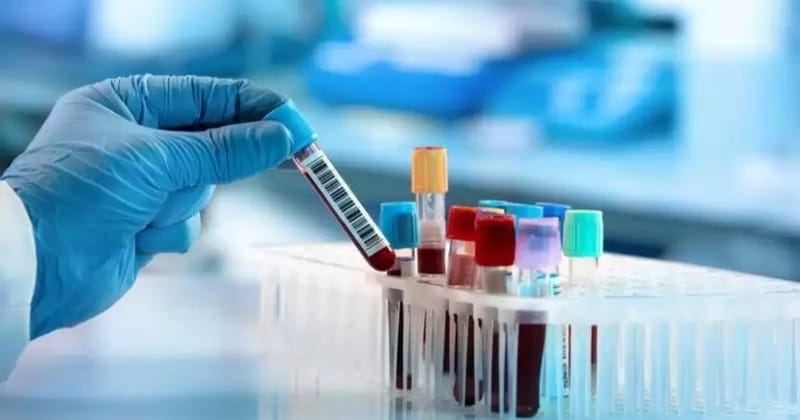
Recently, in a study published in Nature Medicine, Associate Professor Ayami Okuzumi along with Senior Associate Professor Taku Hatano, both from the Juntendo University School of Medicine, Senior Assistant Professor Gen Matsumoto at the Nagasaki University School of Medicine, and Professor Nobutaka Hattori from Juntendo University Faculty of Medicine /RIKEN Center for Brain Science, present a novel assay that can efficiently detect a-synuclein seeds from a patient’s serum. In this assay, named immunoprecipitation-based real-time quaking-induced conversion (IP/RT-QuIC), the a-synuclein seeds are isolated from the patient’s serum through immunoprecipitation (protein separation using an antibody binding only to the target protein) followed by rapid amplification by real-time quaking-induced conversion (amplification induced by vigorous shaking). This method is highly sensitive, as it can detect serum a-synuclein seed concentrations as small as 1000pg/ml. This comes as great news since most existing diagnostic methods require cerebrospinal fluid for synuclein detection. The current study was made available/published on May 30, 2023.

Sharing the objective of their study, Professor Hattori and his team explains, “In this study, we validated the usefulness of our novel assay system, IP/RT-QuIC, as a diagnostic marker of synucleinopathies. We propose that the fibril morphology of serum a-synuclein seeds and aggregates derived by IP/RT-QuIC can discriminate between Parkinson’s disease (PD), dementia with Lewy bodies (DLB), and multiple system atrophy (MSA).”

The research team demonstrated that IP/RT-QuIC detected a-synuclein seeds efficiently in patients with neurodegenerative diseases and could distinguish them from people without degenerative diseases (controls). Next, they studied the structural properties of the amplified seeds using transmission electron microscopy (TEM). They observed that the synuclein seed structure varied with the type of synucleinopathy. PD and DLB seeds showed paired filaments whereas MSA seeds had two distinct structures – twisted and straight filaments. This finding was confirmed that IP/RT-QuIC coupled with TEM can differentiate between synucleinopathies based on disease specific seed structure.

Further, when the researchers transduced amplified seeds into the HEK293T cell line stably expressing GFP-fused human a-synuclein with p.A53T mutation (in vitro) and injected seeds into mouse brains (in vivo), the seeds retained their aggregate forming capacity and diseases-specific seed structure. These aggregates displayed different morphologies depending on the disease type. Thus, specific synucleinopathies can be diagnosed by IP/RT-QuIC from the structural differences of the a-synuclein seeds and their aggregates.

This technique could help provide a quick and efficient diagnosis to patients. Professor Hattori and his team explains, “At present, a neurologist’s consultation is necessary to diagnose synucleinopathies. However, using IP/RTQuIC, a general internist can make the diagnosis. Therefore, more patients with synucleinopathies may be diagnosed with precision and could receive appropriate treatment at an earlier stage.”

The authors conclude with their future vision, “Our new IP/RT-QuIC assay may have many future applications as a biomarker for precise diagnosis and monitoring of treatment of neurodegenerative diseases in clinical trials. This simple diagnostic method will enable establishment of personalised therapy options for synucleinopathies.”

(with inputs from ANI)


Topics: proteinBlood serum testNeurodegenerative disorderSynucleinopathiesSeruma-synuclein seeds
Share
Tweet
SendShareSend
✮ Subscribe Organiser YouTube Channel. ✮
✮ Join Organiser's WhatsApp channel for Nationalist views beyond the news. ✮
Previous News

How Artificial Intelligence could be used to improve lives of poor

Next News

Remembering Devi Ahilyabai Holkar on her birth anniversary

Related News

Representative image

Researchers discover how body’s natural killer cells protects from cancer

Representative image

Study finds new gene in progression of Huntington’s disease

Representative image

Nanotechnology breakthrough could transform Alzheimer’s care

Representative image

Consuming too much protein is risky for arteries, and this amino acid is to blame: Study

Representative image

How lack of sleep can harm brain, finds study

Representative image

Most milk alternatives lack nutritional value of cow’s milk: Study

Load More

Latest News

PM Modi's Mann ki Baat completes 12 years

12 years of PM Narendra Modi’s radio program ‘Mann Ki Baat’: Serves as a public platform inspiring millions of Indians

Tamil Nadu: DMK faces legal heat as leaders face arrests, ED probe ahead of October 6 bypolls

Flydubai Attack: UAE condemns ‘Terrorist Act’; Israel thanks Captain Smit, Pro-Palestine leaflets found with Oman pilot

Tamil Nadu: ED arrests Unique Exports proprietor, associate over Rs 1,417 crore Ponzi scheme targeting 35,759 investors

Tamil Nadu: Evangelists target rural workers during VB-G RAM G work, Hindu groups seek probe

A view of historical Boat Club public gathering in New Delhi to liberate Sri Ram Janmbhoomi on April 4, 1991

Centenary year of Ashok Ji Singhal: Carrier of the civilisational legacy

Sabarimala Halal jaggery row: Kerala High Court directs Devaswom Board to ensure religious customs are followed

School students escalate violent protest in France

France School Protests Turn Violent: Gen Z attack teachers, damage buildings; Is it a hijack of students unrest?

Parveen Hooda wins gold medal in boxing in Asian Games 2026

Asian Games 2026: Parveen Hooda’s golden return; From suspension and family hardship to Asian Games glory

Let us pledge to realise the dream of Ashok ji Singhal: PM Narendra Modi

Load More
  • Privacy
  • Terms
  • Cookie Policy
  • Refund and Cancellation
  • Delivery and Shipping

© Bharat Prakashan (Delhi) Limited.
Tech-enabled by Ananthapuri Technologies

  • Home
  • Search Organiser
  • Bharat
    • Assam
    • Bihar
    • Chhattisgarh
    • Jharkhand
    • Maharashtra
    • View All States
  • World
    • Asia
    • Africa
    • North America
    • South America
    • Europe
    • Australia
  • Editorial
  • Operation Sindoor
  • Opinion
  • Analysis
  • Defence
  • Culture
  • Sports
  • Business
  • RSS @ 100
  • Entertainment
  • More ..
    • Sci & Tech
    • Vocal4Local
    • Special Report
    • Education
    • Employment
    • Books
    • Interviews
    • Travel
    • Health
    • Politics
    • Law
    • Economy
    • Obituary
  • Subscribe Magazine
  • Read Ecopy
  • Advertise
  • Circulation
  • Careers
  • About Us
  • Contact Us
  • Policies & Terms
    • Privacy Policy
    • Cookie Policy
    • Refund and Cancellation
    • Terms of Use

© Bharat Prakashan (Delhi) Limited.
Tech-enabled by Ananthapuri Technologies