Mahashivaratri: Science behind Shiva Lingam
December 5, 2025
  • Read Ecopy
  • Circulation
  • Advertise
  • Careers
  • About Us
  • Contact Us
Android AppiPhone AppArattai
Organiser
  • ‌
  • Bharat
    • Assam
    • Bihar
    • Chhattisgarh
    • Jharkhand
    • Maharashtra
    • View All States
  • World
    • Asia
    • Europe
    • North America
    • South America
    • Africa
    • Australia
  • Editorial
  • International
  • Opinion
  • RSS @ 100
  • More
    • Op Sindoor
    • Analysis
    • Sports
    • Defence
    • Politics
    • Business
    • Economy
    • Culture
    • Special Report
    • Sci & Tech
    • Entertainment
    • G20
    • Azadi Ka Amrit Mahotsav
    • Vocal4Local
    • Web Stories
    • Education
    • Employment
    • Books
    • Interviews
    • Travel
    • Law
    • Health
    • Obituary
  • Subscribe
    • Subscribe Print Edition
    • Subscribe Ecopy
    • Read Ecopy
  • ‌
  • Bharat
    • Assam
    • Bihar
    • Chhattisgarh
    • Jharkhand
    • Maharashtra
    • View All States
  • World
    • Asia
    • Europe
    • North America
    • South America
    • Africa
    • Australia
  • Editorial
  • International
  • Opinion
  • RSS @ 100
  • More
    • Op Sindoor
    • Analysis
    • Sports
    • Defence
    • Politics
    • Business
    • Economy
    • Culture
    • Special Report
    • Sci & Tech
    • Entertainment
    • G20
    • Azadi Ka Amrit Mahotsav
    • Vocal4Local
    • Web Stories
    • Education
    • Employment
    • Books
    • Interviews
    • Travel
    • Law
    • Health
    • Obituary
  • Subscribe
    • Subscribe Print Edition
    • Subscribe Ecopy
    • Read Ecopy
Organiser
  • Home
  • Bharat
  • World
  • Operation Sindoor
  • Editorial
  • Analysis
  • Opinion
  • Culture
  • Defence
  • International Edition
  • RSS @ 100
  • Magazine
  • Read Ecopy
Home Bharat

Mahashivaratri: Science behind Shiva Lingam

There are attempts to misinterpret the meaning and symbolism of Shivalinga. The 129th shukta in the 10th mandal of Rigveda’s Naradiya Shukta clearly states that ‘Shivalinga is related to the creation of the universe’. It is this cosmic energy that Hindus started worshipping through the symbol of a stambha or pillar. Thus the tradition of worshipping Shiva as a large, rounded pillar began. The Shivalingas found in ancient temples are huge and grand

Prashant PolePrashant Pole
Feb 17, 2023, 09:00 pm IST
in Bharat, Opinion
Follow on Google News
FacebookTwitterWhatsAppTelegramEmail

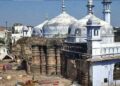
Last year in May when a survey was conducted through the precincts of Gyanvapi mosque, a Shivalinga was found. While the entire country rejoiced at the discovery, there were a few who made fun of it and passed offensive comments on the Shivalinga. Some even dismissed the worshippers of the divine Shivalinga as barbaric and regressive. Danish Qureshi, a spokesperson of Asaduddin Owasis’ AIMIM posted a disgusting remark that led to his arrest too.

In the midst of all these cacophonous controversies, I kept wondering how come the progressive Hindu society took to worshipping linga of a deity. Since time immemorial, our faith is mounded along scientific assumptions; its every little aspect is dictated by causality. It is scientific and logical. Why linga worship?

It is also suggested that the platform on which Shivalinga is mounted symbolises Devi Parvati’s yoni. And that the structure enacts their union. For me, this suggestion too was quite unpalatable. It begs attention that Hindu dharma looks at things through symbols. Bhagwan Shiva is seen as a symbol of cosmic annihilation. And Shiva-Shakti union symbolises the very process of creation. Under the circumstances, a literal enactment of union appears unlikely; the aforementioned relationship between Shivalinga and the platform is thus wrong.

The question remains: what then is a Shivalinga?

As I explored the subject, I stumbled upon Swami Vivekanand’s speech that he delivered in August 1900 during the ‘Congress of Religion’ in Paris. German scholar Gustav Opert, while delivering his opening remarks at the Congress, had described Shivalinga and Shaligram as representations of genitals. During his address, Swamiji launched a vociferous affront on Opert’s observations, dismissing the latter’s hypothesis as idiotic.

To establish the true origin of the Shivalinga, Swamiji invoked a shloka from the Atharva Veda that speaks of the Yupastambha. This shloka refers to a timeless cosmic stambha or pillar. This stambha, which is a manifestation of Bhrahma, becomes one with Shiva. It, therefore, becomes worthy of our worship.

The 35th shloka in the 7th sukta of Atharveda’s 10th kanda says
स्कम्भो दाधार द्यावापृथिवी उभे इमे स्कम्भो दाधारोर्वन्तरिक्षम्।
स्कम्भो दाधार प्रदिश: षडुर्वी: स्कम्भ इदं विश्वं भुवनमा विवेश।।

It means that it is the ‘stambha that holds the swarga, earth and the earth’s atmosphere. It supports all the six directions and it stretches across the universe. This suggests that the form in which we worship Shiva symbolises the universe. It represents boundless energy, boundless power. This cosmic energy can create life and erase it too, if it so wishes. The 129th shukta in the 10th mandal of Rigveda’s Naradiya Shukta clearly states that ‘Shivalinga is related to the creation of the universe.’ It is this cosmic energy that Hindus started worshipping through the symbol of a stambha or pillar, and that subsequently came to be known as the Shivalinga. It must also be clarified that the word linga or lingam is not linked to human anatomy. In Sanskrit, the word linga connotes a mark.

To establish the true meaning of the Shivalinga, Swami Vivekanand invoked a shloka from the Atharva Veda that speaks of the Yupastambha. This shloka refers to a timeless cosmic Stambha or pillar, that which holds the swarga, earth and the earth’s atmosphere. It supports all the six directions and it stretches across the universe. This suggests that the form in which we worship Shiva symbolises the universe. It represents boundless energy, boundless power

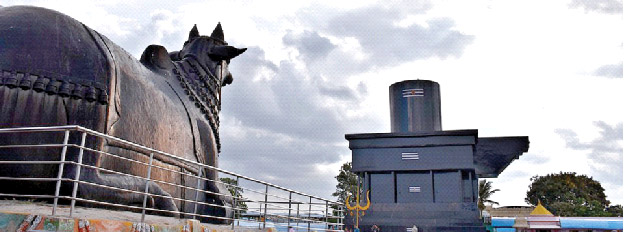
Thus the tradition of worshipping Shiva as a large, rounded pillar began. The Shivalingas found in ancient temple are huge and grand. For example, in Andhra Pradesh’s Dakshramam temple, located at a distance of 28 km from Kakinada, the Shivalinga stands tall at eight-and-a-half feet. Archeologists have found stone-inscriptions suggesting that the Dakshramam temple was renovated in the 9th Century. Clearly, this temple is of a much ancient antiquity. Two centuries later, Bhopal’s monarch Raja Bhoj built a Shiva temple in Bhojpur. The Shivalinga installed in this temple is 18 feet tall, with a 7½-feet wide diameter. Another massive Shivalinga, dating back to 5th-6th CE, is found in Gadhnora, Chhattisgarh. Such massive Shivalingas are found all over India.

Therefore, it should not surprise us that a Shivalinga has been found at Kashi’s Gyanvapi. Prior to the arrival of Muslim invaders, throughout the Indian subcontinent — from Kandahar and Peshawar to Philippines and Indonesia — Lord Shiva was worshipped in the form of a towering Shivalinga. Last year, 1000 to 1200 year old huge Shivalingas were discovered in Vietnam and Indonesia. This reaffirms the tradition of Shiva worship in India and beyond.
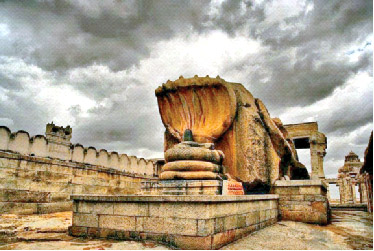
Black stone Shiva Linga in the coils of a seven hooded serpent. Lepakshi, Andhra Pradesh

Things changed after the Muslim invasion. It was no longer possible to worship and install huge Shivlingas in temples. History tells us that whenever Muslims invaded a settlement, the priests hid the sacred statues installed in temples, lest they would be vandalised or desecrated. However, given their size, it wasn’t possible to hide the Shivlingas. That is why after the 10th-11th Century, people started installing smaller Shivlingas in their homes. A similar practice can be seen in the temples too; the temples too took to installing smaller Shivlingas. Because of their reduced size, and because the original meaning of the Sanskrit word linga was gradually lost on the people, the figure that once represented cosmic energy acquired a distorted meaning and symbolism.

While we may understand the literal meaning of the Sanskrit word Shivlinga and even appreciate, to some extent, its symbolic significance, the abiding mysteries of Shivlingas, Jyotirlingas and Shiva temples remain inscrutable. Why do the modern day atomic reactors resemble the shape of a Shivlinga? What explains the absolute straight line between (South Pole) Antarctica and Somnath Shivlinga, with no land in between? All these questions remain unanswered.

In the form of Shivlinga, a profound symbol of Bhrahma and bhrahmand was handed down to us by our ancestors. It’s our sheer misfortune that we mistook it for male genitalia. Almost 125 years ago, Swami Vivekanand had debunked this pathetic misinterpretation and explained the meaning of the Stambha. However, we idiots refused the admit the light of wisdom. Hereafter, whenever you step into a Shiva temple, do remember that you are bowing to the entire cosmos, to Bhrahma, the infinite energy. Bear it in mind that you are worshiping as the adherent of the Sanatan Hindu faith that is scientific in its conceptualisation. Do not forget you are the proponent of a scientific, timeless and Sanatan culture.

Topics: Muslim invasionShivlingasBhrahma and bhrahmandSanatan HinduGyanvapi MosqueLord ShivaMuslim invadersMahashivaratriworshipping Shiva
Share1TweetSendShareSend
✮ Subscribe Organiser YouTube Channel. ✮
✮ Join Organiser's WhatsApp channel for Nationalist views beyond the news. ✮
Previous News

Charred bodies of cow smugglers found; VHP demands apology from Gehlot Govt for accusing Bajrang Dal for the incident

Next News

Pakistan should dismantle terrorist bases including in illegally occupied Kashmir: UK MP Blackman

Related News

RSS: A vanguard battalion for National Unity and solidarity — Sarkaryavah Dattatreya Hosabale

Statue of Bhagwan Shiva at CERN

Maha Shivratri 2025: Why the world’s most advanced particle physics lab CERN displays a statue of Bhagwan Shiva

CM Mohan Majhi virtually launched a special bus service to Mahakumbh in Prayagraj

Odisha: Four modern buses depart for Mahakumbh mela, flagged Off by Chief Minister Mohan Majhi

Time for Muslims to hand over Kashi & Mathura sites to Hindus

Assam Chief Minister Himanta Biswa Sarma

“Give 400 seats, we will raise temples at Krishna Janmabhoomi, Gyanvapi complex,” says Assam CM Himanta Biswa Sarma

Gyanvapi

Gyanvapi-Kashi Vishvanath temple: Application in SC for cleaning of ‘wazukhana’

Load More

Comments

The comments posted here/below/in the given space are not on behalf of Organiser. The person posting the comment will be in sole ownership of its responsibility. According to the central government's IT rules, obscene or offensive statement made against a person, religion, community or nation is a punishable offense, and legal action would be taken against people who indulge in such activities.

Latest News

BJYM leader Shyamraj with Janaki

Kerala: Widow of BJP worker murdered in 1995 steps into electoral battle after three decades at Valancherry

Russian Sber bank has unveiled access to its retail investors to the Indian stock market by etching its mutual fund to Nifty50

Scripting economic bonhomie: Russian investors gain access to Indian stocks, Sber unveils Nifty50 pegged mutual funds

Petitioner S Vignesh Shishir speaking to the reporters about the Rahul Gandhi UK citizenship case outside the Raebareli court

Rahul Gandhi UK Citizenship Case: Congress supporters create ruckus in court; Foreign visit details shared with judge

(L) Kerala High Court (R) Bouncers in Trippoonithura temple

Kerala: HC slams CPM-controlled Kochi Devaswom Board for deploying bouncers for crowd management during festival

Fact Check: Rahul Gandhi false claim about govt blocking his meet with Russian President Putin exposed; MEA clears air

Union Minister for Road Transport and Highways Nitin Gadkari (Right)

India set for highway overhaul as Union Minister Nitin Gadkari unveils nationwide shift to MLFF electronic tolling

RSS Akhil Bharatiya Prachar Pramukh Shri Sunil Ambekar

When Narrative Wars result in bloodshed, countering them becomes imperative: Sunil Ambekar

Ministry of Civil Aviation mandates emergency action: IndiGo ordered to stabilise flight operations by midnight

Chhattisgarh CM Vishnu Deo Sai at Panchjanya Conclave, Nava Raipur, Image Courtesy - Chhattisgarh govt

Panchjanya Conclave: Chhattisgarh CM Sai shares views on development projects in Maoist hotbed, women empowerment

Union Finance Minister Nirmala Sitharaman

‘TMC is holding Bengal back’: Sitharaman slams Mamata govt over industrial & healthcare setbacks

Load More
  • Privacy
  • Terms
  • Cookie Policy
  • Refund and Cancellation
  • Delivery and Shipping

© Bharat Prakashan (Delhi) Limited.
Tech-enabled by Ananthapuri Technologies

  • Home
  • Search Organiser
  • Bharat
    • Assam
    • Bihar
    • Chhattisgarh
    • Jharkhand
    • Maharashtra
    • View All States
  • World
    • Asia
    • Africa
    • North America
    • South America
    • Europe
    • Australia
  • Editorial
  • Operation Sindoor
  • Opinion
  • Analysis
  • Defence
  • Culture
  • Sports
  • Business
  • RSS @ 100
  • Entertainment
  • More ..
    • Sci & Tech
    • Vocal4Local
    • Special Report
    • Education
    • Employment
    • Books
    • Interviews
    • Travel
    • Health
    • Politics
    • Law
    • Economy
    • Obituary
  • Subscribe Magazine
  • Read Ecopy
  • Advertise
  • Circulation
  • Careers
  • About Us
  • Contact Us
  • Policies & Terms
    • Privacy Policy
    • Cookie Policy
    • Refund and Cancellation
    • Terms of Use

© Bharat Prakashan (Delhi) Limited.
Tech-enabled by Ananthapuri Technologies