





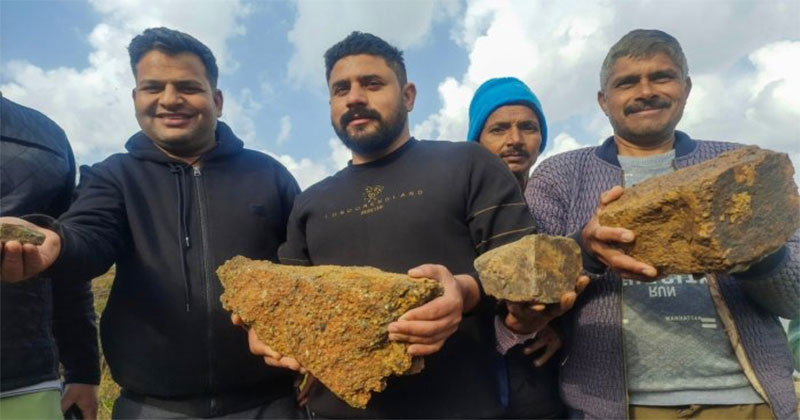
Lithium, the lightest metal in the periodic table, is attracting a great deal of attention due to its critical role in the production of batteries for electric vehicles (EVs) and consumer electronics. The discovery of significant reserves of Lithium in Jammu & Kashmir has the potential to be a game-changer for the country, transforming the nation into a major player in the global lithium market and propelling its transition to a low-carbon economy.
The increasing demand for Lithium batteries has led to a growing demand for Lithium. The global market for Lithium is estimated to be worth $30 billion by 2025, and the demand is only set to increase as the shift towards EVs and renewable energy sources gathers pace. The discovery of Lithium in India presents a significant opportunity for the country to tap into this growing market, reduce its dependence on imports, and boost its economy.
One of the major challenges faced by India’s energy sector is the lack of a domestic supply of Lithium. Currently, India relies heavily on imports of Lithium from countries such as Australia, Chile, and Argentina, which are leading producers of the metal. The discovery of Lithium in India would reduce the country’s dependence on imports and increase its bargaining power in the global market, providing a much-needed boost to the economy.
It has the potential to create thousands of jobs, both directly and indirectly. The development of lithium mines and production facilities would create employment opportunities for workers in the mining and manufacturing sectors, while the growth of the EV industry and consumer electronics market would generate jobs in research and development, marketing, and sales. In addition, the development of a domestic supply chain for Lithium would create opportunities for local suppliers and service providers.
The production of Lithium-ion batteries requires a number of specialised inputs, including lithium hydroxide, lithium carbonate, and lithium metal. The discovery of Lithium in India would provide the country with the raw material necessary to develop a domestic battery industry, reducing the country’s reliance on imported batteries and stimulating growth in the domestic manufacturing sector. This, in turn, would contribute to the development of a low-carbon economy, as lithium-ion batteries are widely used in the production of EVs, which emit far fewer greenhouse gases than traditional gasoline-powered vehicles.
In addition to its economic benefits, the discovery of Lithium in India would have positive environmental impacts. The production of EVs and renewable energy sources is widely recognised as a critical step towards reducing greenhouse gas emissions and combating climate change. The development of a domestic lithium industry in India would help to accelerate the transition to a low-carbon economy and reduce the country’s dependence on fossil fuels.
Prime Minister Narendra Modi has been at the forefront of the clean energy revolution, making it a top priority for his government. He has set ambitious targets for India to transition to a more sustainable energy future, including the goal of achieving 40 per cent of its installed power capacity from renewable sources by 2030. The discovery of Lithium in Jammu is a significant step towards realising this vision, as it will help to ensure a steady supply of the mineral to produce batteries for clean energy systems.
Under the leadership of Prime Minister Modi, the Indian Government has implemented several policies and initiatives to promote clean energy and reduce the country’s dependence on fossil fuels. These include the National Electric Mobility Mission Plan, which aims to put five to six million electric vehicles on India’s roads by 2020, and the National Solar Mission, which aims to increase the use of solar energy in the country.
In addition to these policies, Prime Minister Modi has also taken a proactive approach to promote clean energy through international cooperation. He has been a strong advocate for the International Solar Alliance, a global platform for cooperation among 121 countries that was launched in 2015 with the goal of promoting the widespread adoption of solar energy. He has also prioritised strengthening partnerships with other countries to promote clean energy and reduce greenhouse gas emissions.
The discovery of this new lithium reserve in Jammu & Kashmir is an exciting development for India’s economy. It has the potential to reduce the country’s dependence on imports of this mineral, become a major player in the global lithium market, and stimulate economic growth in one of the country’s most underdeveloped regions. The Indian Government is taking a responsible and strategic approach to developing this reserve. It is working to ensure that it has a positive impact on both the local and national economies.
(The writer is the Social Media Associate of G20’s official youth engagement group – Y20. He writes on economy, politics and international affairs)
















Comments