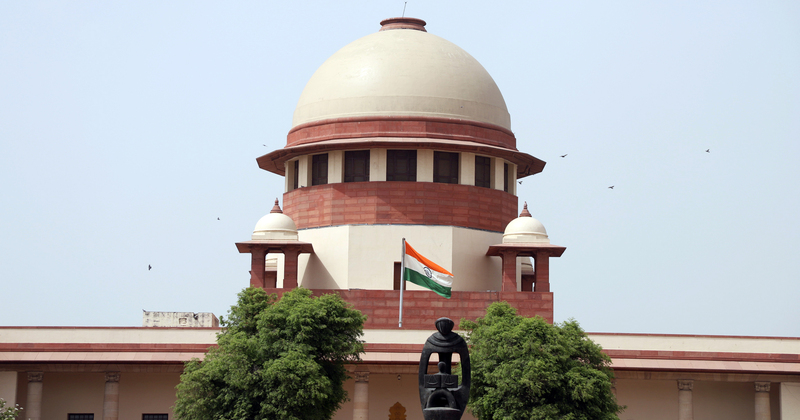
Supreme Court to hear petitions challenging sedition law on May 11
June 24, 2026
  • Read Ecopy
  • Circulation
  • Advertise
  • Careers
  • About Us
  • Contact Us
Android AppiPhone AppArattai
Organiser
  • ‌
  • Bharat
    • Assam
    • Bihar
    • Chhattisgarh
    • Jharkhand
    • Maharashtra
    • View All States
  • World
    • Asia
    • Europe
    • North America
    • South America
    • Africa
    • Australia
  • Editorial
  • International
  • Opinion
  • RSS @ 100
  • More
    • Op Sindoor
    • Analysis
    • Sports
    • Defence
    • Politics
    • Business
    • Economy
    • Culture
    • Special Report
    • Sci & Tech
    • Entertainment
    • G20
    • Azadi Ka Amrit Mahotsav
    • Vocal4Local
    • Web Stories
    • Education
    • Employment
    • Books
    • Interviews
    • Travel
    • Law
    • Health
    • Obituary
  • Subscribe
    • Subscribe Print Edition
    • Subscribe Ecopy
    • Read Ecopy
  • ‌
  • Bharat
    • Assam
    • Bihar
    • Chhattisgarh
    • Jharkhand
    • Maharashtra
    • View All States
  • World
    • Asia
    • Europe
    • North America
    • South America
    • Africa
    • Australia
  • Editorial
  • International
  • Opinion
  • RSS @ 100
  • More
    • Op Sindoor
    • Analysis
    • Sports
    • Defence
    • Politics
    • Business
    • Economy
    • Culture
    • Special Report
    • Sci & Tech
    • Entertainment
    • G20
    • Azadi Ka Amrit Mahotsav
    • Vocal4Local
    • Web Stories
    • Education
    • Employment
    • Books
    • Interviews
    • Travel
    • Law
    • Health
    • Obituary
  • Subscribe
    • Subscribe Print Edition
    • Subscribe Ecopy
    • Read Ecopy
Organiser
  • Home
  • Bharat
  • World
  • Operation Sindoor
  • Editorial
  • Analysis
  • Opinion
  • Culture
  • Defence
  • International Edition
  • RSS @ 100
  • Magazine
  • Read Ecopy
Home Bharat

Supreme Court to hear petitions challenging sedition law on May 11

Supreme Court is scheduled to hear a batch of petitions challenging the 153-year-old sedition law on 11 May, 2023.A bench comprising Chief Justice DY Chandrachud and Justice P S Narasimha has listed for hearing as many as 12 petitions

Manisha SaradeManisha Sarade
Jan 10, 2023, 11:42 am IST
in Bharat, Delhi
Follow on Google News
FacebookTwitterWhatsAppTelegramEmail

The Supreme Court is scheduled to hear a batch of petitions challenging the 153-year-old sedition law on 11 May, 2023. A bench comprising Chief Justice DY Chandrachud and Justice P S Narasimha has listed for hearing as many as 12 petitions.

In a notable order the previous year, the Supreme Court had asked the Centre and states not to register any cases of sedition under Section 124A of the Indian Penal Code pending an exercise to review the colonial law. “It will be appropriate not to use this provision of law till further reexamination is over. We hope Centre and States will desist from registering any FIR under 124A or initiate proceeding under the same till reexamination is over,” a three-judge Bench led by the then Chief Justice of India NV Ramana, also presided over by Justices Suryakant and Hima Kohli, had ordered. The Bench had noted that the Union Government in its affidavit agreed with the observation that rigours of Section 124A are not in consonance with the present-day circumstances and the law was meant for the time when country was governed by colonial law. The affidavit claimed that the said colonial-era law is “not in line with the current social milieu”. The Bench had further asked the Union Government to reconsider the law. The court added, “If any fresh case is filed under Section 124A IPC, the accused can approach the court concerned for reliefs.”

During the hearing, the Centre had opposed the proposal to stay the exercise of the sedition law under Section 124A IPC. Solicitor General Tushar Mehta, as an alternative, submitted that future FIRs under Section 124A IPC shall be filed only after scrutiny by Superintendent of Police. In cases that are pending, courts can be directed to expeditiously consider bail. Representing the petitioners, senior advocate Kapil Sibal diverged from the SG Mehta’s argument, labelling it “wholly unacceptable”. The Bench, however, which had on 10th May, 2022 asked the Centre to provide clarity on the issue if all sedition cases filed across India could be kept in suspension till the review of Section 124A of the IPC was concluded, did not agree with SG Mehta’s submission. “It would be appropriate to put the provision on abeyance,” the court said. The Union of India had also been given the liberty to “issue the Directive as proposed and placed before us, to the State Governments/Union Territories to prevent any misuse of Section 124A of IPC”.

In July 2021, the then Chief Justice of India had asked the Attorney General to clarify if Sedition law was still required after 75 years of independence. He mentioned that the sedition law was used by the British against pioneers of the freedom movement such as Lokmanya Tilak, Mahatma Gandhi, Jawaharlal Nehru, Bhagat Singh, etc., who were convicted for their seditious speeches, writings and activities under the British regime. “The government has repealed a number of laws…I don’t know why you aren’t looking into it,” the CJI had asked.

The petitioners challenging the validity of Section 124A of IPC included Editors Guild of India and former Major General S G Vombatkere, former union minister Arun Shourie and journalists Kishorechandra Wangkhemcha from Manipur and Kanhaiya Lal Shukla from Chhattisgarh.

Section 124-A criminalises any act which “brings or attempts to bring into hatred or contempt, or excites or attempts to excite disaffection towards the Government of India”. It is a non-bailable offence. Punishment under Section 124A ranges from imprisonment up to three years to a life term, to which a fine may be added.

As per National Crime Records Bureau (NCRB) reports, Assam recorded the most number of Sedition cases in the country in the last eight years. Out of 475 sedition cases registered in the country between 2014 and 2021, Assam accounted for 69 cases (14.52%). After Assam, the most number of such cases were reported from Haryana (42 cases), followed by Jharkhand (40), Karnataka (38), Andhra Pradesh (32) and Jammu and Kashmir (29). These six states accounted for 250 cases — more than half the number of total sedition cases recorded in the country — in the eight-year period. 76 sedition cases were registered across the country in 2021, a marginal increase from the 73 registered in 2020.

This piece of legislation has been debated since its inception. The statute was originally drafted in 1837 by Thomas Macaulay, the British historian-politician, but was mysteriously removed when the Indian Penal Code (IPC) was enacted in 1860. In 1837, when the Indian Penal Code was originally framed, Section 113 of the draft, which criminalised sedition, did not mention anything about sedition being only provocation to disorder and violence and rather was framed in terms very similar to seditious libel. While Section 113 was not included in the the final draft of the Indian Penal Code, the provision on sedition, that is Section 124-A, came to be added to the Indian Penal Code in 1870 through an Amendment. This occurred in response to the Wahabi uprising at the time.

The original constitution that was adopted in 1950 did not recognise the law on sedition and gave the right to free speech absolute protection within the fundamental rights. However, the first amendment brought in 1951 introduced restrictions that validated the sedition law.


 

Topics: Supreme CourtIndian Penal Codechief justice of indiaUnion Government153-year-old sedition lawNational Crime Records Bureau
Share10TweetSendShareSend
✮ Subscribe Organiser YouTube Channel. ✮
✮ Join Organiser's WhatsApp channel for Nationalist views beyond the news. ✮
Previous News

Joshimath sinking: Demolition of damaged hotels, houses to begin today

Next News

Pakistan Economy: Is the Islamic republic going Sri Lankan way?

Related News

Supreme Court of India

‘RTI activism has become business’: SC denies anticipatory bail, questions activist’s authority to monitor road project

The AMU Judgment: Why the Supreme Court must revisit Article 30

Tamil Nadu Assembly (File Photo)

Tamil Nadu speaker drops action against 21 rebel AIADMK MLAs after EPS withdrawal, targets 4 who joined TVK

Supreme Court remarks have revived the UAPA bail debate, with supporters citing national security concerns

UAPA Bail Debate: Striking a delicate balance between individual liberty and national security

Supreme Court invokes Article 142, issues strict timelines to curb delay in High Court judgments

Supreme Court invokes Article 142, orders strict timelines for High Court judgments to end delays in justice delivery

SIR and Article 324: Supreme Court strengthens the constitutional spine of Indian Democracy; Reaffirms ECI’s authority

Load More

Latest News

Bangladeshi infiltrators arrested by Assam Police

Assam Police arrests 10 Bangladeshi infiltrators from Guwahati lodge; 33 arrested in two weeks 

Punjab CM Bhagwat Mann

Bhagwant Mann Video Row: Gurugram police claim Punjab officers paid Rs 10 lakh to tailor forensic report

France’s annual music festival turns into night of fear amid alleged syringe attacks, sexual assaults & street violence

France Music Festival Violence: Women stabbed, drugged and sexually assaulted; 243 arrests made

Can Karnataka bypass SIR rules? Residence certificate move sparks citizenship debate

Karnataka SIR Controversy: Residence certificate plan unlikely to pass ECI’s voter verification test

The US Ambassador to India Sergio Gor and Tamil Nadu Chief Minister Joseph Vijay; The tweet of BJP Tamil Nadu State Secretary Ashvathaman.

BJP Tamil Nadu urges Jaishankar to intervene over US Ambassador’s ‘two nations’ remark after meeting CM Joseph Vijay

Puri Rath Yatra 2026: Authorities finalise crowd management plan

Puri Rath Yatra 2026 in Odisha: Massive security, healthcare and transport arrangements finalised

Karnataka's Gruha Lakshmi scheme faces scrutiny after CAG flags 19,000 beneficiaries linked to one account

Karnataka: Gruha Lakshmi scheme under scanner; CAG flags 19,000 beneficiaries linked to same bank account

Pesticides linked to cancer and environmental harm remain in use on Indian farms, sparking fresh concerns about food safety

Toxic Harvest? Why cancer-linked pesticides continue to be used across Indian farms despite global concerns

Gem-quality diamonds found during exploration in Chhattisgarh's Mahasamund

From Panna to Mahasamund: Could Chhattisgarh be India’s next diamond frontier?

External Affairs Minister S Jaishankar

Kanishka Bombing Anniversary: Jaishankar reaffirms India’s commitment to combat terrorism in all its forms

Load More
  • Privacy
  • Terms
  • Cookie Policy
  • Refund and Cancellation
  • Delivery and Shipping

© Bharat Prakashan (Delhi) Limited.
Tech-enabled by Ananthapuri Technologies

  • Home
  • Search Organiser
  • Bharat
    • Assam
    • Bihar
    • Chhattisgarh
    • Jharkhand
    • Maharashtra
    • View All States
  • World
    • Asia
    • Africa
    • North America
    • South America
    • Europe
    • Australia
  • Editorial
  • Operation Sindoor
  • Opinion
  • Analysis
  • Defence
  • Culture
  • Sports
  • Business
  • RSS @ 100
  • Entertainment
  • More ..
    • Sci & Tech
    • Vocal4Local
    • Special Report
    • Education
    • Employment
    • Books
    • Interviews
    • Travel
    • Health
    • Politics
    • Law
    • Economy
    • Obituary
  • Subscribe Magazine
  • Read Ecopy
  • Advertise
  • Circulation
  • Careers
  • About Us
  • Contact Us
  • Policies & Terms
    • Privacy Policy
    • Cookie Policy
    • Refund and Cancellation
    • Terms of Use

© Bharat Prakashan (Delhi) Limited.
Tech-enabled by Ananthapuri Technologies