The Architect of ‘Political Vedanta’
December 6, 2025
  • Read Ecopy
  • Circulation
  • Advertise
  • Careers
  • About Us
  • Contact Us
Android AppiPhone AppArattai
Organiser
  • ‌
  • Bharat
    • Assam
    • Bihar
    • Chhattisgarh
    • Jharkhand
    • Maharashtra
    • View All States
  • World
    • Asia
    • Europe
    • North America
    • South America
    • Africa
    • Australia
  • Editorial
  • International
  • Opinion
  • RSS @ 100
  • More
    • Op Sindoor
    • Analysis
    • Sports
    • Defence
    • Politics
    • Business
    • Economy
    • Culture
    • Special Report
    • Sci & Tech
    • Entertainment
    • G20
    • Azadi Ka Amrit Mahotsav
    • Vocal4Local
    • Web Stories
    • Education
    • Employment
    • Books
    • Interviews
    • Travel
    • Law
    • Health
    • Obituary
  • Subscribe
    • Subscribe Print Edition
    • Subscribe Ecopy
    • Read Ecopy
  • ‌
  • Bharat
    • Assam
    • Bihar
    • Chhattisgarh
    • Jharkhand
    • Maharashtra
    • View All States
  • World
    • Asia
    • Europe
    • North America
    • South America
    • Africa
    • Australia
  • Editorial
  • International
  • Opinion
  • RSS @ 100
  • More
    • Op Sindoor
    • Analysis
    • Sports
    • Defence
    • Politics
    • Business
    • Economy
    • Culture
    • Special Report
    • Sci & Tech
    • Entertainment
    • G20
    • Azadi Ka Amrit Mahotsav
    • Vocal4Local
    • Web Stories
    • Education
    • Employment
    • Books
    • Interviews
    • Travel
    • Law
    • Health
    • Obituary
  • Subscribe
    • Subscribe Print Edition
    • Subscribe Ecopy
    • Read Ecopy
Organiser
  • Home
  • Bharat
  • World
  • Operation Sindoor
  • Editorial
  • Analysis
  • Opinion
  • Culture
  • Defence
  • International Edition
  • RSS @ 100
  • Magazine
  • Read Ecopy
Home Bharat

The Architect of ‘Political Vedanta’

Even though Sri Aurobindo spent his formative years in England, mastering western classics, his theory of political Vedanta, which exerted a shaping influence on our freedom struggle, was rooted firmly in Bharat’s own knowledge systems

Gautam ChoubeyGautam Choubey
Dec 25, 2022, 01:10 pm IST
in Bharat
Follow on Google News
FacebookTwitterWhatsAppTelegramEmail

In 1893, when the twenty-one year old Aurobindo Ghosh returned to India, he couldn’t even speak Bengali, his mother tongue. By then, he had spent fourteen of his formative years in England, having distinguished himself academically—first at St. Paul’s school, London, and later at King’s College, Cambridge. However, over the next two decades, Sri Aurobindo came to represent the spirit of Indian patriotism, both in theory and praxis; he was to become the most prominent face of Bharat’s yearnings for freedom. And by the time he left for Pondicherry in 1910, he had set firmly into place not just the ideals and connotations of our nationalism, but also its objectives and methods. Such was the sheer force and efficacy of his strategy that all those who came after him, including Gandhi, could not help resorting to them.

Put plainly, Sri Aurobindo was arguably the greatest and certainly among the earliest thinkers of India’s complete decolonisation. However, his swift rise to astronomical prominence as well as his lasting legacy, when viewed against the backdrop of his life in England, appears rather baffling. This begs a pertinent question, the answer to which will unpack the very essence of Sri Aurobindo’s anti-colonial thoughts: how come a Victorian gentleman, trained on English soil, succeeds in conquering our country’s imagination?

Three Schools of Thought in 19th Century Bengal

In the late 19th century Bengal, to which Aurobindo returned, one comes across three schools of thoughts on Bharat’s intellectual and political awakening. The first school, as represented by Raja Ram Mohan Roy and his ardent follower Rabindranath Tagore, advocates cultural assimilation and empathy between the East and the West. To them, Bharat and England should meet as equals and capitalise on their intertwined political ties to forge deeper sympathies. This tendency triggered politics of reform, petitioning, and eventually, the moderate faction within the Congress. The second school, as typified by the likes of Michael Madhusudan Dutta and Bengal’s English-speaking professionals—like Dr Krishna Dhan Ghosh, the anglicised father of Sri Aurobindo—looked upon English presence in India as fortuitous. To them, conditions of colonisation presented an opportunity to radically restructure Indian society in the light of Western and Christian thoughts. Naturally, they responded in ways that may reek of unqualified surrender. While Dutta converted to Christianity and spent a lifetime singing paeans to Greek and English literature, Dr Ghosh took his three sons—including a seven years old Aurobindo—to England, put them in the care of an English clergyman, and forbade them from making contact with anything Indian.
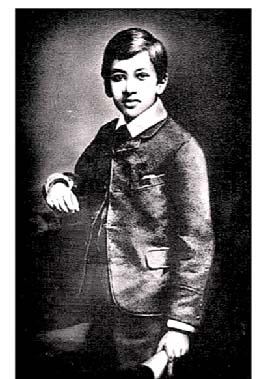
Sri Aurobindo at St. Paul’s School, London 1884

If Vivekanand described God as the sum total of all humanity, Aurobindo argues that nation itself is the clearest manifestation of that divinity

The third school of thought, championed with aplomb by the likes of Bankim Chandra Chatterjee, Swami Vivekanand and Sri Aurobindo, believed that India had something profound to offer to the world, particularly to the morally bankrupt West. They had utmost faith in our ancient scriptures and the pan-Bharat religiosity our sacred texts animated. However, in order to provide intellectual and spiritual leadership to the world, at first, Bharat much smash the shackles of political servitude. Further, for unfettering our political destiny, the country must rely on its core resource—faith, religious fervor, and the spirit of sacrifice and renunciation of our sages. In other words, Bharat had to live by its age-old wisdom, enshrined in Vedas and Upanishads, embodied by its monks and mystics.

Nation as Shakti, Patriot as Sanyasi

In this order of things, nation is not just a lifeless geopolitical territory to be won, guarded and defended against enemies; it becomes the summation of the life-forces of all those who live in it. Nation emerges as a source of their nourishment, a benevolent goddess who provides for her inhabitants, just as a mother provides for her children. In other words, nation becomes the one true subject of their devotion. ‘What is a nation?’ asks Aurobindo rhetorically. ‘It is a mighty Shakti, composed of all the Shaktis of all the millions of units that make up the nation,’ he explains.

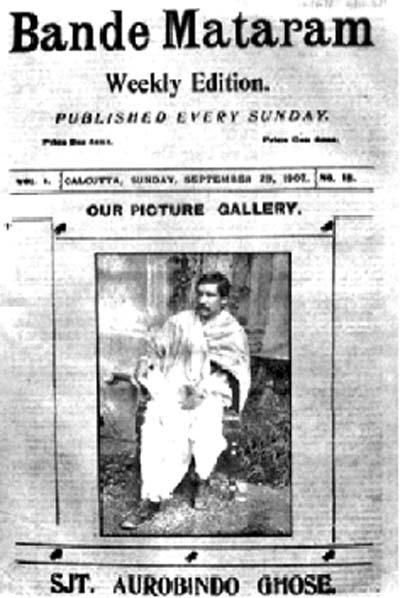
Having equated nation with mother goddess, he goes on to define nationalism as ‘a religion that comes from God—a creed which you [patriot] shall have to live.’ Under the circumstances, the patriot becomes an ‘instrument of God,’ charged with a sacred mission. It is therefore only fair that from Bankim’s Anand Maths to Sri Aurobindo’s conceptualisation of the true patriot, the figure of sanyasi figures prominently in the third school of thought. His method, as Sri Aurobindo outlines in an article in Bande Matram published in 1907, is ‘political Vedantism.’ He developed Swami Vivekanand’s ‘practical Vedanta’ into an elaborate theory better suited for application in the political realm. If Vivekanand described God as the sum total of all humanity, Aurobindo argues that nation itself is the clearest manifestation of that divinity, which he likens to Kali. To serve this nation, he calls upon a new order of sanyasis willing to die for her sake.

It must be underscored that it was this ability to mobilise the profundity of India’s indigenous knowledge resources that endeared him to the masses. This project, as Sri Aurobindo envisioned it, was not only meant to secure political freedom for Bharat; it would have led to the spiritual salvation of the entire world. His identification of mother India with Shakti ignited a social churning whose imprints can be seen all through Bharat’s long attempts at decolonisation—earlier political decolonisation, now cultural decolonisation. It not only served the cause of our freedom struggle, inspiring generations of patriots ready to lay down their lives for the country, but continues to shape new India’s destiny.

(This is the first of the three-part essay on Sri Aurobindo’s philosophy of decolonisation)

Topics: Bankim Chandra ChatterjeeDr Krishna Dhan GhoshSri Aurobindo envisioned
Share17TweetSendShareSend
✮ Subscribe Organiser YouTube Channel. ✮
✮ Join Organiser's WhatsApp channel for Nationalist views beyond the news. ✮
Previous News

Atal Bihari Vajpayee: Father of India’s Infrastructure Revolution

Next News

Two international drug peddlers, Khader Mohideen and Ibrahim Sha held with 3.1kg of illegal drugs in Hyderabad

Related News

Over 5,000 students at S.R. Group of Institutions, Lucknow, united to sing “Vande Mataram”

ABVP Unites 5,000 Voices in One Song: “Vande Mataram” resonates at SRGI Lucknow

“Removal of significant verses in Vande Mataram sowed seeds of partition”: PM Modi

Load More

Comments

The comments posted here/below/in the given space are not on behalf of Organiser. The person posting the comment will be in sole ownership of its responsibility. According to the central government's IT rules, obscene or offensive statement made against a person, religion, community or nation is a punishable offense, and legal action would be taken against people who indulge in such activities.

Latest News

PM Modi presents Putin with Bhagavad Gita, chess set, and silver horse

Cultural ties strengthened: PM Modi presents Putin with Bhagavad Gita, chess set, and silver horse

Image for representational purpose only, Courtesy Vocal Media

Bihar to get ‘Special Economic Zones’ in Buxar and West Champaran

Thirupparankundram Karthigai Deepam utsav

Andhra Pradesh: AP Dy CM Pawan Kalyan reacts to Thirupparankundram row, flags concern over religious rights of Hindus

23rd India-Russia Annual Summit

India-Russia Summit heralds new chapter in time-tested ties: Inks MoUs in economic, defence, tourism & education

DGCA orders probe into IndiGo flight disruptions; Committee to report in 15 days

BJYM leader Shyamraj with Janaki

Kerala: Widow of BJP worker murdered in 1995 steps into electoral battle after three decades at Valancherry

Russian Sber bank has unveiled access to its retail investors to the Indian stock market by etching its mutual fund to Nifty50

Scripting economic bonhomie: Russian investors gain access to Indian stocks, Sber unveils Nifty50 pegged mutual funds

Petitioner S Vignesh Shishir speaking to the reporters about the Rahul Gandhi UK citizenship case outside the Raebareli court

Rahul Gandhi UK Citizenship Case: Congress supporters create ruckus in court; Foreign visit details shared with judge

(L) Kerala High Court (R) Bouncers in Trippoonithura temple

Kerala: HC slams CPM-controlled Kochi Devaswom Board for deploying bouncers for crowd management during festival

Fact Check: Rahul Gandhi false claim about govt blocking his meet with Russian President Putin exposed; MEA clears air

Load More
  • Privacy
  • Terms
  • Cookie Policy
  • Refund and Cancellation
  • Delivery and Shipping

© Bharat Prakashan (Delhi) Limited.
Tech-enabled by Ananthapuri Technologies

  • Home
  • Search Organiser
  • Bharat
    • Assam
    • Bihar
    • Chhattisgarh
    • Jharkhand
    • Maharashtra
    • View All States
  • World
    • Asia
    • Africa
    • North America
    • South America
    • Europe
    • Australia
  • Editorial
  • Operation Sindoor
  • Opinion
  • Analysis
  • Defence
  • Culture
  • Sports
  • Business
  • RSS @ 100
  • Entertainment
  • More ..
    • Sci & Tech
    • Vocal4Local
    • Special Report
    • Education
    • Employment
    • Books
    • Interviews
    • Travel
    • Health
    • Politics
    • Law
    • Economy
    • Obituary
  • Subscribe Magazine
  • Read Ecopy
  • Advertise
  • Circulation
  • Careers
  • About Us
  • Contact Us
  • Policies & Terms
    • Privacy Policy
    • Cookie Policy
    • Refund and Cancellation
    • Terms of Use

© Bharat Prakashan (Delhi) Limited.
Tech-enabled by Ananthapuri Technologies