






One pizza a month,” reads a wedding contract signed by newlyweds of Assam in their mid-twenties. Mintu Rai, 25, married his college sweetheart and “a pizza freak” 24-year-old Shanti Prasad in June 2022 and the 16-second video of the bride and the groom signing the piece of paper has been viewed 45 million times on Instagram, reads a report in the BBC news portal on July 17 this year.
The story also quotes Raghav Thakur, the couple’s friend and the brain behind the surprise wedding contract. “She takes it as a joke. She keeps complaining that she’s put on 3-4 kg in the past few years, but I don’t think that she’s really serious about cutting down on her pizza consumption,” he says, laughing.
He’s right, says Shanti, and adds, “We’ve already had pizzas twice since the wedding and it’s only been two weeks.”
It is easy to laugh and shrug off the above anecdote, but in reality, it is no laughing matter. It speaks volumes about how fast food has seeped into Indian culture and has altered the eating habits of our future – our youth. It also tells us about the addictive nature of fast foods and the link between fast food and weight gain or obesity.
Such a radical change in the eating habits of a population is a clear sign of a cultural loss leading to the complete desertion of culinary traditions. Across the nation, millions, perhaps billions, are currently developing tastes that will sustain for the rest of their lives – one of the great American conquests of our time. McDonald’s, Pizza Hut, KFC, and other stereotypical American fast-food chains stay popular and their offerings go very well with the modern lifestyle of Indians. All of the top 10 fast-food brands in the world have their roots in the US.
Fast Food Kills
There can be no discussions about the fact that fast food is not healthy — in fact it kills.
Worldwide, regardless of whether you eat it or not, fast food and its consequences have become inescapable. They are definitely ruining the health of young consumers. If someone calls this as the unhealthiest generation the world has ever seen, we should further add the dire truth that this generation is going to have a shorter lifespan compared to their parents, in spite of all the advances in medicine and health care.
As a society, we are flooded with research reports telling us how the quick and tasty bites at fast food restaurants are killing us slowly. Bad diet is a bigger killer than any other risk factor in the world. It is not the pathogens in food that are shortening our life span, but it is the super-sized servings of unhealthy, non-nutritious food.
Fast food can make you impatient
Merely thinking about fast food can make you feel hurried. Just looking at the logos of fast-food companies is enough to affect our attitude and judgment. Difficult to believe? But these are the results reported by researchers at the University of Toronto, published in March 2010 issue of Psychological Science. They found that people who spent time examining leading fast-food logos were more likely to exhibit impatience and rush in executing subsequent tasks, compared with a control group that viewed unrelated shapes of similar size and the logos of inexpensive sit-down chain restaurants.
In another experiment, two groups of people – one group who subconsciously viewed fast-food logos and the other who were not exposed to the logos – were given the task of reading certain passages with no time limit. The group that viewed the logos of the fast food companies subconsciously read the passages more quickly as compared to the group that were not exposed to the logos. Researchers also found that households with more fast-food restaurants in the neighbourhood have lower levels of savings, even after accounting for variables like income, education, and socialisation than those with fewer fast-food outlets.
According to ‘Global Burden of Disease Study’ by the US-based Institute for Health Metrics and Evaluation, unhealthy eating killed 11 million people in 2017, up from 8 million in 1990, while smoking kills only about 8 million people a year.
The changing eating habits are already starting to show their impact on our health. India is facing a tsunami of non-communicable diseases (NCDs). Children and youth are falling victim to diseases that were previously never seen in those age groups, like type 2 diabetes and fatty liver disease. There is also a manifestation of increased rates of adult diseases like hypertension or coronary artery diseases in the young.
Fast food impairs cognitive and mental health
Even though it has long been established that diet impacts physical health issues – including risk for conditions like obesity, heart disease, and diabetes – the idea that food may affect cognitive and mental health is a relatively new area of medicine.
For many years, the medical field was unaware of or did not fully acknowledge the connection between our brain functions and the food we consume. But today, fortunately enough, there is a flood of information on this subject.
A number of studies have been published recently in reputed international journals investigating connection between food and brain functions have determined that sugar and junk food shrinks the brain, limits learning and memory, impairs cognition, is addictive, negatively impacts mood, even heightens the risk for degenerative brain diseases like Alzheimer’s.
This is very significant considering the fact that 70 per cent of mental health problems arise during adolescence. It is a known fact today that the processed foods lead not only to functional changes but also structural changes in the brain and these changes occur much before the development of apparent changes in the body like obesity.
Obesity: An Emerging Health Crisis
India today is not only the fifth economic power also it has broken into the top five countries in terms of adult obesity. Obesity is mainly a problem of modern India, teeming with fast food outlets and American-style malls.
The prevalence of obesity among Indians increased in 2019-21 compared to 2015-16, as per the National Family Health Survey (NFHS-5) data. Nearly one in every four persons is overweight compared to one in every five earlier. Also, according to UNICEF’s World Obesity Atlas for 2022, India is predicted to have one in 10 obese children globally, by 2030.
Obesity increases the risk of NCDs, including type-2 diabetes, 13 types of cancer, heart problems and lung conditions, leading to premature deaths. Multiple studies have shown the association of paediatric and adolescent obesity with obesity in adults. Almost half of overweight adults were overweight as children.
Obesity is by far the single most serious medical condition faced by children today. The gravity of the situation faced by obese children was well brought out in a report published in the Journal of the American Medical Association that equated the quality of life of an obese child with that of a cancer patient undergoing chemotherapy.
All health problems are sad, but it is particularly regrettable that so many otherwise healthy children are being burdened from such an early age by a totally preventable health condition.
Lure Tactics
In the early 1990s, a dashing young model zoomed her way into Indian living rooms, endorsing a carbonated drink laden with sugars. The epoch-making advertisement continues to be remembered even today and is cited as one of the successes of the Indian ad world. Even while acknowledging the creativity and effort that went behind it, what should not be forgotten is how it came to influence our Indian palate. It told young gullible viewers that consuming carbon-high drinks was indeed a right choice!
It will bring a smile to our dear readers when they know that India is growing younger, when the world is getting older. The average Indian was only 29 years old in 2020, one of the youngest in the world. By 2030, the average age in India will become 29.7 years.
In 2030, India with a population of 1.4 billion and younger than any other major economy in the world, will have tremendous opportunity for both economic progress and improvement in the general wellbeing of its citizens.
A more interesting development will be by 2030; when Internet will be accessed by more than one billion Indians, both rural and urban as well as old and young. Accordingly, nine out of 10 children above the age of 15 will be online. While this is a great achievement, it is also the target population of the global fast food companies, who will step up their marketing efforts to reach them. The Internet and social media are the latest armours at the disposal of the fast food companies. Not surprisingly, the fast-food industry is the sector with the highest online engagement rates.
An added advantage for them is that 80 per cent or more of the Indian population access internet through their mobile phones, which is expected to increase to more than 90 per cent over the coming years. This will be a significantly different profile of connected consumers compared to the US, the UK and even China where nearly half of Internet users today access the web primarily through desktops.
The fast-food industry has effectively leveraged factors such as demographic dividend, deepening technology and Internet penetration, growth in organised retail, convenience and changing consumer consumption patterns.
According to American Dietetic Association, exposure of children to food commercials for just 30 seconds is enough to influence their food choices. Children see thousands of slick, clever, appealing advertisements each week. Armed with sophisticated psychological research and marketing techniques, fast-food industry target children in the global digital media landscape. In this area, both children and food marketers are active, while parents have little awareness.
The prevailing pattern of food and beverage consumption of youth and children in India who represent the major demographic share of our population, is at best, a missed opportunity, and, at worst, a direct threat to the future of the nation.
In most countries, healthcare and welfare systems are legal pyramid schemes; that is, lots of young, healthy people, financially sound are at the bottom and the few old, sick people are at the top. What if the country’s healthcare system becomes overburdened by the influx of young patients? Without a solid foundation, the whole pyramid collapses, and that is really what seems imminent.
It is a matter of sadness that Western foods have now transformed into the ‘new traditional Indian diet’ of the country’s youth. The demographic and digital advantage that the nation has at present should not get destroyed through mindless junk eating.
War is not lost yet
What is needed to thwart this increasing inclination for consumption of fast foods is a massive awareness about our traditional food systems, its advantages and the vital role it has played in up keeping the health of our elderly.
Traditional Indian food has always been about abundance and wholesomeness, with the right balance of proteins, carbohydrates, fat and other nutrients to meet the body’s requirements. A regular Indian home-cooked meal contains various staples like rice, chapati, daal and curry along with pickles, chutneys, papads, salad and raita. The family meal is also about socialising and strengthening ties between the members who share the meal.
Fast foods make the brain shrink
Your pancreas produces more insulin when you eat lots of fatty fast food. It is well known that increased insulin production can lead to insulin resistance and type 2 diabetes. Much scarier is the fact that it could also lead you to dementia. Insulin resistance affects brain’s ability to create and store memories, thereby increasing the risk of dementia. Researchers even call Alzheimer’s ‘the diabetes of the brain’. The hippocampus helps us control short-term and long-term memories. With a functioning hippocampus, we receive fullness-signalling messages from the gut and the memories related to food may get blocked so that we are not tempted to eat by the sight, smell, or thought of something delicious. Once the hippocampus is damaged, people feel hungry all the time, leading to obesity.
A study published in the Royal Society Open Science in 2020 by a few researchers from Macquarie University in Sydney examined the effects that fast food can have on our mental state, its functions, and their results. The shocking result was that it takes only a week for these processed foods especially the western style meal to have a notable effect in the hippocampus region of the brain leading to a cycle of fast-food binging and overeating.
India still has the advantage as we have not lost our culture of real food. Home cooking has not stopped altogether and there are millions still who eat frugal but nutritious home-cooked meals with local ingredients.
The fast-food industry has effectively leveraged factors such as demographic dividend, deepening technology and Internet penetration, growth in organised retail, convenience and changing consumer consumption patterns
Dietary patterns that begin in childhood give shape to the health profiles of the population at all ages. Healthy eating behaviours should be kindled during childhood by fostering a feeling of pride in our local food culture and by promoting their health benefits. Involving children in all stages of traditional meal preparation can promote a sense of pride; it can also go a long way in fostering the pristine connections between nutrition, nature and livelihoods.
We have fought invasions, survived their lasting impacts and successfully regained lost glories. But today, we seem to be succumbing slowly to the pressure of the new invasion, the fast-food culture. Just as the East India Company drained wealth of its colonies, now these fast food and soft drink multi-nationals are draining the wealth and health of our nation.
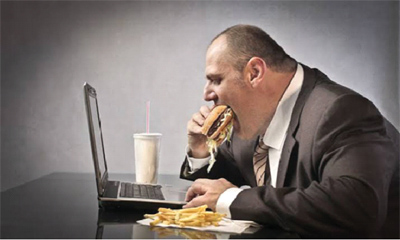
As we step into the ‘Amrit Kaal’ – the next 25 years leading to the centenary of Indian Independence – as highlighted by our Prime Minister Shri Narendra Modi, crafting an environment in which children and youth can grow up healthy should be a high priority for the nation if we are to have a healthy nation in 2047. For that it is very important to tell the fast-food industries to stop playing with human lives. The march of armies of the colossal fast-food empire, which has taken vast swathes of the globe under its dominion can be stopped in this land, where enormous diversity in traditional food culture still continues. This is possible only if there is strong public and political will.
Good food is not the one which is just good for you, but good for the society, nation and environment. We need to go back to good food practices TODAY for no child should ever die early – or even have to suffer – from a condition that is completely preventable.
















Comments