
Decolonisation: Need for another National Movement
December 14, 2025
  • Read Ecopy
  • Circulation
  • Advertise
  • Careers
  • About Us
  • Contact Us
Android AppiPhone AppArattai
Organiser
  • ‌
  • Bharat
    • Assam
    • Bihar
    • Chhattisgarh
    • Jharkhand
    • Maharashtra
    • View All States
  • World
    • Asia
    • Europe
    • North America
    • South America
    • Africa
    • Australia
  • Editorial
  • International
  • Opinion
  • RSS @ 100
  • More
    • Op Sindoor
    • Analysis
    • Sports
    • Defence
    • Politics
    • Business
    • Economy
    • Culture
    • Special Report
    • Sci & Tech
    • Entertainment
    • G20
    • Azadi Ka Amrit Mahotsav
    • Vocal4Local
    • Web Stories
    • Education
    • Employment
    • Books
    • Interviews
    • Travel
    • Law
    • Health
    • Obituary
  • Subscribe
    • Subscribe Print Edition
    • Subscribe Ecopy
    • Read Ecopy
  • ‌
  • Bharat
    • Assam
    • Bihar
    • Chhattisgarh
    • Jharkhand
    • Maharashtra
    • View All States
  • World
    • Asia
    • Europe
    • North America
    • South America
    • Africa
    • Australia
  • Editorial
  • International
  • Opinion
  • RSS @ 100
  • More
    • Op Sindoor
    • Analysis
    • Sports
    • Defence
    • Politics
    • Business
    • Economy
    • Culture
    • Special Report
    • Sci & Tech
    • Entertainment
    • G20
    • Azadi Ka Amrit Mahotsav
    • Vocal4Local
    • Web Stories
    • Education
    • Employment
    • Books
    • Interviews
    • Travel
    • Law
    • Health
    • Obituary
  • Subscribe
    • Subscribe Print Edition
    • Subscribe Ecopy
    • Read Ecopy
Organiser
  • Home
  • Bharat
  • World
  • Operation Sindoor
  • Editorial
  • Analysis
  • Opinion
  • Culture
  • Defence
  • International Edition
  • RSS @ 100
  • Magazine
  • Read Ecopy
Home Editorial

Decolonisation: Need for another National Movement

Prafulla KetkarPrafulla Ketkar
Sep 12, 2022, 12:17 pm IST
in Editorial
Follow on Google News
FacebookTwitterWhatsAppTelegramEmail

“IT is essential that we think about our national identity. Without this identity there is no meaning of independence, nor can Independence become the instrument of progress and happiness. As long as we are unaware of our national identity, we cannot recognise or develop all our potentialities. Under alien rule this identity is suppressed. That is why nations wish to remain independent so that they can progress according to their natural bent and can experience happiness in their endeavour. …The Nation too, like the individual, falls a prey to numerous ills when its natural instincts are disregarded. The basic cause of the problems facing Bharat is the neglect of its national identity”.
— Pandit Deendayal Upadhyaya, ‘Our Direction’, Integral Humanism, Jagriti Prakashan, NOIDA, 1995 pp. 12-13

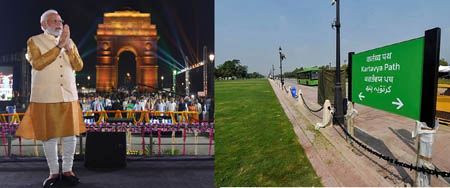
Whenever the question ‘what is there in a name?’ is asked, the name of Shakespeare invariably crops up in the same breath. It is ironic that without mention of the celebrated playwright, one cannot raise a question on the importance of the name. Similar  questions have been raised about the symbolism involved in changing the nomenclature of the places; a recent one is the renaming of Rajpath to Kartavya Path. The approach of ruling the illiterate, uneducated, to be civilised is reflected in the same.In national life, especially for a country like Bharat, with centuries of colonial past, such exercise acquires more significance in decolonising our minds.

While elaborating on the five resolutions for the Amrit Kaal in his Independence Day speech, Prime Minister Modi called to remove any trace of the colonial mindset. Rajpath turning into Kartavya Path should be seen as the action programme for the same.

The colonisation process is excruciating and brutal. Along with the political subjugation, it also leads to social, psychological, economic and cultural tormenting. The earlier invaders desecrated and destroyed the places of pilgrimage with the intent of attacking the dignity, unity, soul and sacredness of Mother Bharat. The British continued that process more clinically through the laws, education and other instruments of servitude. This long and systematic process ingrained the divisive and degraded self-perception. We gained Independence politically, but the colonisation of intellectual space continued.

After Independence, the political leadership changed a few colonial symbols. Still, the fundamental thinking behind the State functioning and the character of Lutyens’ Delhi did not change. The reconstruction of sacred places at Somnath and Ayodhya was seen as ‘communal’ initiatives instead of decolonisation. The education system, the influence of English in the bureaucratic and judicial proceedings and the thought progression behind implementing the Government schemes by and large remained colonial. The inspiration behind our freedom struggle was the spirit of Swadeshi and Vande Mataram. Suddenly, they became a sign of regression and saffronisation. The critical ingredients of nationhood, namely, glorious history, bravery and continuous struggle, scientific achievements, economic and commercial prosperity and civilisational heritage, have been  systematically refuted. In other words, the colonial mindset persisted by the elites.

Few Governments took important steps in nationalising the state apparatus. Removing the statues of British officers, engraving Sanskrit verses in the Parliament, and delinking the budget presentation from the British timings are a few significant steps. The present dispensation has expedited that process by removing redundant laws, introducing the National Education Policy (NEP) with a focus on Bharatiya languages and flexibility in course options and creating a new cultural infrastructure. Restoration of Dharmic thinking for addressing the present problems and building the future Bharat that will guide the world with righteous power are critical ingredients for reshaping the intellectual space. To truly nationalise the intellectual space, we must develop our own parameters and objectives. Technological advancement and data sovereignty are fundamental to future solutions. We must encourage our youth to undertake research in these areas. World-class infrastructure and institutions also are the need of the hour. While doing so, we should keep the soul or chitti of Bharat, as explained by Deendayalji, in mind. The Government can be a facilitator, and leadership can be inspirational towards the path of decolonisation. But ultimately, society, including academia, think tanks and community leaders, has to reconnect with the roots and initiate another freedom movement to intellectually and culturally decolonise ourselves.
Topics: National Education PolicyAmrit KaalKartavya PathDeendayaljiSomnath and Ayodhya
Prafulla Ketkar
Prafulla Ketkar
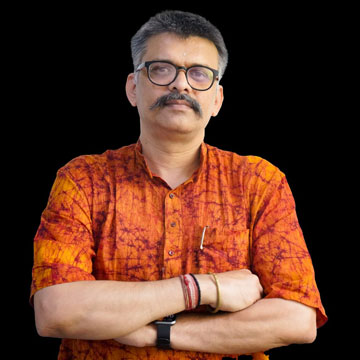
Prafulla Ketkar, is the Editor, Organiser (Weekly) since 2013. He has a experience of over 20 years in the fields of research, media and academics. He is also Advisory Committee School of Journalism, Delhi University. He has been writing on issues related to International politics and foreign policy, with special reference to China and Democracy, Hindutva, and Bharatiya Civilisation. He was also a member of the Editorial team of the recently published Complete Works of Pt Deendayal Ji in 15 Volumes. He has 2 books, 29 academic articles, 2 entries in Encyclopedia of India and numerous articles to his credit. [Read more]
Share1TweetSendShareSend
✮ Subscribe Organiser YouTube Channel. ✮
✮ Join Organiser's WhatsApp channel for Nationalist views beyond the news. ✮
Previous News

Sonali Phogat’s last film ‘Prerna’ that talks about ‘hope in life’ to be released soon

Next News

Ajit Pawar walks off in front of Sharad Pawar at NCP national convention, sparks rift rumours

Related News

Representative Image

‘Viksit Bharat Shiksha Adhikshan’ Bill gets cabinet nod; New body to replace UGC, AICTE, NCTE

Uttar Pradesh CM Yogi Adityanath

Uttar Pradesh: CM Yogi Adityanath led govt promotes Tamil, Telugu, Kannada & Malayalam in vocational education

UGC urges colleges and universities to implement “Learn One More Bharatiya Bhasha” initiative under NEP 2020

Union Minister Suresh Gopi

“Expose the lies of the past”: Union Minister Suresh Gopi defends NEP as tool for cultural reawakening

Representative Image

Govt mulls integrating JEE, NEET, CUET into school curriculum, a step aimed to reduce dependence on coaching

PM Narendra Modi

Government not opposed to English language, but firmly supports Indian languages: PM Modi on National Education Policy

Load More

Comments

The comments posted here/below/in the given space are not on behalf of Organiser. The person posting the comment will be in sole ownership of its responsibility. According to the central government's IT rules, obscene or offensive statement made against a person, religion, community or nation is a punishable offense, and legal action would be taken against people who indulge in such activities.

Latest News

US lawmakers warn Trump towards irrational tariffs on India

Trump tariffs on India mounts pressure on American workers & consumers; US lawmakers move resolution to repeal tariffs

Representative image

SIR in West Bengal: Election Commission to reverify over one crore entries after discovering anomalies

Official logo of Magh Mela 2026

Magh Mela 2026: CM Yogi Adityanath unveils logo depicting confluence of Ganga-Yamuna, Saraswati & 14 phases of moon

Draft SOP prepared for inventory of Ratna Bhandar at Puri Jagannath Temple by SJTA Niti Sub-Committee

Odisha: Draft SOP prepared for inventory of Ratna Bhandar at Puri Jagannath Temple; Approval process underway

Sheikh Mujibur Rahman

Superficial bonhomie between Bangladesh & Pakistan set to break: Rawalpindi labels Sheikh Mujibur Rahman as ‘traitor’

The hidden agenda behind the 2023 visit of Rahul Gandhi to Pangong Tso, Ladakh

The Soros & Pakistan link to the Ladakh trip of Rahul Gandhi; Decoding the nexus behind visit to sensitive Pangong Tso

Union Home Minister Amit Shah at closing ceremony of Bastar Olympics in Jagdalpur, image courtesy Newson Air

Chhattisgarh: Union Home Minister Shah attends closing ceremony of Bastar Olympics, reiterates resolve to end Naxalism

A representative image - Bombay High Court

Bhima Koregaon Case: Bombay High Court disposes petition seeking to expunge NIA court observation against Stan Swamy

Bhagwan Murugan temple at Thiruparankundram(Left) - BJP MP Anurag Thakur (Right)

Tamil Nadu: MP Anurag Thakur accuses DMK of ‘crushing Hindu sentiments’ over Thiruparankundram issue in Lok Sabha

(Left) Former IAF Jr. Warrant Officer Kulendra Sharma arrested by Assam Police ( Right) Jyotika

Assam Police arrest Ex IAF Jr. office for spying for Pakistan: Lady arrested for financial links with Pakistani man

Load More
  • Privacy
  • Terms
  • Cookie Policy
  • Refund and Cancellation
  • Delivery and Shipping

© Bharat Prakashan (Delhi) Limited.
Tech-enabled by Ananthapuri Technologies

  • Home
  • Search Organiser
  • Bharat
    • Assam
    • Bihar
    • Chhattisgarh
    • Jharkhand
    • Maharashtra
    • View All States
  • World
    • Asia
    • Africa
    • North America
    • South America
    • Europe
    • Australia
  • Editorial
  • Operation Sindoor
  • Opinion
  • Analysis
  • Defence
  • Culture
  • Sports
  • Business
  • RSS @ 100
  • Entertainment
  • More ..
    • Sci & Tech
    • Vocal4Local
    • Special Report
    • Education
    • Employment
    • Books
    • Interviews
    • Travel
    • Health
    • Politics
    • Law
    • Economy
    • Obituary
  • Subscribe Magazine
  • Read Ecopy
  • Advertise
  • Circulation
  • Careers
  • About Us
  • Contact Us
  • Policies & Terms
    • Privacy Policy
    • Cookie Policy
    • Refund and Cancellation
    • Terms of Use

© Bharat Prakashan (Delhi) Limited.
Tech-enabled by Ananthapuri Technologies