





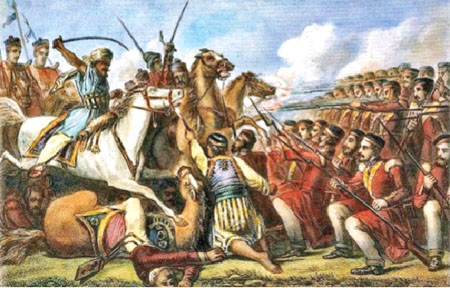
Portugal, a major European power, explored the Atlantic Ocean and African coast, colonised select areas, and discovered an eastern route to Bharat via the Cape of Good Hope. However, they quickly came into conflict with Spain, the other naval powers in Europe. To avoid war they turned to the Pope for arbitration. In the ensuing negotiations, the Pope issued Papal Bulls (a grant of rights issued by the Catholic Church) which strengthened Spanish claims, offending the Portuguese.
The Portuguese
Bharat was famous for her wealth since Roman times in Europe. In the 15th century trade between Bharat and Europe was carried on by Venice through the Mediterranean. To break Venice’s stranglehold on this trade the Portuguese actively searched for an alternative trade route to Bharat. On 20 May 1498 Vasco da Gama found it when he landed on the beaches of Kappad, near the city of Kozhikode (presently in the state of Kerala).
The Portuguese were first welcomed for they were seen as another group of foreign merchants, in a long line of merchants, coming to Bharat for trade. However, the Portuguese were different as previously trade had been carried on by private traders but the Portuguese came with the active support of their national government, with not only economic but also religious motives. Soon the Hindu king, Zamorin came to understand the imperialist objectives of the Portuguese and embarked on steps to thwart the Portuguese attempts to expand their sphere of control. In 1510 Portugal defeated the Bijapur Sultans and Vijayanagara Empire with the help of the Mughals, resulting in Goa’s capture, which became the headquarters of the Portuguese Empire in Asia.
Unsung Heroes
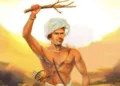
Birsa Munda
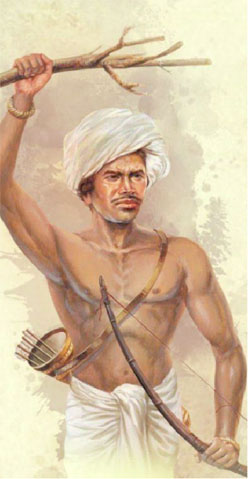
Birsa Munda was an Indian freedom fighter and a tribal leader who revolted against the British rule. He was a visionary who played a crucial role in the liberation of the tribal community. Therefore, he was converted to Christianity as Birsa David and got enrolled in the school. During the early 1890s, he started spreading awareness among the common people about the plans of the British company to gain total control of India. Under his leadership, the tribal movements gained momentum and numerous protests were staged against the British. The movement was remarkably significant as it forced the colonial government to introduce laws so that the land of the tribal people could not be easily taken away by the dikus or outsiders. He was also a self-proclaimed messenger of the almighty and propagated the principles of Hindu religion. He recommended that the tribal people who converted to Christianity return to their original religious system and also advocated the concept of One God. On March 3, 1900, he was arrested, along with his tribal guerrilla army, by the British troops in Jamkopai forest, Chakradharpur. On June 9, 1900, he died at the age of 25 in Ranchi Jail where he was imprisoned.
The Portuguese clerics preached Catholicism and made attempts to gain ecclesiastical control over pre-existing Christian groups, particularly the Syrian Christians of the Malabar Coast.Confronted with the Syrian Christians’ attempt to break away from the Roman Church, Menezes sent troops against them and re-introduced Latin rituals. Matters peaked when he convened the Synod of Diamper (Udayamperur) in 1599 where 1200 years of doctrine held sacred by the Syrian Christians were thrown aside.
The Dutch
In the 16th century, the Portuguese mostly maintained trade relations with Bharat and tried to dominate the trade in Asia. Dutch expansion became possible due to innovations introduced by them, particularly the establishment of one of the earliest joint-stock companies in the world, the United Dutch East India Company (VOC), in 1602. The Dutch established themselves in Bengal after receiving a permit from the faujdar of Pipli in 1629. From the 1680s, as intra-Asian trade declined, Bengal emerged as a major source of exported goods to Holland. The Dutch began a conquest of Portuguese forts on the Malabar coast from 1661 to secure control the pepper trade.
This ultimately brought them into conflict with the kingdom of Travancore under its energetic king Marthanda Varma (1706-1758) in the 1730s. The neighboring kingdoms turned to the Dutch and they sent an army in response. This major power which had defeated the English twice was defeated by Marthanda Varma in the Battle of Colachel in 1741. Not until the Japanese defeated Russia in 1905 would an Asian power decisively defeat another European power.
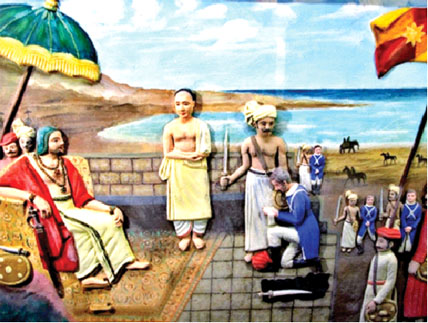
The victory won by Travancore in the battle is of tremendous significance. In the words of Sardar KM Panikkar,“The battle of Colachel was in its effects a disaster of the first importance to the Dutch. It is true that the struggle……. But it put an end to the Dutch dreams of the conquest of Malabar. It was the first great blow inflicted on the Dutch army and its moral effect was so great that the Dutch never recovered from it at all.”
The French
France was the last major European maritime power from the 17th century to enter the East Bharat trade. The first French factory in Bharat was established in Surat in 1668. Another factory was established at Pondicherry in 1674 and became the headquarters of the French in Bharat. It was seized by the Dutch in 1693 but restored to the French in 1697. French trade extended into Bengal in 1686 when an agent was sent there to found a factory. Trading posts were established at Balasore, Kasimbazar, and Patna, but the real beginnings of French trade can be traced to the acquisition of Chandannagar in 1690.
Unsung Heroes
Tilka Manjhi
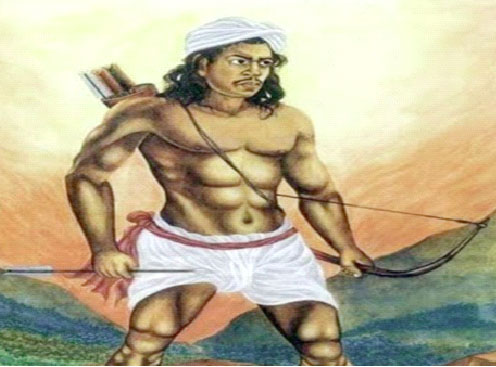
Tilka Manjhi was born ‘Jabra Pahadia’ on 11 th February 1750, in a village called Tilakpur in Sultangunj, Bihar. Due to exploitative policies of the British, the adivasis were reduced to mere agricultural labourers or ‘tenants’ on their own lands. During 1770s, Tilka started mobilising people in small gatherings in Bhagalpur, urging them to oppose Company rule and to rise above the divisions of caste and tribe to reclaim what was theirs. In 1778, the adivasis united under of a 28-year-old Tilka Manjhi and they attacked the Regiment of the Company stationed in the Ramgarh Cantonment. The British fled the cantonment after realising that it was difficult to fight with the Adivasis. Tilka took a daring decision to attack Bhagalpur and catch the enemy napping, and the adivasi charge on Bhagalpur in 1784 took the British completely by surprise. This was a major blow to British morale, Tilka Manjhi and his associates retired to the jungle, largely unharmed. The British effectively blocked all supply routes to Tilka and his men. On 12th January 1785 was finally captured. His short yet well-lived life was brought to an end on 13th January 1785 by hanging. He was only 35 when he died
Till 1741 the French mostly stayed away from court politics but with the arrival of Joseph François Dupleix, they attempted to create a territorial empire in Bharat by manipulating Bharatiya kingdoms. This led to conflicts with the British who were the rivals of the French. The French were defeated, leading them to encourage Bharatiya kingdoms to fight the British. For example, Frenchmen encouraged the Bengal Sultans to attack the British leading to the Battle of Plassey in 1757, where the British emerged victorious. The British inturn razed Pondicherry in 1761. Puducherry was officially liberated in 1964.
The English
The English East India Company was founded in 1600. It first established a factory in Machilipatnam in 1611 and was granted rights to establish a factory in Surat in 1612 by the Mughal emperor. Mumbai was a Portuguese territory gifted to the English crown as dowry in the year 1662 as Spain needed English support. The English Company was granted a Farman by the Mughal Empire in 1717.
Other Illegal forces like Austria, Norway, Sweden
Besides these four major European powers, other European powers attempted to gain a foothold in Bharat but never succeeded.













Comments