Guruji (the second Sarsanghchalak of Rashtriya Swayamsevak Sangh) once said: “For clear, straightforward, impartial views on subjects of national and international importance and for imbibing unadulterated patriotism, it is useful to read Organiser. It will fulfil the expectations for correct guidance in all current affairs.” In consonance with his views, the Republic Day special edition of Organiser highlighted that the tentative value of data produced by Indians is approximately $2 trillion. Thus, to safeguard the political economy of Digital India, data protection and governance are a must.
On June 14, 2022, the Ministry of Electronics and Information Technology (MeitY), India invited stakeholder interaction on Draft National Data Governance Framework Policy (NDGFP). The session was led by Rajeev Chandrasekhar, Union Minister of State for Electronics and Information Technology.
Elaborating on NDGFP, Alkesh Kumar Sharma, Secretary MeitY, stated that the NDGFP’s objective is “to transform and modernise Government’s data collection and management processes and systems through standardised guidelines, rules and standards for the collection, processing, storage, access, and use of Government data – with the objective of improving governance through a whole-of-government approach towards data-led governance.”
Creating Large Repository of Datasets
The Prime Minister’s commitment towards digital India and the Indian startup ecosystem were reinstated when, Rajeev Chandrasekhar, Minister of State for Electronics and Information Technology (MeitY), stated that NDGFP’s purpose was to enable and catalyse vibrant AI and Data-led research and start-up ecosystem, by creating a large repository of India datasets. This will be achieved by establishing guidelines, rules and standards to build and access to anonymised non personal data to ensure the growth of Indian datasets. This will be the catalyst for the Artificial Intelligence and analytics ecosystem, which in turn would be kinetic enablers of India’s digital economy.
Why must we have AatmaNirbhar Bharat in Data Governance?
In January 2019, at the World Economic Forum, the then Japanese Prime Minister Abe espoused this new concept of Data Free Flow with Trust (DFFT). The WTO member countries that value a rule-based digital economy should define and implement global rules for data governance. Globally accepted data governance rules shall pavethe way for DFFT – essential for successful cross-border e commerce.
With the US hegemony, DFFT was already there. As the US used to control the Internet space, so is the data.
However, the trustees of DFFT themselves are in trouble. The US, which controlled the Internet space, has seen the repercussions of data-free flow in the form of a negative impact on elections. Similarly, the United Kingdom, which initiated the Digital single market concept in the European Union, is facing one of the biggest crises in history, i.e. Brexit. Brexit again shows a manipulated use of data on social media to influence public opinion negatively. The whole narrative of the nation has been changed and diverted, i.e. from developmental issues to Brexit issues. This is the level of harm data-free flow can do.
Secondly, when we say DFFT which category of the data we are talking about. For sure, no country will allow Government data to flow freely across the border. Thus, classifying data like Government data, business data, and personal data is also a gigantic and complicated task.
Data brokers like Oracle already have more than 30,000 attributes of user data stored in their system. How will policymakers segregate and ensure that this data is not misused? Further, Cyber troop’s ability and numbers are increasing rapidly. Access to data will further strengthen the influence of cyber troops on individuals and public perception. This influence can be terrifying as this may lead to the horrifying creation of data colonies and data slaves. The creation of data slaves will threaten the principles of democracy. Any foreign country can destabilise the internal peace and harmony of a country based on the negative or biased use of data intelligence through propaganda, trolls, search manipulation, and advertisements.
Democratic countries like India cannot afford this risk of misuse of the citizen’s data that may not only harm them individually but also the whole country’s security and peace. Due to the devastating cases of data manipulation, more countries are in favour of data localisation. There are few bilateral agreements like between China and Russia (Non-Aggression Treaty) related to data localisation
Data Localisation
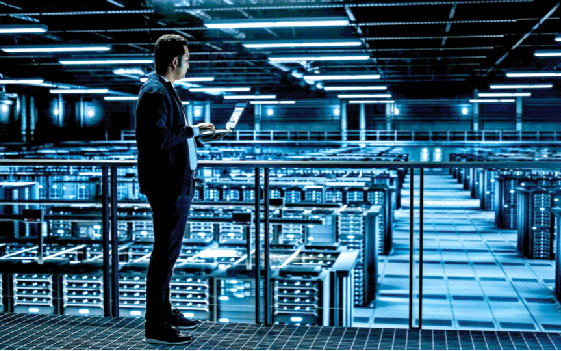
Data is the new oil. Many countries, including India support data localisation- storing data within the country’s jurisdiction. Law enforcement, geo-politics, individual data protection and human rights are the major factors that drive the demand for data Localisation. The politics (e.g. controlling public opinion) and economics (e.g. enforcing companies to invest locally in data centres and data processing) shape the data localisation policies of a country.
In the 2020 Budget, Union Finance Minister Nirmala Sitharaman rightly proposed to roll out a new policy for building data centre parks. Bharat urgently needs a short and long-term strategy to be “AatmaNirbhar in Data management and governance.”
National Data Governance Framework Policy
Under NDGFP, an “India Data Management Office (IDMO)” shall be set up under the Digital India Corporation (“DIC”) under MeitY and shall be responsible for framing, managing and periodically reviewing and revising the Policy. The IDMO shall be responsible for developing rules, standards, and guidelines under this policy that shall be published periodically. The IDMO shall formulate all data/datasets/metadata rules, standards, and guidelines in consultation with Ministries, State Governments, and industry. IDMO will enable and build the India Datasets programme, which will consist of non-personal and anonymised datasets from the Government entities that have collected data from Indian citizens or those in India. Creating an inventory of existing datasets and finalising the priority of which datasets to build first are the key.
India was ranked first in digital payments, second in internet users and was ranked third in Cyber Security attacks. As per Forbes, 80 per cent of cyber attacks happen due to a lack of awareness and there is a multifold rise in cyber frauds in vernacular languages. This can be the biggest challenge for Digital India especially digital banking and financial inclusion. Thus in the first phase, the India Datasets programme must curate financial fraud datasets available with various agencies like banks, and cyber cells.
Secondly, especially post COVID-19, to revive the national and global economy, skilled workers are in high demand. India has 500 million workers, but the national labour database is not yet completed. Thus in the first phase, the India Datasets programme must unify various labour/worker datasets scattered in silos like with State Governments, and different departments. A unified labour database is a must for skill mapping and re-skilling required to elevate Bharat’s role in the global supply chain.
Competition With China Is Inevitable
The policy framework gives a limited role to Indian startups by stating that “The IDMO shall also encourage and foster the data and AI-based research, start-up ecosystems by working with the Digital India Start-up Hub (the erstwhile MSH).” If Bharat wants to grab this opportunity to lead Asia and the world then Bharat has to compete with China’s fast and mammoth implementation capabilities on the ground. Indian startups have the zeal, experience, ability and passion to deliver projects at lightning speed. Like when the whole world refused ventilators, during COVID-19, IIT Kanpur startup delivered this in 90 days and many such execution disruptions happened.
Considering the current dynamics of geopolitics, the following Sanskrit quote seems relevant for Bharat’s quest to be a Vishwa Guru in the era of data and limited manpower (after COVID-19 deaths)
क्षणश: कणशश्चैव विद्यामर्थं च साधयेत्।
क्षणत्यागे कुतो विद्या कणत्यागे कुतो धनम्।।
(Knowledge and wealth are procured with every moment and grain (respectively). If a moment is wasted, how can knowledge be accrued? If a grain is wasted, how can wealth be accumulated?)