





Some whispered, "kabhi kabhi lagta tha, galti ho gayi. Shayed Raj niti ho rahi hae (Often I felt we made a mistake. May be, we are committing or playing into the hands of politicians)". Others spoke about the rich-poor divide even among farmers.
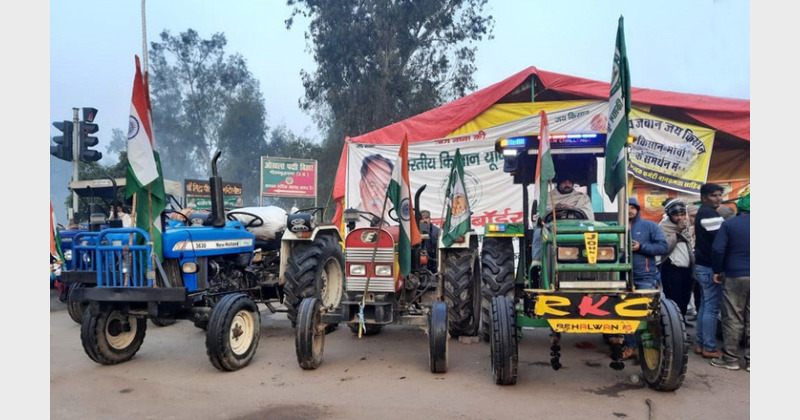
New Delhi: The return journey of farmers from the venue of agitation around Singhu has been given due and deserving coverage by the media. Politicians also noted that the agitating lot had called it a day and would be returning home.
"It is a victory for those who toil hard on ground and feed the population of 135 crore…," says Gurjeet Singh Khalsa, a farmer from the Moga region of Punjab. Flowers, jalebi and sloganeering with a feeling of victory have been in the air as tractor-trailers stepped into Punjab and Haryana.
Farmers from these two agri-rich states participated in the year-long protest across the outskirts of the national capital, often embarrassing the country. The mood in Punjab is already about elections, and thus the farmers were discussing among themselves. Some said the exit of Capt Amarinder Singh from the Congress would be a decisive factor. Others contested this argument. They have now returned home 'victorious' as Prime Minister Narendra Modi finally decided to withdraw three contentious farm laws last month.
But many farmers underlined that not much has changed, and the challenges of Indian farmers are the same as where they stood before November 2020.
"The farmers will continue to need government's support and advice from time to time," said Ludhiana-based Kisan Union leader S. Shamsher.
He emphasised the need to move from traditional methods to modern and more practical cultivation methods. "We have to be realistic. Stubble burning has to stop. I feel a major corrective step is that."
His reference was to the burning of paddy stubble which caused winter air pollution in New Delhi and other parts of north India.
Some shared their personal concerns, "Now, I have to go back to the field and plan with my sons for next farm season. Sitting in Delhi's air-conditioned houses and buildings, some of you and others might think farming happens just like that. You put some seeds and wait for rain." The truth is, he says, a lot of on-field assessment has to be done. "We are a few weeks late for that planning. We have to assess the ground conditions, analyse whether conditions and rain and water supply."
But with him too – the immediate priority is now personal. "My son studies in an engineering college in south India. Before I came for the agitation in December 2020, we were planning our daughter's marriage. Now everything needs to be rebooted. One tension is over, we middle class have other challenges."
As reality dawns and the 'fight on spirit' could be replaced for the next few weeks, several farmers say it will be time again now to ensure that 'discord' between Indian farmers and the government does a vanishing act.
Some even whispered, and one said, "kabhi kabhi lagta tha, galti ho gayi. Shayed Raj niti ho rahi hae (Often I felt we made a mistake. May be, we are committing or playing into the hands of politicians)". Others spoke about the rich-poor divide even among farmers.
Another farmer, on the condition of anonymity, said, "I will not come back, perhaps none of us will have to come back again."
"India's lopsided developmental remains a challenge. The urban-rural divide is a very serious problem," said one farmer from Haryana.
"Kisan toh sabhi they, kucch bepari bhi they. Lekin koi amir kisan hae, aur kor garib (Well, everyone is a farmer. But some are traders too. Some are rich farmers, some very poor)," said Baldev Pahari.
Farming was India's most resilient sector during the Covid pandemic, but the 'misguided' road map adopted by the government and then the stir have now put farmers, the middlemen and consumers at the crossroads.
Dwindling natural resources is another major challenge that would need a closer look at. Western states such as Maharashtra, Gujarat and some regions in Karnataka are over-dependent on sugarcane cultivation as this fetches more income. But again, this takes away the bulk of irrigated water and electricity.










Comments