Temple Politics/Kerala/ Report : State Off Shrines
August 7, 2026
  • Read Ecopy
  • Circulation
  • Advertise
  • Careers
  • About Us
  • Contact Us
Android AppiPhone AppArattai
Organiser
  • ‌
  • Bharat
    • Assam
    • Bihar
    • Chhattisgarh
    • Jharkhand
    • Maharashtra
    • View All States
  • World
    • Asia
    • Europe
    • North America
    • South America
    • Africa
    • Australia
  • Editorial
  • International
  • Opinion
  • RSS @ 100
  • More
    • Op Sindoor
    • Analysis
    • Sports
    • Defence
    • Politics
    • Business
    • Economy
    • Culture
    • Special Report
    • Sci & Tech
    • Entertainment
    • G20
    • Azadi Ka Amrit Mahotsav
    • Vocal4Local
    • Web Stories
    • Education
    • Employment
    • Books
    • Interviews
    • Travel
    • Law
    • Health
    • Obituary
  • Subscribe
    • Subscribe Print Edition
    • Subscribe Ecopy
    • Read Ecopy
  • ‌
  • Bharat
    • Assam
    • Bihar
    • Chhattisgarh
    • Jharkhand
    • Maharashtra
    • View All States
  • World
    • Asia
    • Europe
    • North America
    • South America
    • Africa
    • Australia
  • Editorial
  • International
  • Opinion
  • RSS @ 100
  • More
    • Op Sindoor
    • Analysis
    • Sports
    • Defence
    • Politics
    • Business
    • Economy
    • Culture
    • Special Report
    • Sci & Tech
    • Entertainment
    • G20
    • Azadi Ka Amrit Mahotsav
    • Vocal4Local
    • Web Stories
    • Education
    • Employment
    • Books
    • Interviews
    • Travel
    • Law
    • Health
    • Obituary
  • Subscribe
    • Subscribe Print Edition
    • Subscribe Ecopy
    • Read Ecopy
Organiser
  • Home
  • Bharat
  • World
  • Operation Sindoor
  • Editorial
  • Analysis
  • Opinion
  • Culture
  • Defence
  • International Edition
  • RSS @ 100
  • Magazine
  • Read Ecopy
Home Bharat

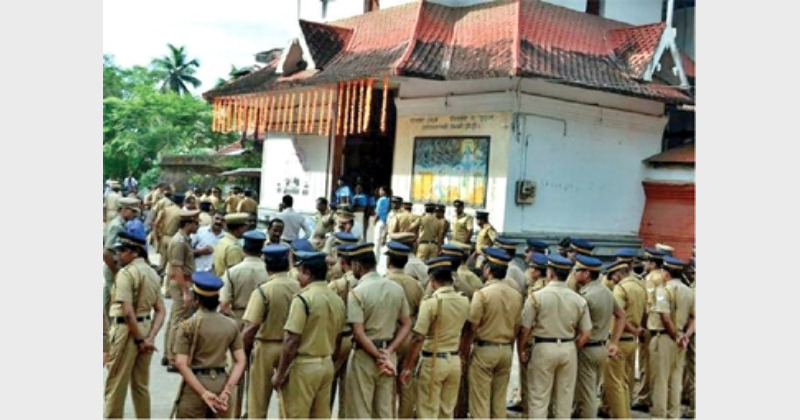
Temple Politics/Kerala/ Report : State Off Shrines

The Emergency of 1975-77 was perhaps the darkest period in the post-Independence history of India. The government?s clampdown on civil liberties and widespread abuse of human rights posed a serious challenge to the democratic values enshrined in the fabric of our Constitution.

Archive ManagerArchive Manager
Nov 27, 2017, 04:34 pm IST
inBharat
Follow on Google News
Facebook
Twitter
WhatsAppTelegramEmail


Secularism, contrary to popular misconception in India, is not the opposite of communalism. The government must refrain from meddling in the management of shrines in its garb

Kiran Bettadpur

The Emergency of 1975-77 was perhaps the darkest period in the post-Independence history of India. The government’s clampdown on civil liberties and widespread abuse of human rights posed a serious challenge to the democratic values enshrined in the fabric of our Constitution.
Using its unfettered powers and a brute majority in Parliament, the Central Government headed by Smt. Indira Gandhi passed the 42nd Amendment, which changed the perambulatory description of India from “sovereign democratic republic” to “sovereign, socialist, secular democratic republic”. The eminent jurist and constitutional expert, H.M. Seervai, severely criticised this ambiguous amendment inserted arbitrarily. However, the amendment survived the judicial challenge and the term “secular” has since become an integral part of the Preamble.  
A Hindu temple is a space designed to bring devotees nearer to the Divine. Consecrated as the dwelling of the presiding God or deity, it is a place for prayer, worship, reverence and supplication to divinity. The structure of the temple is typically used for symbolic expression of the ideas and beliefs of Hinduism. The adoration of the deity gives Hindus solace and satisfaction.
Inscriptions and pillar edicts prove that Hindu temples also functioned as centres of community celebrations and training in fine arts, performing arts and architecture. Thus, temples not only provided spiritual succour to devotees but also functioned as hubs of social, beneficent, charitable, cultural, educational and economic activities? They even served as forums for dispute resolution and dispensation of justice. In ancient times religious and charitable institutions were under the special protection of the ruling authority. The King, as the sovereign head of his state, discharged the duty of protecting temples and intervened as an arbiter in disputes.
In modern India, the Constitution provides for regulation and restriction of “any economic, financial, political or other secular activity associated with religious practice.” This empowers the government to institute regulatory measures for protecting interests of devotees, safeguarding temple assets, and intervening in the event of mismanagement.
Autonomous Temples
Evidence, however, shows a brazen abdication of these duties, not to mention the refusal to abdicate control over temple affairs. The reluctance forced the Supreme Court to observe in its landmark Chidambaram Temple
judgment:
“Even if the management of a temple is taken over to remedy the evil, the management must be handed over to the person concerned immediately after the evil stands remedied. Continuation thereafter would tantamount to the usurpation of their proprietary rights or violation of the fundamental rights guaranteed by the Constitution… Supersession of rights of administration cannot be of a permanent enduring nature. Its life has to be reasonably fixed so as to be co-terminus with the removal of the consequences of maladministration… Power to regulate does not mean the power to supersede the administration for an indefinite period.”
The questions that beg to be asked then are: What happens if government relinquishes control over its temples? Who does the power to govern temples devolve onto? What safeguard and regulatory mechanisms are necessary for ensuring good governance?
A consensus no doubt exists over the need for government to end its involvement in the day-to-day affairs of temples. This is possible only if legislation enables the state to prevent mischief by functionaries,
misappropriation of funds and mismanagement of affairs of temples. The law must also provide for timely intervention and time-bound exit of government from temples after irregularities or illegalities have been remedied.
Need of the Hour
Diversity within Hinduism— a large pantheon of Gods, besides the multitude of sects and multiplicity of customs, beliefs, rituals, practices and worship forms— poses serious challenges to the enactment of any umbrella legislation. Imposing any diktat-driven, monolithic command-and-control forms of temple administration is impractical.
Hindu temples must reflect the ethos of Bharat and become cornerstones of a vibrant, progressive and
resurgent nation, which is proud of its heritage, traditions and cultural roots. Temples can help people aspire to higher quality-of-life and inspire the pursuit of ‘dh?rmic’ living. With appropriate societal interfaces, temples can be transformed into hubs of socio-cultural activity.
Revitalising the temple ecosystem though calls for a decentralised system that entails rigorous regulatory oversight, while conferring autonomy in all operational matters, religious or otherwise. A robust system can ensure (a) full withdrawal of state control over temples; (b) smooth transition of power to local communities; and, (c) effective and transparent administration of our holy shrines.
While rigid policy and compliance parameters may be imposed, temple administration mechanisms must be flexible. A phased transition approach can be framed for the transfer of management to local communities and mathas based on sampradayas.
If a “from-the-frying-pan-into-the-fire” scenario is to be avoided, a central comprehensive enactment of the
regulation of Hindu temples is the sine qua non. Indeed, we, the people of secular India, have a constitutional duty to ensure that the government is kept out of Hindu religious affairs!
 (The writer is a member of the Bar Council of India)
Share
Tweet
SendShareSend
✮ Subscribe Organiser YouTube Channel. ✮
✮ Join Organiser's WhatsApp channel for Nationalist views beyond the news. ✮
Previous News

Temple Politics/Kerala : Milking Shrines, The Communists? Way

Next News

ASEAN Summit : Recapturing Chola ties with ASEAN

Related News

High Commissioner Suneet Mehta with Fiji's Minister for Housing and Local Government, Hon'ble Maciu Nalumisa

India, Fiji discuss strengthening cooperation to advance affordable social housing, sustainable urban development

LG Manoj Sinha handed over appointment letters to the kins of terror victims

J&K: “Abrogation of Article 370 yielded justice, inclusion, equality & development,” says LG Manoj Sinha

Europe Heatwaves

Europe Heatwave: Italy on red alert, countries entangle in energy crisis; Climate catastrophe escalates economic burden

RSS Sarsanghchalak Dr Mohan Bhagwat on women leadership, the RSS and Rashtra Sevika Samiti

Sarsanghchalak Dr Mohan Bhagwat addresses Gen Z students

Sarsanghchalak Dr Mohan Bhagwat on Pak, China ties: Conflict may halt relations, but permanent hatred isn’t a solution

RSS Sarsanghchalak Dr Mohan Bhagwat on social media: "Banning is not solution, society must develop self-discipline"

RSS Sarsanghchalak Dr Mohan Bhagwat on social media: “Banning is not solution, society must develop self-discipline”

Load More

Latest News

High Commissioner Suneet Mehta with Fiji's Minister for Housing and Local Government, Hon'ble Maciu Nalumisa

India, Fiji discuss strengthening cooperation to advance affordable social housing, sustainable urban development

LG Manoj Sinha handed over appointment letters to the kins of terror victims

J&K: “Abrogation of Article 370 yielded justice, inclusion, equality & development,” says LG Manoj Sinha

Europe Heatwaves

Europe Heatwave: Italy on red alert, countries entangle in energy crisis; Climate catastrophe escalates economic burden

RSS Sarsanghchalak Dr Mohan Bhagwat on women leadership, the RSS and Rashtra Sevika Samiti

Sarsanghchalak Dr Mohan Bhagwat addresses Gen Z students

Sarsanghchalak Dr Mohan Bhagwat on Pak, China ties: Conflict may halt relations, but permanent hatred isn’t a solution

RSS Sarsanghchalak Dr Mohan Bhagwat on social media: "Banning is not solution, society must develop self-discipline"

RSS Sarsanghchalak Dr Mohan Bhagwat on social media: “Banning is not solution, society must develop self-discipline”

Rath Yatra 2026

Puri Rath Yatra 2026: A global benchmark in integrated event management, public safety and smart policing

RSS Sarsanghchalak Dr Mohan Bhagwat interacting with Gen Z

Sarsanghchalak Dr Mohan Bhagwat in dialogue with Gen-Z- “Protest is also a mode of dialogue but to evolve consensus”

Rafale Jet Plane

France submits proposal for Rs 3.25 lakh crore Rafale Deal; 94 Jets to be built in India

Representative Image

India’s household savings surge to 21.7 per cent of GDP: Tax relief & RBI interventions fuel financial recovery

Load More
  • Privacy
  • Terms
  • Cookie Policy
  • Refund and Cancellation
  • Delivery and Shipping

© Bharat Prakashan (Delhi) Limited.
Tech-enabled by Ananthapuri Technologies

  • Home
  • Search Organiser
  • Bharat
    • Assam
    • Bihar
    • Chhattisgarh
    • Jharkhand
    • Maharashtra
    • View All States
  • World
    • Asia
    • Africa
    • North America
    • South America
    • Europe
    • Australia
  • Editorial
  • Operation Sindoor
  • Opinion
  • Analysis
  • Defence
  • Culture
  • Sports
  • Business
  • RSS @ 100
  • Entertainment
  • More ..
    • Sci & Tech
    • Vocal4Local
    • Special Report
    • Education
    • Employment
    • Books
    • Interviews
    • Travel
    • Health
    • Politics
    • Law
    • Economy
    • Obituary
  • Subscribe Magazine
  • Read Ecopy
  • Advertise
  • Circulation
  • Careers
  • About Us
  • Contact Us
  • Policies & Terms
    • Privacy Policy
    • Cookie Policy
    • Refund and Cancellation
    • Terms of Use

© Bharat Prakashan (Delhi) Limited.
Tech-enabled by Ananthapuri Technologies