Cover Story : Learning from Andhra Model
September 13, 2026
  • Read Ecopy
  • Circulation
  • Advertise
  • Careers
  • About Us
  • Contact Us
Android AppiPhone AppArattai
Organiser
  • ‌
  • Bharat
    • Assam
    • Bihar
    • Chhattisgarh
    • Jharkhand
    • Maharashtra
    • View All States
  • World
    • Asia
    • Europe
    • North America
    • South America
    • Africa
    • Australia
  • Editorial
  • International
  • Opinion
  • RSS @ 100
  • More
    • World Hindu Congress 2026
    • Op Sindoor
    • Analysis
    • Sports
    • Defence
    • Politics
    • Business
    • Economy
    • Culture
    • Special Report
    • Sci & Tech
    • Entertainment
    • G20
    • Azadi Ka Amrit Mahotsav
    • Vocal4Local
    • Web Stories
    • Education
    • Employment
    • Books
    • Interviews
    • Travel
    • Law
    • Health
    • Obituary
  • Subscribe
    • Subscribe Print Edition
    • Subscribe Ecopy
    • Read Ecopy
  • ‌
  • Bharat
    • Assam
    • Bihar
    • Chhattisgarh
    • Jharkhand
    • Maharashtra
    • View All States
  • World
    • Asia
    • Europe
    • North America
    • South America
    • Africa
    • Australia
  • Editorial
  • International
  • Opinion
  • RSS @ 100
  • More
    • World Hindu Congress 2026
    • Op Sindoor
    • Analysis
    • Sports
    • Defence
    • Politics
    • Business
    • Economy
    • Culture
    • Special Report
    • Sci & Tech
    • Entertainment
    • G20
    • Azadi Ka Amrit Mahotsav
    • Vocal4Local
    • Web Stories
    • Education
    • Employment
    • Books
    • Interviews
    • Travel
    • Law
    • Health
    • Obituary
  • Subscribe
    • Subscribe Print Edition
    • Subscribe Ecopy
    • Read Ecopy
Organiser
  • Home
  • Bharat
  • World
  • Operation Sindoor
  • Editorial
  • Analysis
  • Opinion
  • Culture
  • Defence
  • International Edition
  • RSS @ 100
  • Magazine
  • Read Ecopy
Home General

Cover Story : Learning from Andhra Model

Archive ManagerArchive Manager
Jan 25, 2016, 12:00 am IST
inGeneral
Follow on Google News
Facebook
Twitter
WhatsAppTelegramEmail

Andhra Model of dealing with Naxalites or Maoists could serve as a relevant reference point for the other affected States in crafting their respective ‘comprehensive’ response to red terror

What is being popularly referred to as the Andhra Model in dealing with Naxalites of the Communist Party of India (Maoist), or Maoists, comprises of political response, development response and security response.
There was a consensus among all political formations in the then Andhra Pradesh to take the Maoist challenge head along.The political leadership of the State understood that the Maoist challenge is, indeed, real and has to be addressed. This was evolved over a long period of time.
Twice, development programmes have been launched in the State with the particular objective of brining in rapid socio-economic development in Maoist affected areas. The first initiative was made during 1990 and the second initiative was launched in 2005. The 1990 initiative was a Planning Commission-approved programme known as Remote Areas Development Programme (RADP). The 2005 initiative is known as Remote and Interior Areas Development Programme.
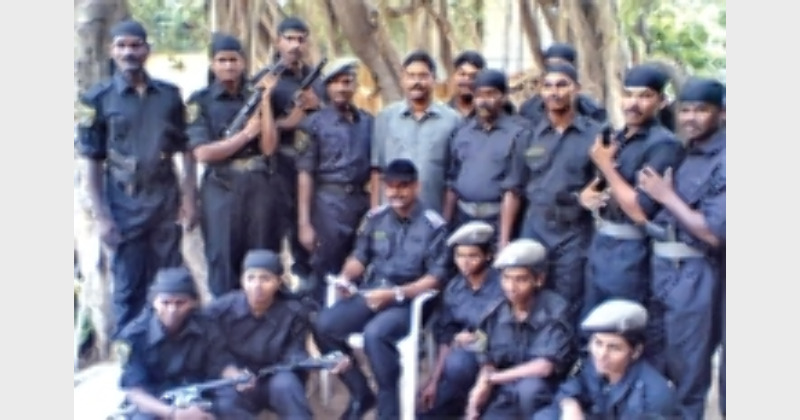
It is widely believed that the Andhra Pradesh model is synonymous with unleashing the security forces–– the elite anti-Naxalite force, Greyhounds––to neutralise the rebels. This is a clear misperception. There are other elements, too, in the security response, all of which together, doubtless, contributed immensely in checking the rebels.
These include:

  • An effective surrender and rehabilitation policy
  • Building the capabilities of the state police through enriching manpower, training, infrastructure and logistics
  • Sensitising the State police at all levels, as well providing exposure to direct recruits of various levels to the training imparted, and the mandate issued, to the Greyhounds
  • Creating a strong institutional mechanism at the Headquarters and at the district level through constituting specialised intelligence and security wings, as well as specialised strike forces
  • Building a strong intelligence network
  • Intelligence-based operations
  • Planning operating procedures in minute detail
  • Ensuring the protection/security of police stations through various measures.
  • Forming grids of police stations involving a cluster of police stations within a given area to ensure the security of police stations
  • Accelerated promotion, victim reassurance and moulding leaders among the police officials at various levels in order to keep high levels of motivation
  • Of the 112 Minor Irrigation schemes planned at an estimated cost of Rs 205.12 cr, a mere 28 schemes have been completed, while 82 schemes are in various stages of progress; work on two more schemes is yet to commence’.
  • Work is yet to begin on the 11 Protected Rural Water Supply Schemes for which a sum of Rs 70 cr has been sanctioned.
  • Construction is yet to begin on any of the 29 Public Health Centre Buildings for which a sum of Rs 20.1 cr has been allocated.
  • In all the five sanctioned Degree Colleges in tribal areas, not even one Lecturer has been appointed on a regular basis, while a few lecturers appointed on contract have been teaching in these colleges, which are in the second year of their functioning (as in 2008). The Principal Secretary, Higher Education, apprised the review meeting that no one was prepared to go and serve in these remoter areas. Resultantly they have not been able to appoint regular lecturers.

Besides, as part of its Development Response the government initiated land re-distribution on large scale and distributed nearly 4.2 lakh acres to the poor. Other development schemes and programmes were launched, too, in the areas of irrigation, health, rural and urban development. Moreover, a myriad number of development schemes and programmes––both State and Central––have been implemented in the State over the past few decades.
Together, these various development initiatives have had an impact on reducing the influence of the Maoists in different affected areas.
The Andhra Pradesh model was not crafted as such, but had evolved over a long period of time.The political will and commitment displayed by the leadership played a significant role in craftihra Pradesh’s response to the challenge posed by the rebels.
The Andhra Pradesh model is, thus, a combination of elements — Political response, Development response tough Security response.
The other affected States have with them the advantage of the experience of Andhra Pradesh in dealing with the Naxalite issue. They would have to clearly recognise that the Andhra Pradesh model is much more than deploying the elite Greyhounds. It involves years’ of painstakingly building-up the fighting capabilities of the State police, their training, logistics and intelligence. Surely, the
leadership has also to be built-up at various levels.
At the same time, even as political will and commitment are a sine-qua-non for successful anti-Naxalite initiatives, while the various other elements of the state response are equally important
Thus, it might not be appropriate to suggest a near total replication of the experiences of Andhra Pradesh in dealing with the rebels. At best, it could serve as a relevant reference point for the other affected States to craft their respective ‘comprehensive’ response.
P V Ramana (The writer is a Research Fellow at Institute for Defence Studies and Analyses, New Delhi)

Share
Tweet
SendShareSend
✮ Subscribe Organiser YouTube Channel. ✮
✮ Join Organiser's WhatsApp channel for Nationalist views beyond the news. ✮
Previous News

Cover Story : Give them the Voice

Next News

Cover Story : The Way Forward

Related News

Vande Mataram: The eternal mantra of national consciousness

A representative image

Team Skill India set for biggest ever WorldSkills push, to compete in 11 new categories at WorldSkills Shanghai 2026

AI-generated representative image

Fragile Five to Fastest-Growing Major Economy – Incredible India’s Transformation in 12 Years

India joins 24 nations in global 6G push

India joins 24 nations in global 6G push, endorses call for secure and resilient networks

Ministry of Defence's ten-year defence diplomacy framework “RAKSHA”, at Kartavya Bhawan in New Delhi. (Source: AI generated Image)

RAKSHA: Ten years of Defence diplomacy turned a decade boosting export and global cooperation

(Left) Naga leader Dr. S. C. Jamir: (Right) RSS Sarsanghchalak Dr Mohan Bhagwat

Bridging Perspectives: Dr SC Jamir meets RSS’ Dr Bhagwat, highlights mutual respect, secularism, and Naga aspirations

Load More

Latest News

Vande Mataram: The eternal mantra of national consciousness

A representative image

Team Skill India set for biggest ever WorldSkills push, to compete in 11 new categories at WorldSkills Shanghai 2026

AI-generated representative image

Fragile Five to Fastest-Growing Major Economy – Incredible India’s Transformation in 12 Years

India joins 24 nations in global 6G push

India joins 24 nations in global 6G push, endorses call for secure and resilient networks

Ministry of Defence's ten-year defence diplomacy framework “RAKSHA”, at Kartavya Bhawan in New Delhi. (Source: AI generated Image)

RAKSHA: Ten years of Defence diplomacy turned a decade boosting export and global cooperation

(Left) Naga leader Dr. S. C. Jamir: (Right) RSS Sarsanghchalak Dr Mohan Bhagwat

Bridging Perspectives: Dr SC Jamir meets RSS’ Dr Bhagwat, highlights mutual respect, secularism, and Naga aspirations

Tiger Bright coffee from Koraput’s tribal farmers featured in BRICS Summit media kits in New Delhi

From Eastern Ghats to BRICS: Koraput Coffee puts Odisha’s tribal enterprise on global map

The RSS has spent a century building influence through organisation, social networks and ideological formation beyond the electoral arena

RSS at 100: How the Sangh built a century-long network of influence beyond Indian politics

India on a Platter: BRICS Dinner Menu Celebrates Regional Culinary Heritage

BRICS Dinner Menu: From Khandvi, mushroom kebabs to pulao global leaders get a taste of Bharat’s culinary heritage

Exterior of the Lokayukta Building

Karnataka Lokayukta records 1,248 cases in four years, 887 linked to bribery

Load More
  • Privacy
  • Terms
  • Cookie Policy
  • Refund and Cancellation
  • Delivery and Shipping

© Bharat Prakashan (Delhi) Limited.
Tech-enabled by Ananthapuri Technologies

  • Home
  • Search Organiser
  • Bharat
    • Assam
    • Bihar
    • Chhattisgarh
    • Jharkhand
    • Maharashtra
    • View All States
  • World
    • Asia
    • Africa
    • North America
    • South America
    • Europe
    • Australia
  • Editorial
  • Operation Sindoor
  • Opinion
  • Analysis
  • Defence
  • Culture
  • Sports
  • Business
  • RSS @ 100
  • Entertainment
  • More ..
    • Sci & Tech
    • Vocal4Local
    • Special Report
    • Education
    • Employment
    • Books
    • Interviews
    • Travel
    • Health
    • Politics
    • Law
    • Economy
    • Obituary
  • Subscribe Magazine
  • Read Ecopy
  • Advertise
  • Circulation
  • Careers
  • About Us
  • Contact Us
  • Policies & Terms
    • Privacy Policy
    • Cookie Policy
    • Refund and Cancellation
    • Terms of Use

© Bharat Prakashan (Delhi) Limited.
Tech-enabled by Ananthapuri Technologies