New Delhi's move to raise objections to Pakistan's plan of holding an election in Gilgit-Baltistan is belated but a move the right direction
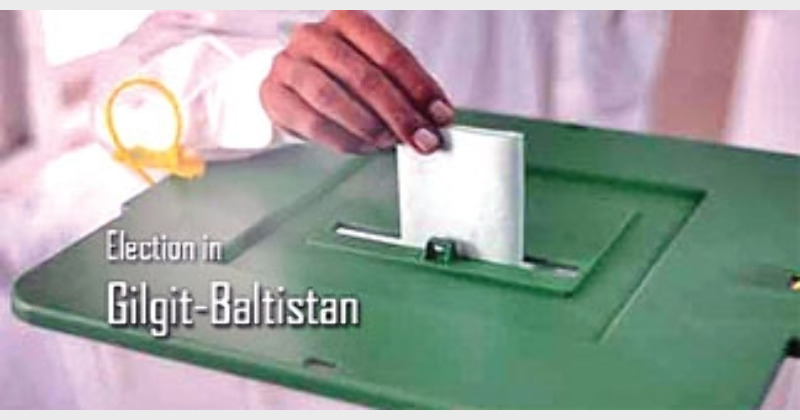
The recent opposition by the Government of India to the conduct of elections in Gilgit-Baltistan, a part of the territory of Jammu and Kashmir under the illegal occupation of Pakistan since 1947, is a step in the right direction, albeit a bit late.
Government of India in a strong statement on 2 June, termed the elections to Gilgit-Baltistan Legislative Assembly slated for 8 June, as an attempt by Pakistan to “camouflage its forcible and illegal occupation” of the regions which are integral part of the country. Gilgit-Baltistan, strategically the most significant part of the former princely state of Jammu & Kashmir, has been under Pakistani occupation for six and a half decades. It was annexed by Pakistan during the tumultuous era of 1947-48, when the then princely state of Jammu and Kashmir acceded to India. Of late there have been attempts by Pakistan to separate Gilgit-Baltistan from other parts of Pakistan occupied Jammu and Kashmir and to project it as an integral part of Pakistan.
Regrettably, the Indian response to the creeping colonisation and annexation of Gilgit-Baltistan has been rather muted. Apart from 800 Km2 of territory in Baltistan that was recaptured by Ladakh Scouts in 1971, no worthwhile attempt was made by India in the past, to reassert its authority over this region, which is constitutionally and legally an integral part of India. Since 14 August 1948, when Skardu Garrison surrendered, India has not used various diplomatic channels to reassert its lawful claims over this territory. Although, the UN resolution talked of withdrawal of Pakistani troops from the region, neither Pakistan complied with it, nor pressure was put on it do so.
Pakistan’s illegal occupation of Gilgit-Baltistan was formalised by the Pakistan authorities by signing an agreement with presidents of ‘Azad Kashmir’ and Muslim Conference on April 28, 1949 in Karachi. Ironically, neither the so called ‘Azad Kashmir’ nor the Muslim Conference represented even one individual from Gilgit-Baltistan.The agreement, which tried to legitimise Pakistani administrative control over the region, was not opposed vehemently by the Government of India. In 1963, Pakistan gave away 2500 square miles of the territory of the former state of Hunza to China as part of Sino-Pak Agreement, despite opposition by Mir of Hunza
In 1974, Zulfiqar Ali Bhutto, abrogated the State Subject Rule, which had prevented naturalisation of outsiders in Gilgit-Baltistan. This opened the floodgates and since then the demographic composition of this strategic region has undergone drastic change. Pakistan, suspicious of this Shia majority region has desperately tried to settle Pakhtun tribesmen from Khyber Pakhtunkhwa and The Federally Administered Tribal Areas (FATA). This ethnic transplantation has transformed the composition of society in Gilgit city and bordering districts. Till recently, Frontier Crimes Regulations (FCR), which treated tribesmen as barbaric and uncivilised and levied collective fines and punishments and had been imposed by the British on the recalcitrant tribes of the Frontier Region had been retained in Gilgit-Baltistan.
Even Indian opposition to Diamer Bhasha Dam in Gilgit- Baltistan, which will inundate, what is constitutionally Indian Territory, to provide power and irrigation to Pakistan has not been opposed vehemently. Many international institutions, like World Bank have from time shown willingness to fund this project and other hydroelectric projects in Gilgit-Baltistan. These projects will inundate fertile valleys and displace population, causing severe hardships to the people and India would be fully justified in opposing these projects. However, media reports indicate that Asian Development Bank cleared two hydroelectric projects for funding in POJK, when Indian representative was absent.
The Northern Areas Legislative Council (NALC) was created in 1994, but remained a dysfunctional consultative forum, presided over by the Minister for Kashmir Affairs, who was also the de-facto Chief Executive of the Northern Areas. The NALC itself was a mixed bag of directly and indirectly elected members, withhardly any powers of legislation and its members were treated with contempt. The realisation that it was a toothless body was reflected in the voter apathy during the last NALC elections in October 2004.The bureaucratic rule – mainly from the NWFP and the Punjab – heightened the sense of alienation and completely eroded the notion of self-rule from amongst the people’s minds. To counter the growing demands for local self-rule, the authorities have tried to divide them along sectarian and ethnic lines.
However, after failing to create large-scale divisions amongst the people Pakistan government announced certain concessions to locals in the form of Gilgit-Baltistan (Empowerment and Self-Governance) Order-2009. The order renamed the region as Gilgit-Baltistan, fulfilling a longstanding demand of the residents of the region. It also gave the region a local administration headed by a ‘Chief Minister’, to be elected by the Gilgit-Baltistan Legislative Assembly (GBLA), who would head a council of ministers, comprising six ministers and two advisors. The order also introduced a judicial set-up with the establishment of an Appellate Court, comprising of a Chief justice and two other judges. There is also a provision for a separate Public Service Commission, a Chief Election Commissioner and an Auditor General for the region. Unfortunately, it does not provide either the Chief Minister or the Legislative Assembly with any worthwhile powers as the real powers rest with the Governor of Gilgit-Baltistan, who is appointed by the President of Pakistan, on the advice of the Prime Minister.
Although there is an elected Legislative Assembly, but the real power vests with the Gilgit-Baltistan Council, whose Chairman is the Prime Minister of Pakistan and most of whose members are the appointees of the Pakistani government. Although, the number of subjects on which the assembly can make law has been increased from 49 to 61, the Council retains the exclusive power to legislate on 55 issues, which are of far greater significance. In any case, certain issues like defence, foreign affairs and security are beyond the purview of both the Assembly and the Council. Similarly the Chief Justice of the Appellate Court is appointed by the Chairman of the Council (Prime Minister of Pakistan) on the advice of the Governor (another appointee). Other judges are also appointed by the Chairman on the advice of the Governor, after seeking views of the Chief Justice. The order stipulates that the budget will be presented to the assembly and passed by it; however, what is significant is that it would be prepared by the Pakistani bureaucrats. Similarly, all members of Public Service Commission, the Auditor General or the Election Commissioner are to be either the direct or indirect appointees of Islamabad.
It is significant to note that the region has no representation in either the Pakistani Parliament or the Council of Ministers, who can have the final say in the future set up of the region. This order was the first step taken by Pakistan government towards amalgamating this strategically significant region into Pakistan. Unfortunately, there was no worthwhile Indian response.
People of the region have been denied the basic fundamental rights as enshrined in the Universal Declaration of Human Rights. The growing discontentment within Gilgit-Baltistan is further compounded by the growing conviction in the region that successive Pakistani governments, which call for “basic human rights” in Jammu and Kashmir, ignore these very rights in the case of this region. Even the media has been muzzled in the region.
The region is legally and constitutionally an integral part of India. In the past, Indian governments have maintained stoic silence over the happenings there. Consequently, Indian authorities kept mum during the last elections to Gilgit-Baltistan Legislative Assembly. The recent protest by Indian authorities against the elections is therefore a belated move in the right direction.
Alok Bansal
(The writer is the Director- Centre of Security and Strategy, India Foundation)