WATER CRISIS?
December 14, 2025
  • Read Ecopy
  • Circulation
  • Advertise
  • Careers
  • About Us
  • Contact Us
Android AppiPhone AppArattai
Organiser
  • ‌
  • Bharat
    • Assam
    • Bihar
    • Chhattisgarh
    • Jharkhand
    • Maharashtra
    • View All States
  • World
    • Asia
    • Europe
    • North America
    • South America
    • Africa
    • Australia
  • Editorial
  • International
  • Opinion
  • RSS @ 100
  • More
    • Op Sindoor
    • Analysis
    • Sports
    • Defence
    • Politics
    • Business
    • Economy
    • Culture
    • Special Report
    • Sci & Tech
    • Entertainment
    • G20
    • Azadi Ka Amrit Mahotsav
    • Vocal4Local
    • Web Stories
    • Education
    • Employment
    • Books
    • Interviews
    • Travel
    • Law
    • Health
    • Obituary
  • Subscribe
    • Subscribe Print Edition
    • Subscribe Ecopy
    • Read Ecopy
  • ‌
  • Bharat
    • Assam
    • Bihar
    • Chhattisgarh
    • Jharkhand
    • Maharashtra
    • View All States
  • World
    • Asia
    • Europe
    • North America
    • South America
    • Africa
    • Australia
  • Editorial
  • International
  • Opinion
  • RSS @ 100
  • More
    • Op Sindoor
    • Analysis
    • Sports
    • Defence
    • Politics
    • Business
    • Economy
    • Culture
    • Special Report
    • Sci & Tech
    • Entertainment
    • G20
    • Azadi Ka Amrit Mahotsav
    • Vocal4Local
    • Web Stories
    • Education
    • Employment
    • Books
    • Interviews
    • Travel
    • Law
    • Health
    • Obituary
  • Subscribe
    • Subscribe Print Edition
    • Subscribe Ecopy
    • Read Ecopy
Organiser
  • Home
  • Bharat
  • World
  • Operation Sindoor
  • Editorial
  • Analysis
  • Opinion
  • Culture
  • Defence
  • International Edition
  • RSS @ 100
  • Magazine
  • Read Ecopy
Home Bharat

WATER CRISIS?

It is only in recent times that the human population is witnessing

Archive ManagerArchive Manager
Jul 14, 2014, 07:24 pm IST
in Bharat
Follow on Google News
FacebookTwitterWhatsAppTelegramEmail

WATER CRISIS?

Intro: The need of the hour is to revive traditional wisdom and traditional ways of water management.?
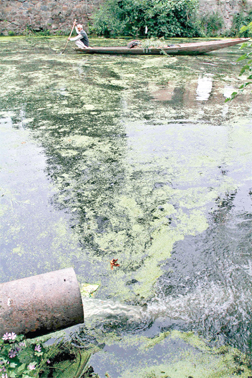
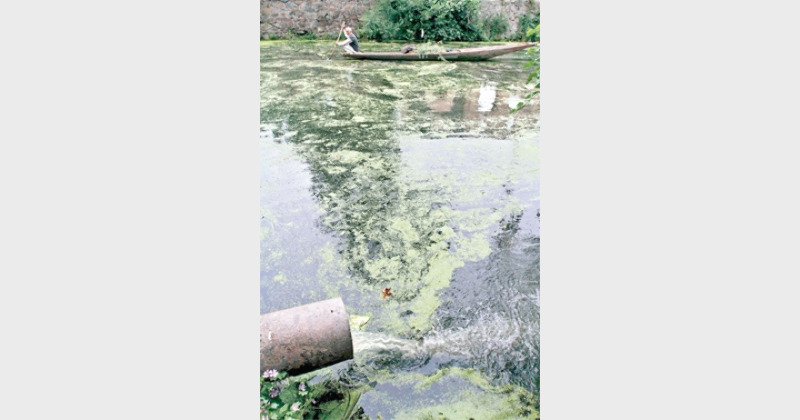
$img_titleIt is only in recent times that the human population is witnessing serious droughts, is facing floods and other calamitous water scarcity in the form of vanishing lakes, drying rivers and falling water tables. Definitely, humankind who has to its credit the modern marvels of science and technology, is not only at a loss to understand this calamity but is finding itself helpless in checking, mitigating or reversing it. Let us analyse one by one, the factors, which has led to water crisis that is staring many countries and particularly India in the face.

What we need to do

  1. Educate masses, especially the national and international decision makers. They need to understand that as mentioned in our primeval scriptures, the Vedas — especially Rigveda and Atharvaveda-our ancestor knew right ways of managing natural resources that were in tune with nature.
  2. Stop dumping untreated industrial waste into rivers. 
  3.  Anti pollution laws need to be stringent.
  4.  Rainwater harvesting should be a mandatory practice.
  5. Serious thinking needs to be done for building cities and towns of the future.

?

1. Urbanisation
Urbanisation, marked by rapid growth and proliferation of cities and dwindling population of villages are an important feature of Industrial revolution that began in Europe. In urban living, consumptive water is drawn from rivers and waste water in the form of sewage is dumped into the rivers. Contaminated waste water – an industrial effluent finds its way into the rivers, pollutes them and impacts the fertility of the landmass contiguous to their banks. The reduced fertility reduces the greenbelt and foliage, and disturbs the ecosystem.
In the present time, water tables have become extremely low due to large scale drawing of underground water through bore wells and hand pumps. Rainwater harvesting of medieval and ancient times with virtually little or no dependence on rivers for human water needs was a water management practice quite in tune with nature. Unfortunately, this is not the case today. By tampering with the natural water cycle systems, we have invited a multitude of problems for ourselves. Even modern scientists acknowledge that more than 30 percent drawing of water from rivers for consumption is ecologically and environmentally disastrous.
2. Hydro power plants , dams/barrages
The proliferation of micro, mini or mega hydro power plants or plain barrages across rivers has thrown up newer set of problems related to environment and ecosystem. It is estimated that Ganga river, originating from the foot of Himalayas, carries with it nearly 360 million tonnes of mineral rich fertile soil to the plains every year. By constructing dams and barrages across the flow of the Ganga, this soil does not reach the plains where it is intended to be taken by nature and, it gets deposited on the upstream walls and concrete embankments of the barrages. In due course, this deposition of mineral rich soil called silt undermines the operation of dams and hydro electric plants too and disturbs the distribution of water in the upstream and downstream regions of the land.
3. Greenhouse effect and melting glaciers
The extremely high dependence on hydrocarbons as a fuel and the consequent loading of the atmospheric air by carbon-di-oxide has created the ‘Greenhouse effect’ marked by global warming and climate change. The percentage of carbon-dioxide in the atmosphere has gone up from the normal level of 0.02 percent. And today, serious environmental consequences of global warming are monstrously peeping at us.
Himalayan glaciers are melting rapidly and peaks receding like never before. In India, the Gangotri Glacier retreated 34 m per year between 1970 and 1996, and has averaged a loss of 30 m per year since 2000. For the Indian Himalayas, retreat averaged is 19 m per year for 17 glaciers. In Sikkim, 26 glaciers are retreating at an average rate of 13.02 m per year from 1976 to 2005. 51 glaciers in the main Himalayan Range, Nepal and Sikkim are retreating, at an average rate of 23 metres per year.

-Atul Sehgal? (The writer is a senior professional in Infrastructural Consultancy and can be contacted at atul4956@gmail.com)?
ShareTweetSendShareSend
✮ Subscribe Organiser YouTube Channel. ✮
✮ Join Organiser's WhatsApp channel for Nationalist views beyond the news. ✮
Previous News

Analysis: Old theories can shape?

Next News

Role of Women in Global ?Jihad

Related News

Representative Image

Does the bossing by the Supreme Court also fall within ‘the basic structure of the constitution’

Union Home Minister Amit Shah speaks at the Bastar Olympics 2025

Chhattisgarh: Bastar will be most developed tribal division in the country in 5 years, says, Home Minister Amit Shah

A case that tests the system—not just the accused

Maharashtra DCM pays tribute at Smriti Mandir, Nagpur

Maharashtra: Visiting Smriti Mandir evokes patriotism & service urge, says DCM Eknath Shinde on tribute to Hedgewar

The role of Gen AI in election campaign

How Generative AI is redefining the election campaigns

Representative Image

Manipur: Security forces recover cache of arms, ammunition in Kakching district; Strive for heightened public safety

Load More

Comments

The comments posted here/below/in the given space are not on behalf of Organiser. The person posting the comment will be in sole ownership of its responsibility. According to the central government's IT rules, obscene or offensive statement made against a person, religion, community or nation is a punishable offense, and legal action would be taken against people who indulge in such activities.

Latest News

Representative Image

Does the bossing by the Supreme Court also fall within ‘the basic structure of the constitution’

Union Home Minister Amit Shah speaks at the Bastar Olympics 2025

Chhattisgarh: Bastar will be most developed tribal division in the country in 5 years, says, Home Minister Amit Shah

A case that tests the system—not just the accused

Maharashtra DCM pays tribute at Smriti Mandir, Nagpur

Maharashtra: Visiting Smriti Mandir evokes patriotism & service urge, says DCM Eknath Shinde on tribute to Hedgewar

The role of Gen AI in election campaign

How Generative AI is redefining the election campaigns

Representative Image

Manipur: Security forces recover cache of arms, ammunition in Kakching district; Strive for heightened public safety

Winning the narrative war

The need for strong narratives in Bharat

R. Ashoka, Leader of Opposition

Karnataka: Opposition condemns diversion & misuse of exclusive SCSP, TSP funds for guarantee schemes

Deceit and manipulation became symbolic of Congress governance

Special Intensive Revision: A red rag to the opposition

R Sreelekha, Kerala’s first woman IPS officer and former DGP, wins from the Sasthamangalam ward in the Trivandrum Corporation elections

Kerala Local Body Polls: BJP fields first woman IPS officer and ex-DGP R Sreelekha, wins big in Trivandrum Corporation

Load More
  • Privacy
  • Terms
  • Cookie Policy
  • Refund and Cancellation
  • Delivery and Shipping

© Bharat Prakashan (Delhi) Limited.
Tech-enabled by Ananthapuri Technologies

  • Home
  • Search Organiser
  • Bharat
    • Assam
    • Bihar
    • Chhattisgarh
    • Jharkhand
    • Maharashtra
    • View All States
  • World
    • Asia
    • Africa
    • North America
    • South America
    • Europe
    • Australia
  • Editorial
  • Operation Sindoor
  • Opinion
  • Analysis
  • Defence
  • Culture
  • Sports
  • Business
  • RSS @ 100
  • Entertainment
  • More ..
    • Sci & Tech
    • Vocal4Local
    • Special Report
    • Education
    • Employment
    • Books
    • Interviews
    • Travel
    • Health
    • Politics
    • Law
    • Economy
    • Obituary
  • Subscribe Magazine
  • Read Ecopy
  • Advertise
  • Circulation
  • Careers
  • About Us
  • Contact Us
  • Policies & Terms
    • Privacy Policy
    • Cookie Policy
    • Refund and Cancellation
    • Terms of Use

© Bharat Prakashan (Delhi) Limited.
Tech-enabled by Ananthapuri Technologies