





Deepshikha Chauhan
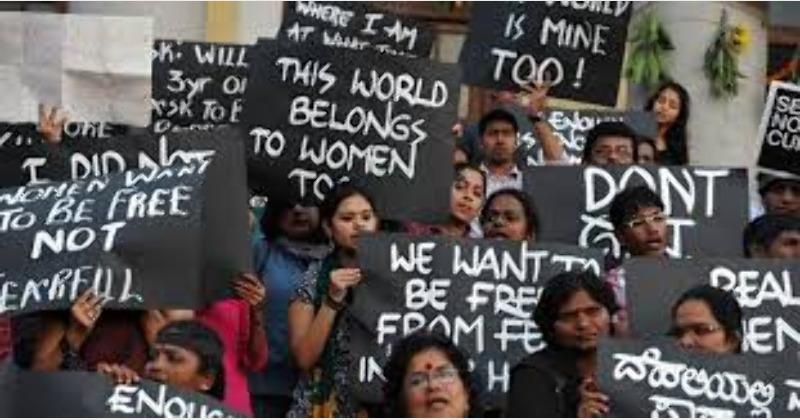
 Indian women raised the issue of representation in Indian politics first in 1917. At that time it was a basic demand for universal adult franchise and representation in politics. By 1930, the right to vote became reality, but it remained limited to a few elite women, and despite India witnessing 16 General Elections after independence, general representation of women in political parties, parliament and other key decision making bodies’ remained abysmally low.
The international annual analysis on statistics of women members of parliament (MPs) conducted by the Inter-Parliamentary Union (IPU) – an international organisation of parliaments that works for the establishment of representative democracies reveals that, women have a poor 11% representation in India”s Lok Sabha and 10.6 % in the Rajya Sabha, ranking India 108th among 188 countries covered in the annual analysis on statistics.
The global average of women in parliaments as of November 2013 which is at 21.3 % does not represent a healthy picture either, as it represents a slight increase over the numbers in the immediately preceding two years as (20.3 % and 19.5%).
Though women in India constitute nearly half the population of the country, even till today they remain poorly represented in governance. According to statistics released periodically by the Election Commission, for the 543 Lok Sabha constituencies, where the number of women voters in India has increased from 44.3% to 45.8%, the number of elected women has only increased from 49 in 1999 to 59 in 2009, and her representation in politics still needs to cross the 10 per cent milestone.
Women Representation in India
Through the Panchayat Raj institutions, over a million women have actively entered political life in India. As per the 73rd and 74th Constitutional Amendment Acts, all local elected bodies reserved one-third of their seats for women. Although the percentages of women in various levels of political activity have risen considerably, women are still under-represented in governance and decision making positions.
Indian National Congress and Bharatiya Janata Party dominate women parliamentarians compared with other parties. It needs to be noted here that, while the states Madhya Pradesh, Uttar Pradesh and West Bengal stand out with more women members of Parliament, there has been no women member from Uttarakhand. For being largely misrepresented it is therefore seen that only ten per cent women occupy all top political position compared to 90 per cent occupation by men.
Case for women’s wider participation in politics
Women represent almost half the population of the country, but remain poorly unrepresented in the various government and decision-making bodies.
The lack of resources to enter and compete in contemporary political arena, and lack of opportunities for entering politics without the patronage of male leaders or mentors have limited women’s entry in politics. So the overall improved social indicator in the development graphs in no way indicates that there is improvement in women’s political participation and representation in India eventoday.
Countries like Belgium, France and Germany, and other countries such as Egypt, Iraq, and Nepal legislatively provide for quotas for women candidates. Even, countries like Afghanistan, Bangladesh, China and Pakistan reserve seats for women in parliament. India will need to implement the same if it seriously aims at increasing women representation in future.
As equal right to vote, participation and representation in legislative bodies may not be enough for women’s political empowerment, equality with equity is a goal that needs to be buttressed by other supportive measures to help women live with dignity.
Women’s Charter of Demands for 16th Lok Sabha elections
- Enact the 33% Women’s Reservation Bill to reserve one – third seats in Parliament and State Assemblies for women.
- Legislation for at least 50% reservation for women in all decision-making bodies;
- Enact the Constitution (One Hundred and Tenth Amendment) Bill, 2009 after necessary amendments to enhance reservation for women from one-third to one-half of the total seats in the Panchayats and Municipalities; provide similar reservation for the offices of Chairpersons.
Expectations from the New Government
Change in attitude towards women and transformation of India’s Infrastructure to give women an equal and safer place is needed. Changing attitude may take time but provision of infrastructure can be a simple one time policy decision.
Lack of adequate public transport, lighting on public streets, parks and other places, toilets and other public facilities hamper the right of a woman to live with dignity. Let’s see how…Public toilets are designed with an invariably male user in mind. The women’s toilets are dark and unfriendly and are often closed after 9 p.m. as if to suggest that women are not supposed to be outside in public at night. As a consequence, it is often reported that offences including molestation and rapes mostly occur when women go out in the night.
Safety of girl child must be ensured through strict formulation and implementation of laws against female foeticide and should be supplemented by awareness campaigns and proper investigation of foeticide cases.
Education should be encouraged among the girls by giving them incentives to go to school including relaxation in school fee, scholarship, uniforms, etc.
Loans at low interest should be provided to women for education and employment.
Clean drinking water and Sanitation facility in schools should be ensured to encourage women to continue their studies. Reports reveal most girls drop-out form school for lack of washrooms and sanitation which is essential for them during their growing years.
Police reforms are much needed to protect women. Friendly and efficient police force that includes more number of female cops who can be trusted with quick disposal of complaints regarding eve teasing, sexual harassment etc. in a compassionate manner will ensure women safety. Greater representation of women in key committees, councils, policy framing agencies should be encouraged. The aforementioned demands if implemented will go a long way in ensuring safe life, equal participation, equity, and the right to live with dignity to a woman. And I don’t think I”m asking too much?.
(Advt Monika Arora, Supreme Court of India)








Comments