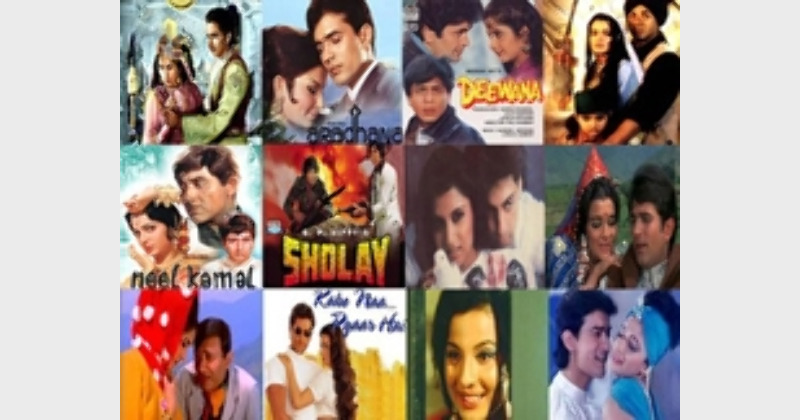
 To some Indian Film Industry is a like factory or a gigantic machine producing more than 800 movies a year; for us Indians the movie-making is more like cooking our favourite dish. Like Indian cuisine have innumerable dishes of various tastes, so are our movies in various languages and on a plethora of themes. The themes of the Indian Movies are so diverse that from mainstream cinema to parallel ones all can be accommodated in them. There is no dearth of plots; it can range from comedy to action, to drama, to tragedy, to romance, to social issues, to anything and everything under the Sun. And like with cuisine we Indians experiment adding a few spices or mixing a few more ingredients, so is with our films where we can have comedy with action or drama with romance or even better, all this in one. Sometimes we mess up but sometimes we cook something so delicious that generations enjoy its taste; like in the case of masterpieces like Sholay.
Once we look at the Indian Cinema as a delicious and indigenous dish we can understand the concept of ‘Masala’ in it. It’s our own variety of spices tested and ‘tasted’ by our seasoned filmmakers, which ensure us that our dish is going to be good. These few ingredients can be found in almost every Indian Movie. If we pay a little attention and think about the inception of these ‘Masalas’ we find that somewhere or the other they are originated from the age old Indian psyche; from Indian history, mythology, spirituality and traditions. Not only when we make religious or cultural movies but in outright commercial movies too we can find them at work. Whether a comedy, or a tragedy, or action they are to be seen everywhere. Here we are presenting a few such unique Indian specialties which have been shaped by our cinema and have given shape to our cinema over last 100 years.
Happy Endings
This concept can justifiably claim to be the central theme of most of the movies. It is the concept of “victory of good over evil”. So important it is that in order to make the “good” win, our “hero” can single handedly beat black and blue a whole battalion of villains; and no one dares to call it ‘illogical’, or to be precise, on one even considers it as ‘illogical’; and that’s how we are. For us being ‘illogical’ can go but the “good” must win and the “evil” must end. What use is of “logic” if it cannot even make the “good” win?
Punarjanam
One of the favourite Masala of Indian Cinema is of “Punarjanam” or reincarnation. Like many other Indian themes, this concept also owes its roots to the Indian mythology and is one of the bestselling recipes commercially. From stalwarts of black and White like “Bimal Roy” to the most recent ones like “Farah Khan” it has been one of the favourite themes of the film-makers. The genre of Punarjanam also has the honour of having some of the most successful movies of Indian Cinema like Karz, Karan-Arjun, Om Shanti Om, Madhumati, Kudrat, Neelkamal, etc to its hall of fame. The Indian idea of the “victory of good over evil” which is almost omnipresent in Indian movies can be seen in the basic plot of such movies where even after the death the “good” returns to settle the scores with the “evil” leading to the ultimate defeat of the latter.
Double Role
Like Punarjanam, “Double Role” is also an “OK tested” theme of the Indian Cinema; especially for Comedy movies. Ram aur Shyam, Seeta aur Geeta, Chaalbaaz, Duplicate, Judwa, Don, Hum Dono and Angoor are examples of some movies which have exploited the plot in a very efficient way. Again like Punarjanam, the concept of double role has been there from black and white era up to the hits like Rowdy Rathore.
Family and Maa
“Mere Paas Maa Hai”… This one dialogue is enough to show what the status of Maa and family is in our movies. There’s nothing more sacrosanct than Maa and family in the Indian movies. Though in reality the society is running fast towards the ‘nuclear family’ model but in our movies we can still see our traditional ‘joint family’ enjoying its status. Leading production house like ‘Rajashri Productions’ has made superhits like Hum Aapke Hain Kon and Hum Saath Saath Hain just on the concept of family only; similar is the case with ‘Kabhi Khushi Kabhi Gham’ of ‘Dharma Productions’. Family is one of the most important components of many movies today also.
Patriotism
To be honest, even a dozen of political parties or hundreds of slogans won’t be able to instill so much of patriotism in a person as is instilled by a two and a half hour movie like Border or Rang De Basanti or Haqeeqat or Bhagat Singh. Songs like Ae Mere Watan ke Logon, Mera Rang De Basanti Chola, Vande Mataram, Sarfaroshi ki Tamanna, Kar Chale Hum Fida have produced more martyrs than all the sterile speeches by so called patriotic leaders put together. Indian people owe a lot to these movies for making martyrs out of common man and for making generations of Indians patriotic.
Festivals and Weddings
Grand is the Indian Cinema and so are its celebrations. One of the reasons of movies becoming so popular in India is the prominence with which they portray the celebration of Indian festivals; whether it is of Karwa Chauth, Diwali, and the ‘holiest of holi’ our HOLI. Holi alone can claim some of the most hit songs like ‘Holi ke Din’, ‘Holi khele Raghubeera’, ‘Aaj na Chhodenge bas Humjoli’, ‘Rang Barse’, etc dedicated to it. Festivals like Karwa Chauth were unknown to a major part of the country but it’s due to movies that they are a ‘fashion’ today. Similarly with weddings; it’s movies because of which the ‘Grand Indian Weddings’ have got such a reputation worldwide. Not just worldwide but in India also the movies have given the weddings new colours and style. Even if we leave movies like “Vivah”, which was completely based on wedding only, still in every other movie we can see the grand celebrations of weddings.
It won’t be an exaggeration to say that movies, through the channels of these festivals and wedding celebrations, have helped a lot in making a pan-Indian culture and integrating people across the length and breadth of the country.
These are the reasons for which we say that Indian Cinema is like a ‘cultural brand ambassador’ of India. It is now a part of our culture like some indigenous Indian dish made up of various spices with true Indian tastes. This is what we feel a true Indian movie is. It’s a reflection of the traditional psyche of the Indians, it’s a drama par excellence making you cry and laugh, it’s a cultural ambassador of Indian traditions, a collage of tragedy, comedy, drama, action romance. It’s Indian Cinema.
—Aniruddh Subhedar