India?s endeavour to explore new resources
September 17, 2026
  • Read Ecopy
  • Circulation
  • Advertise
  • Careers
  • About Us
  • Contact Us
Android AppiPhone AppArattai
Organiser
  • ‌
  • Bharat
    • Assam
    • Bihar
    • Chhattisgarh
    • Jharkhand
    • Maharashtra
    • View All States
  • World
    • Asia
    • Europe
    • North America
    • South America
    • Africa
    • Australia
  • Editorial
  • International
  • Opinion
  • RSS @ 100
  • More
    • World Hindu Congress 2026
    • Op Sindoor
    • Analysis
    • Sports
    • Defence
    • Politics
    • Business
    • Economy
    • Culture
    • Special Report
    • Sci & Tech
    • Entertainment
    • G20
    • Azadi Ka Amrit Mahotsav
    • Vocal4Local
    • Web Stories
    • Education
    • Employment
    • Books
    • Interviews
    • Travel
    • Law
    • Health
    • Obituary
  • Subscribe
    • Subscribe Print Edition
    • Subscribe Ecopy
    • Read Ecopy
  • ‌
  • Bharat
    • Assam
    • Bihar
    • Chhattisgarh
    • Jharkhand
    • Maharashtra
    • View All States
  • World
    • Asia
    • Europe
    • North America
    • South America
    • Africa
    • Australia
  • Editorial
  • International
  • Opinion
  • RSS @ 100
  • More
    • World Hindu Congress 2026
    • Op Sindoor
    • Analysis
    • Sports
    • Defence
    • Politics
    • Business
    • Economy
    • Culture
    • Special Report
    • Sci & Tech
    • Entertainment
    • G20
    • Azadi Ka Amrit Mahotsav
    • Vocal4Local
    • Web Stories
    • Education
    • Employment
    • Books
    • Interviews
    • Travel
    • Law
    • Health
    • Obituary
  • Subscribe
    • Subscribe Print Edition
    • Subscribe Ecopy
    • Read Ecopy
Organiser
  • Home
  • Bharat
  • World
  • Operation Sindoor
  • Editorial
  • Analysis
  • Opinion
  • Culture
  • Defence
  • International Edition
  • RSS @ 100
  • Magazine
  • Read Ecopy
Home Bharat

India?s endeavour to explore new resources

Energy is an inevitable requirement for growth. The more energy a society consumers per capita, the better is its quality of life. Whenever in the history of mankind we have made a breakthrough in our lifestyle

Archive ManagerArchive Manager
Jun 16, 2013, 02:33 pm IST
inBharat
Follow on Google News
Facebook
Twitter
WhatsAppTelegramEmail

undefinedEnergy is an inevitable requirement for growth. The more  energy a society consumers per capita, the better is its quality of life. Whenever in the history of mankind we have made a breakthrough in our lifestyle, our energy consumption has also significantly increased.

As a  developing country India is in a state of transition of energy usage and has rapidly  increasing energy demands to support its growth. Growing  energy demands and concerns for energy security are now spurring us to look for alternative energy sources.

India has abundant  reserves of coal  so more than  50 per cent of  our energy needs are met by coal. Since we don’t have enough petroleum reserves, so we import more than 70 per cent of our petroleum needs. Reducing  our dependence on foreign sources of oil and gradual depletion of non-renewable resources is one of the major reasons why we  are exploring new avenues of energy. This is where we want the renewable and non-conventional energy resources. Though it is difficult to estimate when the world will run out of fossil fuel, but it is certain that soon we will run out of them. For dependable sources of energy in future we will have to look beyond coal and petroleum and explore energy sources that might be entirely new.

India has a well-developed,  indigenous nuclear power programme and considerable amount of fuel in the form of thorium sands for breeder reactors. Though  the power production part of a nuclear plant’s  life cycle does not emit any pollutants the problem starts with the spent nuclear fuel rods. Even though they can no longer be used for power production, these fuel rods are still considerably radioactive which makes their disposal a problem.

India has limited potential in the field of hydroelectricity and much of it has been fulfilled. Currently there is much stress and interest regarding micro-hydroelectric  projects. These would require small hydro-turbines running on small or large rivers without needing gigantic dams and aiming  to satisfy the energy needs of a single village on a river bank.

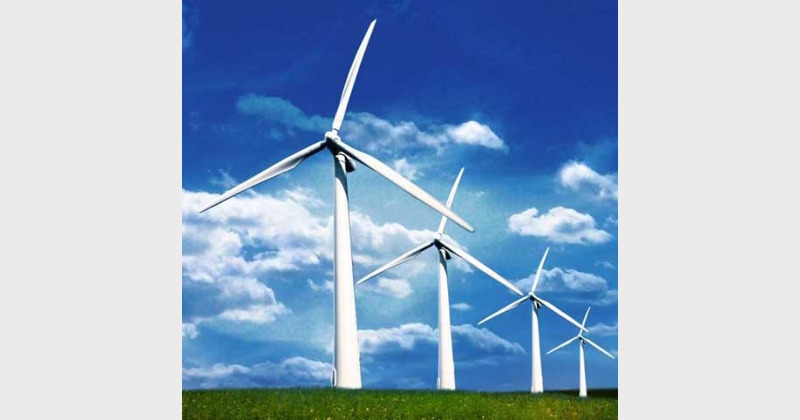
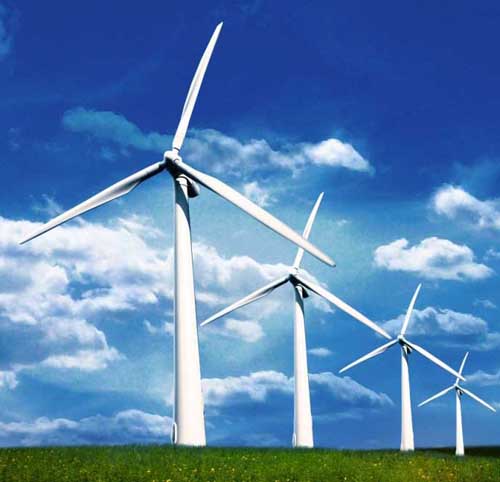
Most of our country’s renewable energy potential lies in the development  of wind energy. Wind energy surveys  of large parts of the country are still in progress. Till mid 2012, more than 17 GW wind energy production capacity has been installed.

Being located near the Tropics India does receive plenty of sunlight. Places like Gujarat and Rajasthan have uninterrupted sunshine to generate electricity using sunlight. Currently all solar power projects are photovoltaic in nature while small-scale solar thermal installations are operational in cities like Chennai and Bengaluru.

Another viable means of energy production  is conversion of organic waste into energy. We have had some success in this regard by pilot biogas projects in several villages. Research is leading to more and new ways of making energy form organic matters, waste or otherwise. One of the ways is production of Syngas, which can be used to produce hydrocarbons and synthetic petroleum  in the long run.

One vital aspect of energy use, apart form power generation, is in transportation. This sector  has also seen the growth of many new fuels that could end our dependence on imported petrol. Amongst alternative fuels, we now use Liquefied Petroleum Gas (LPG) and Compressed Natural Gas (CNG). Future plans include use of hydrogen in petrol-burning engines too. Biodiesels-derived from oil of plants like jatropha, karanja  and even from algae are currently in limited use by mixing with diesel in a 20:80 ratio. Development of alternative fuels is such that they can be used in the current vehicles with minimal or no changes. And most importantly these alternative fuels have minimal adverse effects on atmosphere compared to fossil fuels.

Parallel to developing and exploring new energy sources, another priority for us should be  economic use of the resources we have. With a growing population, our energy demands are increasing much  faster than even before in history. The need of the hour is efficient use of energy and end of all wasteful usage.                  —Aniket Raja


 Venkataraman Ramakrishnan

India’s fourth scientist to win Nobel Prize

Venkataraman Ramakrishnan was born at Chidambaram, a small town in Cuddalore district in Tamil Nadu in 1952. His parents CV Ramakrishnan and Rajlakshmi were lecturers of biochemistry at Maharaj Sayajirao University in Baroda, Gujarat.

Venky, as he is popularly known, did his schooling form the Convent of Jesus and Marry in Baroda. He migrated to America to do his higher studies in physics. He then changed his field to biology at the University of California.

He moved to MRC Laboratory of Molecular Biology, Cambride. It was there he cracked the complex functions and structures of Ribosome,  which fetched him Nobel Prize for Chemistry in 2009, along with Thomas E. Steitz and Ada E Yonath. He  became the fourth scientist of Indian origin to win a Nobel Prize after Sir CV Raman, Har Gobind Khurana and Subrahmanyan Chandrasekhar.

Venkataraman Ramakrishnan began his career as a Post Doctoral Fellow with Peter Moore at Yale University, where he worked on Ribosome. After completing this research, he applied to nearly 50 universities in the US for a faculty position. But he was unsuccessful. As a result of this, Venkataraman continued to work on Ribosomes from  1983 to 1995 in Brookhaven National Laboratory.

In 1995, he got  an offer from University of Utah to work as a  professor of Biochemistry. He worked there for almost four years and then moved to England where he started working in Medical Research Council Laboratory of Molecular Biology. There, he began a detailed research on Ribosome.

In 1999, along with his fellow mates, he published a 5.5 angstrom resolution structure of 30s subunit of  Ribosome. In the subsequent year, Venkataraman submitted a complete structure of 30s subunit of  Ribosome and it created a sensation in structural biology.

Venkatarman earned a fellowship form the Trinity College, Cambridge and the Royal Society. He is also an honorary member of the US National Academy of Sciences. In 2007, he was awarded with the Louis-Jeantet prize for his contribution to Medicine. In 2008, he was presented with Heatley Medal of British Biochemistry Society.

For his contribution to Science, he was conferred with India’s second highest civilian award, the Padama Vibhushan in 2010.                                   

                                      (FOC)   

Share
Tweet
SendShareSend
✮ Subscribe Organiser YouTube Channel. ✮
✮ Join Organiser's WhatsApp channel for Nationalist views beyond the news. ✮
Previous News

Saints demand Bill for Ram temple in Monsoon Session

Next News

Sai Baba-A Saint for All Seasons!

Related News

Akhil Bharatiya Vidyarthi Parishad (ABVP) National Secretary Shravan B. Raj strongly condemned Karnataka Congress President B. K. Hariprasad’s statement describing Umar Khalid as a ‘nationalist’

ABVP slams Congress over Delhi riots 2020 accused Umar Khalid remark, questions ‘Changing’ nationalism narrative

Veteran Kannada Actor Ananth Nag wins Dada Saheb Phalke award

Anant Nag Wins Dadasaheb Phalke Award: PM Modi praises his natural acting, versatility

Pinarayi Vijayan, former CM of Kerala (Left)

Keralam: RTI reveals Pinarayi Vijayan govt spent Rs 245.62 cr on litigations, Kapil Sibal among top beneficiaries

Agatheeswarar temple, Nungambakkam, Chennai

Tamil Nadu: Devotees urge CM Vijay to recover Agatheeswarar temple’s encroached lands in Nungambakkam

Recurring landslides and flash floods highlight the Himalayas’ fragile ecology and risks of unchecked development

Loud and Clear: Recurring himalayan disasters warn against unchecked construction and ecological exploitation

ABVP members injured during a clash with NSUI supporters during DUSU poll campaign

DUSU Elections: ABVP condemns life-threatening attack on its members; alleges Congress-IYC-NSUI resorting to violence

Load More

Latest News

Akhil Bharatiya Vidyarthi Parishad (ABVP) National Secretary Shravan B. Raj strongly condemned Karnataka Congress President B. K. Hariprasad’s statement describing Umar Khalid as a ‘nationalist’

ABVP slams Congress over Delhi riots 2020 accused Umar Khalid remark, questions ‘Changing’ nationalism narrative

Veteran Kannada Actor Ananth Nag wins Dada Saheb Phalke award

Anant Nag Wins Dadasaheb Phalke Award: PM Modi praises his natural acting, versatility

Pinarayi Vijayan, former CM of Kerala (Left)

Keralam: RTI reveals Pinarayi Vijayan govt spent Rs 245.62 cr on litigations, Kapil Sibal among top beneficiaries

Agatheeswarar temple, Nungambakkam, Chennai

Tamil Nadu: Devotees urge CM Vijay to recover Agatheeswarar temple’s encroached lands in Nungambakkam

Recurring landslides and flash floods highlight the Himalayas’ fragile ecology and risks of unchecked development

Loud and Clear: Recurring himalayan disasters warn against unchecked construction and ecological exploitation

ABVP members injured during a clash with NSUI supporters during DUSU poll campaign

DUSU Elections: ABVP condemns life-threatening attack on its members; alleges Congress-IYC-NSUI resorting to violence

Victims of the Jhiram Ghati Maoist attack case

Jhiram Ghati Maoist attack case: NIA Special Court awards death penalty to all 10 convicts

RSS Sarsanghchalak Dr Mohan Bhagwat interacted with students from Class 10 to postgraduate level at a dialogue programme jointly organised by IILM University and Banyan Tree School in New Delhi

Purpose of education is not merely career building, but human development also: Dr Mohan Bhagwat

A Hyderabad jeweller has installed a 24-karat gold-plated Ganesha murti studded with 3,83,800 American diamonds for Ganesh Chaturthi

Hyderabad: Jeweller installs gold-plated Ganesha murti studded with 3.83 lakh American diamonds on Ganesh Chaturthi

India’s steel slag road technology is turning industrial waste into stronger infrastructure while cutting construction costs

Waste to Wealth: How India’s steel slag roads could cut construction costs by 40 per cent and boost durability

Load More
  • Privacy
  • Terms
  • Cookie Policy
  • Refund and Cancellation
  • Delivery and Shipping

© Bharat Prakashan (Delhi) Limited.
Tech-enabled by Ananthapuri Technologies

  • Home
  • Search Organiser
  • Bharat
    • Assam
    • Bihar
    • Chhattisgarh
    • Jharkhand
    • Maharashtra
    • View All States
  • World
    • Asia
    • Africa
    • North America
    • South America
    • Europe
    • Australia
  • Editorial
  • Operation Sindoor
  • Opinion
  • Analysis
  • Defence
  • Culture
  • Sports
  • Business
  • RSS @ 100
  • Entertainment
  • More ..
    • Sci & Tech
    • Vocal4Local
    • Special Report
    • Education
    • Employment
    • Books
    • Interviews
    • Travel
    • Health
    • Politics
    • Law
    • Economy
    • Obituary
  • Subscribe Magazine
  • Read Ecopy
  • Advertise
  • Circulation
  • Careers
  • About Us
  • Contact Us
  • Policies & Terms
    • Privacy Policy
    • Cookie Policy
    • Refund and Cancellation
    • Terms of Use

© Bharat Prakashan (Delhi) Limited.
Tech-enabled by Ananthapuri Technologies