Betrayal of a billion hearts
July 24, 2026
  • Read Ecopy
  • Circulation
  • Advertise
  • Careers
  • About Us
  • Contact Us
Android AppiPhone AppArattai
Organiser
  • ‌
  • Bharat
    • Assam
    • Bihar
    • Chhattisgarh
    • Jharkhand
    • Maharashtra
    • View All States
  • World
    • Asia
    • Europe
    • North America
    • South America
    • Africa
    • Australia
  • Editorial
  • International
  • Opinion
  • RSS @ 100
  • More
    • Op Sindoor
    • Analysis
    • Sports
    • Defence
    • Politics
    • Business
    • Economy
    • Culture
    • Special Report
    • Sci & Tech
    • Entertainment
    • G20
    • Azadi Ka Amrit Mahotsav
    • Vocal4Local
    • Web Stories
    • Education
    • Employment
    • Books
    • Interviews
    • Travel
    • Law
    • Health
    • Obituary
  • Subscribe
    • Subscribe Print Edition
    • Subscribe Ecopy
    • Read Ecopy
  • ‌
  • Bharat
    • Assam
    • Bihar
    • Chhattisgarh
    • Jharkhand
    • Maharashtra
    • View All States
  • World
    • Asia
    • Europe
    • North America
    • South America
    • Africa
    • Australia
  • Editorial
  • International
  • Opinion
  • RSS @ 100
  • More
    • Op Sindoor
    • Analysis
    • Sports
    • Defence
    • Politics
    • Business
    • Economy
    • Culture
    • Special Report
    • Sci & Tech
    • Entertainment
    • G20
    • Azadi Ka Amrit Mahotsav
    • Vocal4Local
    • Web Stories
    • Education
    • Employment
    • Books
    • Interviews
    • Travel
    • Law
    • Health
    • Obituary
  • Subscribe
    • Subscribe Print Edition
    • Subscribe Ecopy
    • Read Ecopy
Organiser
  • Home
  • Bharat
  • World
  • Operation Sindoor
  • Editorial
  • Analysis
  • Opinion
  • Culture
  • Defence
  • International Edition
  • RSS @ 100
  • Magazine
  • Read Ecopy
Home Bharat

Betrayal of a billion hearts

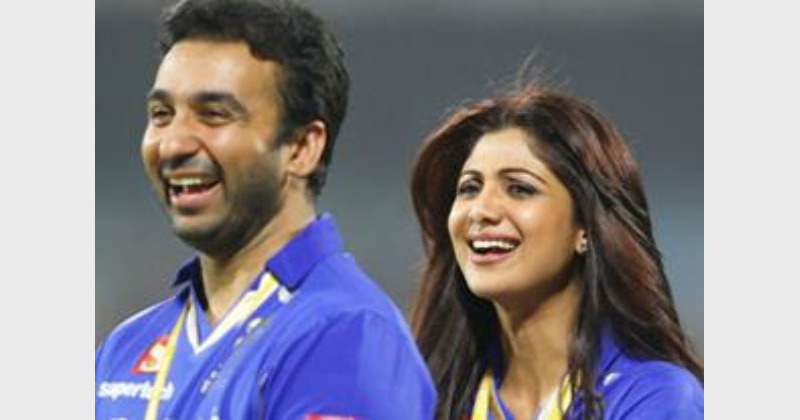
The sensational revelations in the IPL scandal are taking a new turn every day. After hitting the BCCI chief N Srinivasan, the focus of investigation has reached Bollywood actress Shilpa Shetty, the co-owner of Rajasthan Royals. Delhi Police has already grilled her husband Raj Kundra. He has been told not to leave the country until the probe is over.

Archive ManagerArchive Manager
Jun 8, 2013, 02:43 pm IST
in Bharat
Follow on Google News
FacebookTwitterWhatsAppTelegramEmail

What is ailing Indian cricket?

Pranjit Agarwala
-The sensational revelations in the IPL scandal are taking a new turn every day. After hitting the BCCI chief N Srinivasan, the focus of investigation has reached Bollywood actress Shilpa Shetty, the co-owner of Rajasthan Royals. Delhi Police has already grilled her husband Raj Kundra. He has been told not to leave the country until the probe is over.
Match-fixing is not new in the world of sports as it was prevalent even in ancient Greece where the Olympics were first held. However today it has become more intricate with two kinds of match-fixing. The first is motivated by money and involves bookmakers and gamblers and requires contacts and money transfers between bookmakers, players, team officials or referees. This is a criminal act and punishable under the law. Matches that are deliberately lost not under the influence of betting, but to gain an advantage in the later rounds of a competition is a strategy commonly practiced by many teams or individual players. This is known as tanking. Even though tanking is not illegal if discovered it can lead to disqualification. Sports history is replete with instances of match-fixing of both varieties in all the major disciplines and sporting tournaments held around the world, including the Olympics. In comparison till the 1990s cricket had remained relatively free from fixing or any major scandal.
In first class cricket Surrey wicketkeeper Ted Pooley was the first cricketer to be suspended for “selling a match” against Yorkshire in 1873. He also became the first Test cricketer to be arrested for betting when he toured Australia with England in 1876/77. Match-fixing became an endemic feature of cricket, particularly in the sub-continent, only with the advent of One Day cricket (ODI) and the simultaneous explosion of viewership with the rapid expansion of the television and telecommunications network in the country. With India winning the World Cup in 1983, Pakistan in 1992, Sri Lanka in 1996 and Bangladesh gaining Test status, cricket became a sub-continental obsession with India as the dominant force both on and off the field. With the introduction of T20 cricket the practice of spot fixing became prevalent. And with the extravaganza of the Indian Premier League (IPL) the once staid game of cricket became a glamour sport and a money-spinner particularly for the Board of Control for Cricket in India (BCCI) which has become one of the richest sports bodies in the world. Practically, the control of international cricket also shifted from cricket’s sanctum sanctorum Lord’s, London to the BCCI’s headquarters: Wankhede Stadium, Mumbai.
On the positive side the clout, money and popularity has helped develop Indian cricket at the grass-root level. On the downside an unhealthy trend has set in that threatens the credibility of the game. Match-fixing first surfaced in India in 1997 when Manoj Prabhakar alleged that no less a person than Kapil Dev had offered him $53,000/= (25 Lakhs) to underperform in a match against Pakistan in 1994. However in its enquiry the Central Bureau of Investigation (CBI) exonerated Kapil Dev. What shocked the nation was former South African skipper Hansie Cronje’s disclosures in 2000 that Azharuddin, Ajay Jadeja, Manoj Prabhakar, Ajay Sharma and Pakistan’s Salim Malik had links with several Indian bookmakers and were involved in match-fixing. After that skeletons tumbled out with several international players being implicated. Moreover the CBI in a report while condemning the role of the BCCI revealed that even some umpires and grounds-men were accepting bribes to give out pitch information or prepare pitches to influence results. Such revelations have robbed cricket of its charm as a game of glorious uncertainties. Now during a match any event against the run of play, like a sudden batting collapse or a miraculous recovery, immediately raises suspicions of fixing,  inviting skepticism even for genuinely outstanding performances.
The IPL has been dogged by controversies ever since its inception in 2008. From players, officials and umpires misconduct, misappropriation of funds, money laundering, nepotism to match and spot fixing the IPL has earned a reputation more for showbiz and racketeering than cricket. But to its credit it has been able to unearth new talent and increase India’s bench strength in the T20 format by exposing domestic cricketers to international competition.
According to a top Mumbai bookie the centre of match-fixing is Dubai and betting syndicates are controlled by Dawood Ibrahim’s “D” company. Moreover there is an unwritten law that betting for any India/Pakistan match is the monopoly of “D” company. Dawood’s influence also extends to the players. Therefore it is futile to expect fixing to be uprooted just by introducing a new law considering that India’s legal system and law enforcing agencies have failed to nab or curb Dawood in two decades.
Besides much more needs to be done to clean Indian sports if the country’s inherent sporting talent is to grow to its full potential. Sports administration and sports bodies must be freed from the clutches of powerful politicians, influential bureaucrats, industrial tycoons and business magnates. Experts and professionals in sports management/administration and players must be allowed to head sports organisations and conduct their administration. But the incumbent nexus has so much clout that even senior international players, sympathetic politicians and administrators are afraid to speak out lest their careers are ruined.


ShareTweetSendShareSend
✮ Subscribe Organiser YouTube Channel. ✮
✮ Join Organiser's WhatsApp channel for Nationalist views beyond the news. ✮
Previous News

Congress told to pack up

Next News

Fight against Naxals politicised again

Related News

Nihang Sikhs Demand Apology from Abhijeet Dipke for insulting them

Clashes erupt at Jantar Mantar as Nihang Sikhs confront CJP, demands apology from Abhijeet Dipke for demeaning them

Dr Vrushali Joshi, All India Organising Secretary of Vishvamangalya Sabha

Interview| ‘Motherhood is central to nation-building’: Dr Vrushali Joshi explains Yuganukul Matrutva

Representative Image

Zohran Mamdani and the Politics of the Ummah: From Anti-India rhetoric to the demand for Netanyahu’s arrest

Representative Image

Why loan planning should be part of your annual financial goals

India has risen from a negligible solar player to the world's third-largest solar market, driven by rapid clean energy growth

From Zero to Third: How India emerged as the world’s third-largest solar power nation in just two decades

India diversifies its rare earth sourcing through deeper cooperation with Myanmar

India–Myanmar bilateral collaboration on rare earth gains momentum amid China’s export controls

Load More

Latest News

Nihang Sikhs Demand Apology from Abhijeet Dipke for insulting them

Clashes erupt at Jantar Mantar as Nihang Sikhs confront CJP, demands apology from Abhijeet Dipke for demeaning them

Dr Vrushali Joshi, All India Organising Secretary of Vishvamangalya Sabha

Interview| ‘Motherhood is central to nation-building’: Dr Vrushali Joshi explains Yuganukul Matrutva

Representative Image

Zohran Mamdani and the Politics of the Ummah: From Anti-India rhetoric to the demand for Netanyahu’s arrest

Representative Image

Why loan planning should be part of your annual financial goals

India has risen from a negligible solar player to the world's third-largest solar market, driven by rapid clean energy growth

From Zero to Third: How India emerged as the world’s third-largest solar power nation in just two decades

India diversifies its rare earth sourcing through deeper cooperation with Myanmar

India–Myanmar bilateral collaboration on rare earth gains momentum amid China’s export controls

Tarun Vijay presents copy of his book 'Saffron Surge' to RSS Sarsanghchalak Dr Mohan Bhagwat

Tarun Vijay Presents his Book ‘Saffron Surge’ to RSS Sarsanghchalak Dr Mohan Bhagwat in Delhi

Prajna Pravah Akhil Bharatiya Sah Sanyojak Chandrakant Ji at a lecture at Mohanlal Sukhadia University

“Bharatiya perspective is essential in research for Bharat’s resurgence”: Chandrakant Ji, Prajna Pravah Sah Sanyojak

Free Wi-Fi is being set up at Delhi’s Jantar Mantar protest site, allowing protesters to stay connected amid mobile internet restrictions

CJP Protest Gets ‘VIP’ Internet? Free Wi-Fi at Jantar Mantar as Delhi mobile services stay suspended amid violence

Ashok Gehlot (Left), CPI(M)) leader, Balwan Poonia (Right)

CPIM leader’s shameless flip-flop: Defended Congress Ministers on paper leaks then, now attacks Dharmendra Pradhan

Load More
  • Privacy
  • Terms
  • Cookie Policy
  • Refund and Cancellation
  • Delivery and Shipping

© Bharat Prakashan (Delhi) Limited.
Tech-enabled by Ananthapuri Technologies

  • Home
  • Search Organiser
  • Bharat
    • Assam
    • Bihar
    • Chhattisgarh
    • Jharkhand
    • Maharashtra
    • View All States
  • World
    • Asia
    • Africa
    • North America
    • South America
    • Europe
    • Australia
  • Editorial
  • Operation Sindoor
  • Opinion
  • Analysis
  • Defence
  • Culture
  • Sports
  • Business
  • RSS @ 100
  • Entertainment
  • More ..
    • Sci & Tech
    • Vocal4Local
    • Special Report
    • Education
    • Employment
    • Books
    • Interviews
    • Travel
    • Health
    • Politics
    • Law
    • Economy
    • Obituary
  • Subscribe Magazine
  • Read Ecopy
  • Advertise
  • Circulation
  • Careers
  • About Us
  • Contact Us
  • Policies & Terms
    • Privacy Policy
    • Cookie Policy
    • Refund and Cancellation
    • Terms of Use

© Bharat Prakashan (Delhi) Limited.
Tech-enabled by Ananthapuri Technologies