The captivating life of Begum Hazrat Mahal
July 5, 2026
  • Read Ecopy
  • Circulation
  • Advertise
  • Careers
  • About Us
  • Contact Us
Android AppiPhone AppArattai
Organiser
  • ‌
  • Bharat
    • Assam
    • Bihar
    • Chhattisgarh
    • Jharkhand
    • Maharashtra
    • View All States
  • World
    • Asia
    • Europe
    • North America
    • South America
    • Africa
    • Australia
  • Editorial
  • International
  • Opinion
  • RSS @ 100
  • More
    • Op Sindoor
    • Analysis
    • Sports
    • Defence
    • Politics
    • Business
    • Economy
    • Culture
    • Special Report
    • Sci & Tech
    • Entertainment
    • G20
    • Azadi Ka Amrit Mahotsav
    • Vocal4Local
    • Web Stories
    • Education
    • Employment
    • Books
    • Interviews
    • Travel
    • Law
    • Health
    • Obituary
  • Subscribe
    • Subscribe Print Edition
    • Subscribe Ecopy
    • Read Ecopy
  • ‌
  • Bharat
    • Assam
    • Bihar
    • Chhattisgarh
    • Jharkhand
    • Maharashtra
    • View All States
  • World
    • Asia
    • Europe
    • North America
    • South America
    • Africa
    • Australia
  • Editorial
  • International
  • Opinion
  • RSS @ 100
  • More
    • Op Sindoor
    • Analysis
    • Sports
    • Defence
    • Politics
    • Business
    • Economy
    • Culture
    • Special Report
    • Sci & Tech
    • Entertainment
    • G20
    • Azadi Ka Amrit Mahotsav
    • Vocal4Local
    • Web Stories
    • Education
    • Employment
    • Books
    • Interviews
    • Travel
    • Law
    • Health
    • Obituary
  • Subscribe
    • Subscribe Print Edition
    • Subscribe Ecopy
    • Read Ecopy
Organiser
  • Home
  • Bharat
  • World
  • Operation Sindoor
  • Editorial
  • Analysis
  • Opinion
  • Culture
  • Defence
  • International Edition
  • RSS @ 100
  • Magazine
  • Read Ecopy
Home Bharat

The captivating life of Begum Hazrat Mahal

THIS is the life story of Hazrat Mahal, captivating wife of King Wajid Ali Shah of Awadh and an important character in the 1857 Uprising and about whom little is known.

Archive ManagerArchive Manager
Mar 30, 2013, 12:03 pm IST
in Bharat
Follow on Google News
FacebookTwitterWhatsAppTelegramEmail

Manju Gupta

In the City of Gold and Sliver: The Story of Begum Hazrat Mahal, Kenize Mourad, Full Circle, Pp 437, Rs 350.00
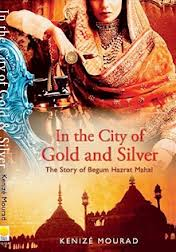
9THIS is the life story of Hazrat Mahal, captivating wife of King Wajid Ali Shah of Awadh and an important character in the 1857 Uprising and about whom little is known.
Born as Muhammadi in a family of artisans from Faizabad, the ancient capital of Awadh, she, as a 14-year old, is taken to the Prince’s harem where she is asked to dance but she admits she can only recite verse. She is asked to do so and on hearing her, “the prince looks at her thoughtfully.” She is charmed by the prince and gets pregnant and is named ‘Iftikhar un-Nisa’, “the pride of women”, as he appreciates her dignity that sets her apart from others who are so submissive. She gives birth to a son and then ensues a covert war in the harem, where accidents and poison “are weapons that mothers must ceaselessly protect their offspring from.” Mammo Khan, the eunuch is granted to Hazrat Mahal as her protector.

She gets extremely riled when she comes to know that the East India Company has become so powerful as to annex two-thirds of the princely states while her husband Wajid Ali Shah is happy at taking refuge in music and poetry. She knows her husband is unhappy but she can hardly do anything as she is only his fourth wife. Her son, who is new seven-years old, has been shifted to men’s quarters despite his indifferent health. Hazrat Mahal has to wait for every Friday to come to meet him.

Meanwhile Governor-General Lord Dalhousie decides that Awadh will be administered by the East India Company and that the king would retain only his title and pension. On 13 March 1856, after six weeks of confrontation against the British, Wajid Ali Shah leaves his beloved town and Hazrat Mahal behind to take refuge in Calcutta. The British seize Lucknow’s most beautiful palaces and surround the palace where Wajid Ali’s concubines reside. They all start fleeing, packing their precious belongings, while the Queen Mother goes to London to present her son’s case. Six months pass but she does not get audience with Queen Victoria.

Meanwhile, chapatis mysteriously begin to appear in north and central India. It is a peasant woman named Nouran who understands the significance and on seeking audience with Hazrat Mahal tells her that distribution of chapatis “announces the Great Mutiny”.
On 10 June, Mammoo Khan, eunuch of Hazrat Mahal, comes with the news that the Meerut garrison has rebelled. Major Carnegie and his men start getting houses evacuated close to the Residency. The princesses and ladies-in-waiting find shelter in Kaisarabagh palace where Hazrat Mahal resides. Often the latter feels angry and frustrated at her husband’s lack of action but then she excuses him, thinking that “he has the right to enjoy what remains of his life rather than making himself ill.” Uprisings spread from one state to other — Benares, Jaunpur, Allahabad, Sultanpur, Gonda, almost whole of North India. King Wajid Ali Shah is lodged in Fort Williams near Calcutta. Hazrat Mahal considers this the best time to seek help from the King’s taluqdars, like Rajah Jai Lal Singh and also from the Rajah of Mahmudabad, exhorting them to take the oath either on the Holy Quran or on the jar containing the holy water of the Ganges “to fight faithfully and relentlessly to the very end; that is to say, until we have driven out the British.”
One by one, all the rajahs and nawabs take the oath, overcoming their initial hesitation at a mere dancer-turned-queen making demands on them. From here on, the author describes how Hazrat Mahal leads the people’s uprising against the British’s unwelcome pressures. She even has the support of the Indian soldiers of the British Army who have now rallied to her cause. She offers resistance for two years, displaying unusual wisdom, integrity and courage for a woman, an orphan but now a queen, leading India on its first step towards Independence.

She places her son Birjis Qadir on the throne and as the Regent, takes all major decisions. She comes to rely on Rajah Jai Lal Singh for his advice. The growing intimacy between her and the Rajah is not acceptable to her eunuch Mammoo because he realises that Hazrat Mahal has fallen in love with Rajah Jai Lal Singh.
The story unfolds to reveal her as a misunderstood mother, a silent lover and a leader who risks everything to face the greatest betrayal of all. The book needs to be read.
(Full Circle, J-40, Jorbagh Lane, New Delhi-110 003; www.fullcirclebooks.in)


 

ShareTweetSendShareSend
✮ Subscribe Organiser YouTube Channel. ✮
✮ Join Organiser's WhatsApp channel for Nationalist views beyond the news. ✮
Previous News

Bleeding hearts cry mercy for Sanjay convicted in Mumbai serial blasts

Next News

Wilde in America earns fans and ideas

Related News

The book that has triggered controversy

J&K Govt school textbook under Samagra Shiksha triggers row over ‘Indian occupied Kashmir’ references

Zeeshan Mir, a resident of Muzaffarabad district in PoK, is said to have fallen in love with Iram Majeed, a resident of Uri in Jammu and Kashmir

PoK man illegally crosses LoC after contacting Uri woman on Snapchat, repatriated after security probe

A representative image

VB-G RAM G in UP: How new rural employment scheme replaces MGNREGA with 125 days of guaranteed work

Representative Image

Karnataka: BJP submits complaint to state election commission over alleged SIR irregularities

Rashtriya Swayamsevak Sangh (RSS) Sarkaryavah Dattatreya Hosabale addressing the gathering on the occasion of 80 years of Organiser's Foundation Day

Organiser @ 80 | Organiser is a sentinel of national interest and a vanguard of national security: Dattatreya Hosabale

(Left) SJTA Chief Administrator Dr. Arvind Kumar Padhee reviews works at Shri Gundicha Temple in preparation for Rath Yatra 2026 (Right) Construction of the three sacred chariots for Mahaprabhu Jagannath, Balabhadra and Devi Subhadra is progressing steadily ahead of the Holy Shree Gundicha Yatra (Rath Yatra) 2026 in Puri

Odisha: Rath Yatra preparations gain momentum; Gundicha Mandir repairs to finish before festival

Load More

Latest News

The book that has triggered controversy

J&K Govt school textbook under Samagra Shiksha triggers row over ‘Indian occupied Kashmir’ references

Zeeshan Mir, a resident of Muzaffarabad district in PoK, is said to have fallen in love with Iram Majeed, a resident of Uri in Jammu and Kashmir

PoK man illegally crosses LoC after contacting Uri woman on Snapchat, repatriated after security probe

A representative image

VB-G RAM G in UP: How new rural employment scheme replaces MGNREGA with 125 days of guaranteed work

Representative Image

Karnataka: BJP submits complaint to state election commission over alleged SIR irregularities

Rashtriya Swayamsevak Sangh (RSS) Sarkaryavah Dattatreya Hosabale addressing the gathering on the occasion of 80 years of Organiser's Foundation Day

Organiser @ 80 | Organiser is a sentinel of national interest and a vanguard of national security: Dattatreya Hosabale

(Left) SJTA Chief Administrator Dr. Arvind Kumar Padhee reviews works at Shri Gundicha Temple in preparation for Rath Yatra 2026 (Right) Construction of the three sacred chariots for Mahaprabhu Jagannath, Balabhadra and Devi Subhadra is progressing steadily ahead of the Holy Shree Gundicha Yatra (Rath Yatra) 2026 in Puri

Odisha: Rath Yatra preparations gain momentum; Gundicha Mandir repairs to finish before festival

Nagpur, Jul 03 (ANI): Rashtriya Swayamsevak Sangh (RSS) chief Mohan Bhagwat speaks during the conclusion of a series of 100 videos based on the lives of Sangh pracharaks and the release of the 101st episode of the audio-visual series "Asu Ame Sukhane, Patthar Payaatil" to mark the centenary of the Rashtriya Swayamsevak Sangh, in Nagpur on Friday. (ANI Photo)

RSS focuses on character building, not controlling organisations by remote control: Dr Mohan Bhagwat in Nagpur

RSS Sarkaryavah Dattatreya Hosabale

“Unfortunate and painful, true Dharmikta must be restored”: Dattatreya Hosabale

Eleven Years of Digital Innovation Transforming everyday life across India

A Decade of Digital India: Revolutionising payment & healthcare ecosystem; Making everyday life easier for Indians

EPF gets its biggest overhaul in 74 years: What the new rules mean for salaried employees

Load More
  • Privacy
  • Terms
  • Cookie Policy
  • Refund and Cancellation
  • Delivery and Shipping

© Bharat Prakashan (Delhi) Limited.
Tech-enabled by Ananthapuri Technologies

  • Home
  • Search Organiser
  • Bharat
    • Assam
    • Bihar
    • Chhattisgarh
    • Jharkhand
    • Maharashtra
    • View All States
  • World
    • Asia
    • Africa
    • North America
    • South America
    • Europe
    • Australia
  • Editorial
  • Operation Sindoor
  • Opinion
  • Analysis
  • Defence
  • Culture
  • Sports
  • Business
  • RSS @ 100
  • Entertainment
  • More ..
    • Sci & Tech
    • Vocal4Local
    • Special Report
    • Education
    • Employment
    • Books
    • Interviews
    • Travel
    • Health
    • Politics
    • Law
    • Economy
    • Obituary
  • Subscribe Magazine
  • Read Ecopy
  • Advertise
  • Circulation
  • Careers
  • About Us
  • Contact Us
  • Policies & Terms
    • Privacy Policy
    • Cookie Policy
    • Refund and Cancellation
    • Terms of Use

© Bharat Prakashan (Delhi) Limited.
Tech-enabled by Ananthapuri Technologies