Gita and the contemporary work ethic
December 7, 2025
  • Read Ecopy
  • Circulation
  • Advertise
  • Careers
  • About Us
  • Contact Us
Android AppiPhone AppArattai
Organiser
  • ‌
  • Bharat
    • Assam
    • Bihar
    • Chhattisgarh
    • Jharkhand
    • Maharashtra
    • View All States
  • World
    • Asia
    • Europe
    • North America
    • South America
    • Africa
    • Australia
  • Editorial
  • International
  • Opinion
  • RSS @ 100
  • More
    • Op Sindoor
    • Analysis
    • Sports
    • Defence
    • Politics
    • Business
    • Economy
    • Culture
    • Special Report
    • Sci & Tech
    • Entertainment
    • G20
    • Azadi Ka Amrit Mahotsav
    • Vocal4Local
    • Web Stories
    • Education
    • Employment
    • Books
    • Interviews
    • Travel
    • Law
    • Health
    • Obituary
  • Subscribe
    • Subscribe Print Edition
    • Subscribe Ecopy
    • Read Ecopy
  • ‌
  • Bharat
    • Assam
    • Bihar
    • Chhattisgarh
    • Jharkhand
    • Maharashtra
    • View All States
  • World
    • Asia
    • Europe
    • North America
    • South America
    • Africa
    • Australia
  • Editorial
  • International
  • Opinion
  • RSS @ 100
  • More
    • Op Sindoor
    • Analysis
    • Sports
    • Defence
    • Politics
    • Business
    • Economy
    • Culture
    • Special Report
    • Sci & Tech
    • Entertainment
    • G20
    • Azadi Ka Amrit Mahotsav
    • Vocal4Local
    • Web Stories
    • Education
    • Employment
    • Books
    • Interviews
    • Travel
    • Law
    • Health
    • Obituary
  • Subscribe
    • Subscribe Print Edition
    • Subscribe Ecopy
    • Read Ecopy
Organiser
  • Home
  • Bharat
  • World
  • Operation Sindoor
  • Editorial
  • Analysis
  • Opinion
  • Culture
  • Defence
  • International Edition
  • RSS @ 100
  • Magazine
  • Read Ecopy
Home Bharat

Gita and the contemporary work ethic

THE Hindu scripture Bhagwadgita (or the Gita) is widely read, interpreted and followed as a guide to happy living, as a textual key to spiritual

Archive ManagerArchive Manager
Mar 23, 2013, 11:23 am IST
in Bharat
Follow on Google News
FacebookTwitterWhatsAppTelegramEmail

Atul Sehgal

4THE Hindu scripture Bhagwadgita (or the Gita) is widely read, interpreted and followed as a guide to happy living, as a textual key to spiritual transcendence of man. Its followers have claimed it to be a beacon of light to help man trudge safely through the jungle of life marked by uncertainties, miseries and difficulties of all kinds.

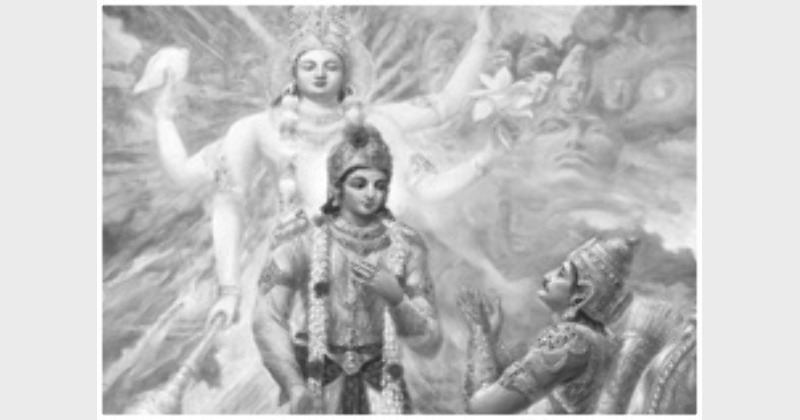
The Bhagwadgita written down as a battle side discourse by Sri Krishna to the warrior Arjun pitched in the battle between the armies of Pandavas and Kauravas in Kurukshetra, India many millennia ago. The epic battle called Mahabharata is believed to have been fought nearly 5,100 years ago.

Regarded as a sublime spiritual discourse, the Bhagwadgita means many things to many people. There are business tycoons who have credited Gita for their entrepreneurial success. The founder of Reliance Group Business Empire in India, the late Dhirubhai Ambani is one of them. He is quoted to have remarked to his son Anil Ambani that he had not merely followed the Gita but had lived on the ideology of  the Gita through his life.

The modern work ethic draws largely from the theories of Capitalism and Socialism propounded by Karl Marx and the thesis of rational work culture put forwarded by Max Weber. In the last five or six decades, we have seen emerging on the global horizon the theories of modern management. These theories were encapsulated as distinct, specific academic disciplines and applied through defined professional careers.
What are the hallmarks of the work ethic defined in the modern management school?

We hear many jargons to explain the above work ethic. Some of these are – ‘Professionalism’, ‘Result Oriented’, ‘Time Management’ and ‘Dynamic Approach’. But with passing decades, the business and commercial world is witness to newer challenges throwing up the need to refine the existing theories. It will not take much for even the relatively less educated to understand that modern business world is far from ideal. But is the term ‘ideal’ well defined? Let us define ‘ideal’ grossly as something that fulfills everyone’s needs, provides due reward of labour and optimises happiness and satisfaction of all. We would at once then observe that modern theories and tools are neither perfect nor complete. They are beset with lacunae and deficiencies. Because the ground realities suggest so.

Let us now go back to the criteria of happiness, satisfaction and reward as enumerated in the Bhagwadgita. The single most important stanza of Bhagwadgita dealing with work culture is the one on Karma and its desired fruits. The Gita says that man should perform his Karma (duty) diligently without expectation of reward. He should concentrate his energy in the performance of Karma and forget about the fruits of action. Karma lies in his hands whereas the fruit thereof belongs to the realm of the Almighty Creator. Thus, according to Bhagwadgita, man should not crave or desire the fruits of his Karma. If he does his Karmas wholeheartedly, he is bound to get due rewards. The time and manner of the bestowal of these rewards is fixed by the all powerful and just Creator.

There are many distinguished personalities who claim to have followed the above injunction of Bhagwadgita in letter and spirit. But whether practical life experience validates the message given in the scripture is a moot point. The Bhagwadgita further enjoins upon a human individual to allay the five cardinal evils – kaam (desire), krodh (anger), ‘lobh’ (greed),  moh (attachment or passion) and mada (ego). It also emphasizes on control of the errant and excitable mind. The holistic prescription of the Gita goes so far as to provide a regimen of diet and lifestyle to subdue evil tendencies of the mind.

(To be continued)

ShareTweetSendShareSend
✮ Subscribe Organiser YouTube Channel. ✮
✮ Join Organiser's WhatsApp channel for Nationalist views beyond the news. ✮
Previous News

Statement of Sarkaryavah Bhayaji Joshi on suffering of Sri Lankan Tamils

Next News

Life and times of Bal Thackeray

Related News

UMEED Portal

UMEED Portal deadline ends: Logs 5.17 lakh Waqf properties, with 2.16 lakh approved, 2.13 lakh pending, 10,869 rejected

R. Sreelekha IPS (Retd.)

Kerala: Interview with R. Sreelekha IPS (Retd.) — BJP’s Thiruvananthapuram Municipal Corporation Candidate

How Nehru Torpedoed Vande Mataram: The Untold Story

Bangladeshi army officer and senior BNP leader Col Abdul Haque

A former Bangladeshi army officer & BNP leader urges youth to get army training to sever Northeast from India

PM Narendra Modi on Vande Bharat

“Removal of significant verses in Vande Mataram sowed seeds of partition”: PM Modi

West Bengal: Sanatan Sanskriti Sansad’s Gita Path Sees 6.5 Lakh Hindus Recite the Gita in Kolkata

Load More

Comments

The comments posted here/below/in the given space are not on behalf of Organiser. The person posting the comment will be in sole ownership of its responsibility. According to the central government's IT rules, obscene or offensive statement made against a person, religion, community or nation is a punishable offense, and legal action would be taken against people who indulge in such activities.

Latest News

UMEED Portal

UMEED Portal deadline ends: Logs 5.17 lakh Waqf properties, with 2.16 lakh approved, 2.13 lakh pending, 10,869 rejected

R. Sreelekha IPS (Retd.)

Kerala: Interview with R. Sreelekha IPS (Retd.) — BJP’s Thiruvananthapuram Municipal Corporation Candidate

How Nehru Torpedoed Vande Mataram: The Untold Story

Bangladeshi army officer and senior BNP leader Col Abdul Haque

A former Bangladeshi army officer & BNP leader urges youth to get army training to sever Northeast from India

PM Narendra Modi on Vande Bharat

“Removal of significant verses in Vande Mataram sowed seeds of partition”: PM Modi

West Bengal: Sanatan Sanskriti Sansad’s Gita Path Sees 6.5 Lakh Hindus Recite the Gita in Kolkata

(L) Panakkad Munavarali Shihab Thangal (R) Fathima Nargese

Kerala: Muslim League leader’s 16 years old daughter Fathima Nargese backs women entry into Mosques, father disputes

Pakistani traders protest mounting losses as prolonged border closures disrupt regional commerce and strain ties with Kabul

Taliban strike back as Pakistan border shutdown with Kabul choke trade routes and trigger protest at home

The doctrine of Geeta diplomacy

The Doctrine of Gita Diplomacy: Culture, strategy and the evolving global connect of India

Defence Minister Rajnath Singh speaks post inaugurating the infrastructure projects of BRO in Leh

Defence Minister Rajnath Singh hails the role of BRO in revolutionising communication & connectivity in border regions

Load More
  • Privacy
  • Terms
  • Cookie Policy
  • Refund and Cancellation
  • Delivery and Shipping

© Bharat Prakashan (Delhi) Limited.
Tech-enabled by Ananthapuri Technologies

  • Home
  • Search Organiser
  • Bharat
    • Assam
    • Bihar
    • Chhattisgarh
    • Jharkhand
    • Maharashtra
    • View All States
  • World
    • Asia
    • Africa
    • North America
    • South America
    • Europe
    • Australia
  • Editorial
  • Operation Sindoor
  • Opinion
  • Analysis
  • Defence
  • Culture
  • Sports
  • Business
  • RSS @ 100
  • Entertainment
  • More ..
    • Sci & Tech
    • Vocal4Local
    • Special Report
    • Education
    • Employment
    • Books
    • Interviews
    • Travel
    • Health
    • Politics
    • Law
    • Economy
    • Obituary
  • Subscribe Magazine
  • Read Ecopy
  • Advertise
  • Circulation
  • Careers
  • About Us
  • Contact Us
  • Policies & Terms
    • Privacy Policy
    • Cookie Policy
    • Refund and Cancellation
    • Terms of Use

© Bharat Prakashan (Delhi) Limited.
Tech-enabled by Ananthapuri Technologies