A revealing book on the behaviour of Muslim rulers of India
June 29, 2026
  • Read Ecopy
  • Circulation
  • Advertise
  • Careers
  • About Us
  • Contact Us
Android AppiPhone AppArattai
Organiser
  • ‌
  • Bharat
    • Assam
    • Bihar
    • Chhattisgarh
    • Jharkhand
    • Maharashtra
    • View All States
  • World
    • Asia
    • Europe
    • North America
    • South America
    • Africa
    • Australia
  • Editorial
  • International
  • Opinion
  • RSS @ 100
  • More
    • Op Sindoor
    • Analysis
    • Sports
    • Defence
    • Politics
    • Business
    • Economy
    • Culture
    • Special Report
    • Sci & Tech
    • Entertainment
    • G20
    • Azadi Ka Amrit Mahotsav
    • Vocal4Local
    • Web Stories
    • Education
    • Employment
    • Books
    • Interviews
    • Travel
    • Law
    • Health
    • Obituary
  • Subscribe
    • Subscribe Print Edition
    • Subscribe Ecopy
    • Read Ecopy
  • ‌
  • Bharat
    • Assam
    • Bihar
    • Chhattisgarh
    • Jharkhand
    • Maharashtra
    • View All States
  • World
    • Asia
    • Europe
    • North America
    • South America
    • Africa
    • Australia
  • Editorial
  • International
  • Opinion
  • RSS @ 100
  • More
    • Op Sindoor
    • Analysis
    • Sports
    • Defence
    • Politics
    • Business
    • Economy
    • Culture
    • Special Report
    • Sci & Tech
    • Entertainment
    • G20
    • Azadi Ka Amrit Mahotsav
    • Vocal4Local
    • Web Stories
    • Education
    • Employment
    • Books
    • Interviews
    • Travel
    • Law
    • Health
    • Obituary
  • Subscribe
    • Subscribe Print Edition
    • Subscribe Ecopy
    • Read Ecopy
Organiser
  • Home
  • Bharat
  • World
  • Operation Sindoor
  • Editorial
  • Analysis
  • Opinion
  • Culture
  • Defence
  • International Edition
  • RSS @ 100
  • Magazine
  • Read Ecopy
Home General

A revealing book on the behaviour of Muslim rulers of India

Archive ManagerArchive Manager
Jan 16, 2012, 12:00 am IST
in General
Follow on Google News
FacebookTwitterWhatsAppTelegramEmail

BOOKMARK-6

By MV Kamath

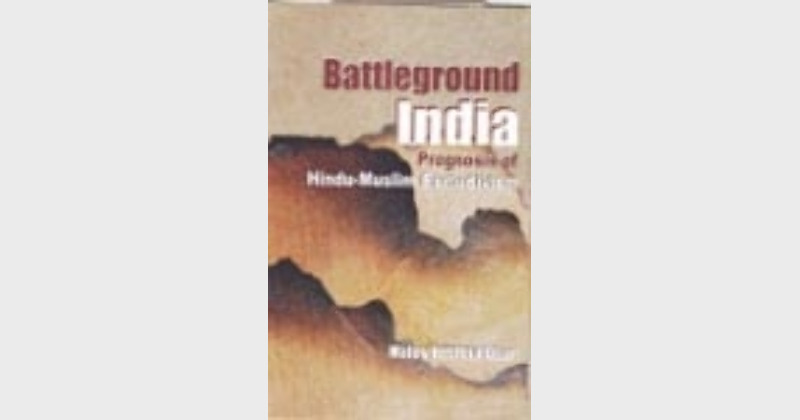
Battleground India: Prognosis of Hindu-Muslim Exclusivism; Maloy Krishna Dhar; Vitasta (Times Group Books); Pp 495; Rs. 599

Anybody who would like to know how Pakistan happened to come about and who were the villains should read this highly revelatory book by Maloy Krishna Dhar whose outstanding scholarship is beyond challenge. Plainly put, it is a book on the behaviour of Muslim rulers in India and how it has affected both Muslim and Hindu subjects in different ways. It tells us how Islam first came to penetrate India and how Islamists sought to destroy Hinduism, isolate Muslims from native Hindus and by and large seek to enslave the locals.

As Dhar bravely puts it: “In the ages of the Sultanate or their successful conquistadors, the rulers did not try to liberate the Indians. They enslaved them”. But Dhar also notes: “India was the only country and the Hindus were the only culturally different people in Asia who would not be totally converted to Islam”. Not that the Islamic rulers did not try. According to Dhar: “Death was the only penalty prescribed for idolators by most Islamic schools of law!” Compromise with the natives was as unthinkable as it was preposterous”. Invaders like Babar were barbarians. When he defeated Rana Sanga, the Rajput king, Babar ordered, in grand Moghul style, the erection of a pillar with the severed heads of Hindu soldiers.

Babar, says Dhar, was an avid destroyer of Hindu temples. He adds: “Majority of the Muslims were converted Hindus – converted on the points of sword and under state pressure”. Aurangzeb, of course, was in a ruthless class all by himself. “He ordered (in 1669) destruction of Hindu schools and temples…. Cartloads of idols were taken to Delhi and were spread on the portals of the Jama Masjid for the pious Muslims to trample the Hindu idols under their feet”. How nice. Conversion went in on a grand scale.

According to Dhar, between 1200 and 1570 AD rough estimates indicate that no less than 70 millions were converted at stages in Bengal, Bihar and Uttar Pradesh with the maximum impact in Bengal where, out of a total population of 70 million, 27 per cent were Hindus. To quote Dhar “The Muslim rulers enjoyed the cream and the ruled Hindus were subjected to social and economic ignominy”. After the British took over power, for the Hindus ‘Patrotism’ was identified with the re-discovery of Hindu-Indian nationalism.

For the Muslims ‘patriotism’ stood for restoration of the lost ‘glory’ and reclaim out of Hindustan what was once achieved by the sword and establish a distinct political nationalism that would protect separate cultural, religious and other identities of the Muslims”. Dhar brilliantly analyses the role of the Muslim after the British took over in all its sickness. They wanted to drift closer to the British, out of aversion to the Hindus.

Dhar recalls Sir Syed Ahmed whose sole aim waa “to overcome majority Hindu domination and to carve out a separate nation for the Muslims… by drifting nearer to the British”. But what was Sir Syed afraid of? That Hindus would make an effort at re-conversion? What they would destroy mosques? That they would not give Muslims jobs? Under Muslims rule – one has only to remember the example of the Nizam’s Hyderabad – 70 per cent of jobs went to Muslims! Sir Syed must have a bad conscience. Nobody among Hindus asked for reservations!

Following 1857 and the formal establishment of British rule came the formation of the Indian National Congress, which the Muslims stayed away from. The subsequent political climate in India, how Muslim leaders abhorred it and the coming into prominence of a net of Muslim leadership is well documented.

The manner in which Muslim leaders sought to win over British affection; the manner in which Mohammad Ali Jinnah started to push his concept of Pakistan and the threats that he issued from time to time, Jinnah was no more non-violent than was Mao. Under his direction, rivers of blood were to flow in Calcutta when he called for Liberation Day.

At one point Dhar notes pathetically that between 1942 and 1947 “the ambience of communal hatred and divide travelled to the deepest core, destroying whatever sense of assimilation and brotherhood had been established over the centuries.” In all this, Dhar maintains that while “the Hindutva majority has been often blamed, Muslim exclusion has been hardly analysed” and that “very little critical analysis of Muslim communalism has been attempted by the established scholars and historians”. That is called secularism by our intellectuals.

Coming to the latest developments, Dhar points out to efforts by Muslim jihadists to break up India again, Writes Dhar: “Would the jihadi ambience prevailing in several parts of the Muslim world and in India’s neighbourhood jeopardise the country’s (India’s) territorial integrity and would the demographically increasing Muslim population demand creation of another homeland?” Good question.

Our liberal intellectuals and ‘secular’ Hindus would do well to read this book. Dhar’s findings are startling, but they are based on facts. The Muslim world, one fears, still lives in a medieval era when times have changed and even a religion-based country – to call it a state or a nation would be hilarious – has become irrelevant. We are living in changed times.

(Vitasta Publishing Pvt. Ltd., 2/15, Ansari Road, Daryaganj, New Delhi-110002, [email protected], www.vitastapublishing.com)

 

ShareTweetSendShareSend
✮ Subscribe Organiser YouTube Channel. ✮
✮ Join Organiser's WhatsApp channel for Nationalist views beyond the news. ✮
Previous News

Simple, natural ways, built on collective ancient wisdom for healthy life 

Next News

NEWS ROUND-UP-1

Related News

Prime Minister Narendra Modi addressed Seychelles National Assembly

PM Modi addresses Seychelles Parliament; Advocates climate justice, maritime security & Global South prosperity

Cloud Burst in Arunachal Pradesh leads to massive destruction and landslide

Arunachal Pradesh Cloud Burst: BRO restores Kimin–Potin road amid heavy flood crises 

Keralam: CPM reviews collapse in Assembly but avoids leadership accountability

Renaming the Indo-Pacific Command as US Pacific Command: Decoding the strategic calculus of US & stakes for India

From a Mass Leader to a Global Statesman: PM Narendra Modi at the centre of Indian politics for more than a decade

Varanasi to emerge as world’s second vegetarian city, reviving its vedic roots & centuries-old sattvic culinary legacy

Load More

Latest News

Prime Minister Narendra Modi addressed Seychelles National Assembly

PM Modi addresses Seychelles Parliament; Advocates climate justice, maritime security & Global South prosperity

Cloud Burst in Arunachal Pradesh leads to massive destruction and landslide

Arunachal Pradesh Cloud Burst: BRO restores Kimin–Potin road amid heavy flood crises 

Keralam: CPM reviews collapse in Assembly but avoids leadership accountability

Renaming the Indo-Pacific Command as US Pacific Command: Decoding the strategic calculus of US & stakes for India

From a Mass Leader to a Global Statesman: PM Narendra Modi at the centre of Indian politics for more than a decade

Varanasi to emerge as world’s second vegetarian city, reviving its vedic roots & centuries-old sattvic culinary legacy

PM Modi in Seychelles: Connectivity, climate action to UPI & Indian Ocean security; Bilateral ties gather momentum

Odisha | Snana Yatra: The sacred bathing festival of Mahaprabhu Jagannath & the spiritual prelude to Rath Yatra

Indian-origin student from Telangana found dead in London

Indian student from Telangana found dead in London under mysterious circumstances; Family seeks early repatriation

A representative image

Ashtalakshmi Rising: How India’s Northeast became the engine of connectivity, growth and strategic transformation

Load More
  • Privacy
  • Terms
  • Cookie Policy
  • Refund and Cancellation
  • Delivery and Shipping

© Bharat Prakashan (Delhi) Limited.
Tech-enabled by Ananthapuri Technologies

  • Home
  • Search Organiser
  • Bharat
    • Assam
    • Bihar
    • Chhattisgarh
    • Jharkhand
    • Maharashtra
    • View All States
  • World
    • Asia
    • Africa
    • North America
    • South America
    • Europe
    • Australia
  • Editorial
  • Operation Sindoor
  • Opinion
  • Analysis
  • Defence
  • Culture
  • Sports
  • Business
  • RSS @ 100
  • Entertainment
  • More ..
    • Sci & Tech
    • Vocal4Local
    • Special Report
    • Education
    • Employment
    • Books
    • Interviews
    • Travel
    • Health
    • Politics
    • Law
    • Economy
    • Obituary
  • Subscribe Magazine
  • Read Ecopy
  • Advertise
  • Circulation
  • Careers
  • About Us
  • Contact Us
  • Policies & Terms
    • Privacy Policy
    • Cookie Policy
    • Refund and Cancellation
    • Terms of Use

© Bharat Prakashan (Delhi) Limited.
Tech-enabled by Ananthapuri Technologies