Marriage is a duty, not entertainment
Marriage is a duty, not entertainment
By Mridula Sinha
“I am not prepared to marry.”
“I am afraid of marriage.”
“I know my marriage will not survive.”
“I don’t want the bondage of marriage. It is very difficult to live with one person for your whole life.”
“I have not even thought of marriage,” replied a thirty-five year old man.
 These are statements of some young boys and girls of marriageable age. These youth are fully engaged in their jobs and careers. They have no time to get married. But this is not the scenario of the whole society. Thousands of minor girls and minor boys are marrying each other. They are very happy to get married, because they get new beautiful clothes, or ornaments and sweets to eat. The bondage is not pinching or hurting them. They are not worried about the survival of the marriage. They enjoy the marriage ceremony. In their cases survival of marriage is not a problem.
On the other hand, a new class of youth has emerged in society where young boys and girls have snached the responsibility of their parents of getting their children married; they want to select their partners themselves. They are supporters of individual independence in family. Marriage is also their own choice and decision. They are not very serious about marriage. It may continue or may not. Both partners are earning. Both have separate bank balances and their own choices of lifestyle. They do not worry too much about each other’s likes and dislikes, habits and desires. Marriage is also a casual thing in their lives. For them, marriages have become a source of entertainment like movies or any other source. They do not consider marriage a life-long bondage or marriage for seven lives as believed in Hindu tradition.
They are also happy with marriage because the worry of marriage sustainability is not a problem for them. Divorce rate has increased. But the concept of divorce is not new for India. It has not been imported from the West as some other changes in family and social life. Divorce did occur in India mostly in lower economic class and upper class families. It did not create problems for the families or the divorced women. In upper class families, the divorced women got all facilities from their parents. Whereas in lower income group families, the divorced daughter used to earn her livelihood by working in the fields or from other labour works. On the other hand, divorce in the middle class agriculture families used to disturb the whole family system. As far as the re-marriage of divorced young men and women was concerned, it was practised in both lower and upper classes.
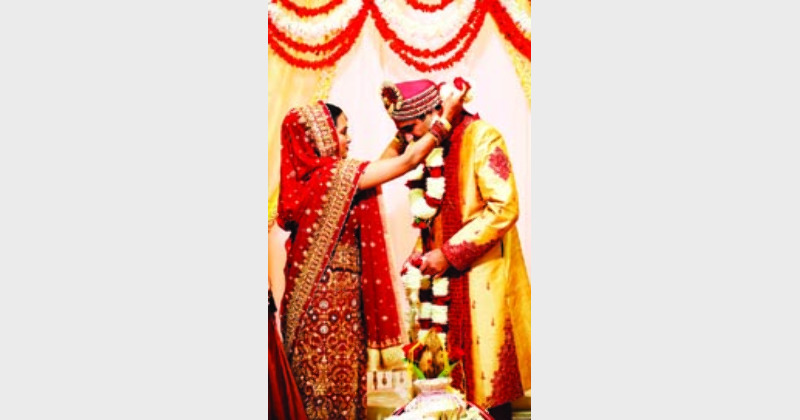
Here my concern is not about the cause of increased rate of divorce or of the diminishing attention of the society on the ancient Indian concept of marriage. First of all, marriage is not an agreement or a contract between a woman and man. It is called sanskar. There are sixteen sanskars performed individually. Only the marriage sanskar requires two individuals. That is why it is supposed that after the wedding, the two individuals become one. Their interests, their ways of life and their future become one. In the rituals of Hindu marriage the materials used in the ceremony are also symbols of joining the two individuals. Bride and groom both take vows to make the relation permanent and easy. All the seven vows taken by the bride involve promises by the groom on how he will take care of her life and interests. Three of the seven vows taken by the bride explain her responsibility of taking care of her husband and her in laws, which will become her own family. She will be the axis of the family.
It requires deep thinking and understanding before taking the vows. Marriage is not only about going together to play in a park or watching movies. It requires commitments from both sides to live their whole life together. Our history tells the stories of two individuals living seven lives together. In our stories of vratas observed by married women, it is desired by them to live seven lives with the same husband. Nobody has seen his or her next life. At least one life should be lived together. Marriage does not guarantee only pleasure or sorrow in whole life, nor does it promise lifelong love. The word love has been derived from the Sanskrit word lubdh (attraction). One cannot be attracted towards another human being for life long. Conjugal life is not only about attraction for each other. It is not for entertainment, it is a duty. Every husband and wife is expected to perform duties for everybody in the family including children. While performing the duties, differences of opinion occur between husband and wife. It does not mean that they have lost their love. In families, the grand children laugh at the quarrel between their grandparents. But they are also amused to see instances when both take care of each other likes and dislikes and comforts.
Recently my daughter (married), daughter-in-law and sons were sitting with us. My husband said, “Your mother is very hardworking and a genious.” They were surprised to hear such appreciation from my husband of fifty three years. They are not used to hearing such appreciation from their father for his wife.
I told the young ladies of my house- “You will have to wait for fifty five years to hear such words from your husband. Do not be afraid if your husband is always quarreling with you or teasing you and not appreciating your qualities and efforts.”
They were laughing. My daughter (married for two years) said: “Another fifty one years?” “Yes! May be more than that. But during these years you have to perform duties towards your husband and all family members. Including his friends, guests and others. The fact is that all others will become your own, not only your husband.”
“Only I have to perform these duties?”
“No, he will also be responsible for your comforts and interests. He will take care of you.”
Both individuals perform duties for each-other. Their duties also give entertainment. Though life is very hard, pleasure is derived only from these hardships. Now-a-days everybody is conscious of their rights. Even in conjugal life, husbands and wives are concerned of their rights, not their duties. But one cannot get rights without investing duties. In married life also, one invests duties and earns rights. These duties do not hurt anyone. They give pleasure. Life becomes easier and livable. Others also get pleasures to see such a happy couple.
(The writer is former Chairperson of Central Social Welfare Board)