CURRENT ISSUE
June 21, 2026
  • Read Ecopy
  • Circulation
  • Advertise
  • Careers
  • About Us
  • Contact Us
Android AppiPhone AppArattai
Organiser
  • ‌
  • Bharat
    • Assam
    • Bihar
    • Chhattisgarh
    • Jharkhand
    • Maharashtra
    • View All States
  • World
    • Asia
    • Europe
    • North America
    • South America
    • Africa
    • Australia
  • Editorial
  • International
  • Opinion
  • RSS @ 100
  • More
    • Op Sindoor
    • Analysis
    • Sports
    • Defence
    • Politics
    • Business
    • Economy
    • Culture
    • Special Report
    • Sci & Tech
    • Entertainment
    • G20
    • Azadi Ka Amrit Mahotsav
    • Vocal4Local
    • Web Stories
    • Education
    • Employment
    • Books
    • Interviews
    • Travel
    • Law
    • Health
    • Obituary
  • Subscribe
    • Subscribe Print Edition
    • Subscribe Ecopy
    • Read Ecopy
  • ‌
  • Bharat
    • Assam
    • Bihar
    • Chhattisgarh
    • Jharkhand
    • Maharashtra
    • View All States
  • World
    • Asia
    • Europe
    • North America
    • South America
    • Africa
    • Australia
  • Editorial
  • International
  • Opinion
  • RSS @ 100
  • More
    • Op Sindoor
    • Analysis
    • Sports
    • Defence
    • Politics
    • Business
    • Economy
    • Culture
    • Special Report
    • Sci & Tech
    • Entertainment
    • G20
    • Azadi Ka Amrit Mahotsav
    • Vocal4Local
    • Web Stories
    • Education
    • Employment
    • Books
    • Interviews
    • Travel
    • Law
    • Health
    • Obituary
  • Subscribe
    • Subscribe Print Edition
    • Subscribe Ecopy
    • Read Ecopy
Organiser
  • Home
  • Bharat
  • World
  • Operation Sindoor
  • Editorial
  • Analysis
  • Opinion
  • Culture
  • Defence
  • International Edition
  • RSS @ 100
  • Magazine
  • Read Ecopy
Home General

CURRENT ISSUE

Archive ManagerArchive Manager
Oct 3, 2011, 12:00 am IST
in General
Follow on Google News
FacebookTwitterWhatsAppTelegramEmail

Combination of tradition and modernity

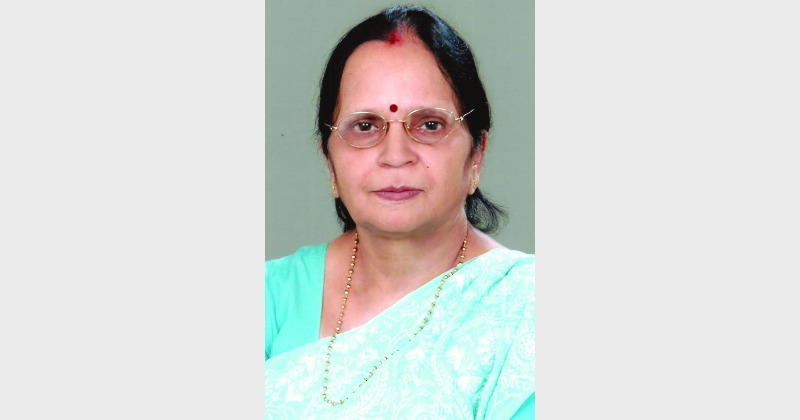
By Mridula Sinha

Everybody has heard the proverb that prevention is better than cure. As we find the cures for several diseases and as some diseases are eliminated completely, we observe the evolution of new diseases spreading terror among the masses. In a nation of more than one billion people with differents economic status, it is not an easy task to provide health care for every citizen. Taking health care to the doorstep of each patient or bringing each patient to the doorstep of the doctor through modern way of treatment, is an uphill task. Perhaps the cure by this way lies in old ways of remedies.

Now our metropolises have large hospitals that are equipped with the latest facilities. Some of the hospitals resemble five star hotels. A throng of patients come to the hospitals from all parts of the country. These patients and their attendants have to face many hardships when they leave their villages and come to Delhi, Mumbai or Chennai for treatment. This is indicative of the fact that we have not been able to provide health services that could be within the reach of the common man. And perhaps such a goal was never attainable. Our forefathers tried to make every individual a back group physician rather than trying to take the physician to every individual. This is the reason why ordinary people had vast knowledge about medicinal herbs and they could identify and use them and remain healthy on the basis of this knowledge. This was possible without their going out to schools or colleges and without the help of the recent information technology revolution.

In the race of getting specialised treatment for  the common disorders, it is becoming necessary to make repeated rounds of the clinics of specialists. As a result, the citizens of a developing country cannot afford the cost of treatment. The limited resources of the government have also rendered treatment costs for the common man out of reach. It is a wonder that still the common man is able to survive. In this situation it has become necessary to go back to traditional and indigenous systems of medicine. If we know a simple remedy for an everyday disease we should try to make other people aware of it. But we have to be cautious about two things—alternative medicines should not be very costly and we should not become roadside doctors.

Modern treatment is costly. Medicines are much more costly at the same time modern medical science is passing through experiments only. One cannot avoid the side effects of medicines. ‘Amma’ is aware of the traditional ways of treating pregnant women only. She must know the modern advices for them. We must think of lessoning huge number of patients rushing to the hospitals.  

My granny was the neighbourhood physician!  She had home remedies for cough, cold and upset tummies! She managed to keep us healthy without visiting the doctor or going to the hospital. She also had a wide arsenal of remedies for preventing disease at every change of season. There was a chutney prepared from neem leaves, a brew made from the sacred basil or it could be a solution of chiraita which kept away boils and pimples. Without incurring any expenditure on medicines and without any time consuming trips to doctors or hospitals, my granny kept us in the pink of health. We have created a problem out of the task of keeping people healthy by centralising a system that should have been decentralised.

A healthy mind lives in a healthy body. The body, brain and mind are interconnected. In our desire to look for revolutionary methods of developing the brain we have the heart lagging behind then the two will not be balanced. We have to treat human beings as a composite whole, comprised of mind, body and soul. Sometimes, there are psychosomatic reasons for diseases, which may escape the attention of the specialist.

We will find a solution to the problems of health care only if we evolve a simple, common and decentralised system. A holistic approach is needed for the problems that are being viewed in fragments. We have to return to our traditional and indigenous knowledge base for the treatment of everyday diseases of the common man. For this we need to utilise information technology so that the person on the street can get inexpensive and readily available treatment for his or her health problems.

Women are more sufferers of this new system of treatment. Two decades before, I had suggested the governments to introduce “Ammas” in the treatment system to deal with the health problems of pregnant women. Over every five thousand population an Amma should the appointed. She will be informed of the name and  address of the pregnant women. She will visit the homes, enquire about the condition of pregnant women, advice the doe’s and don’ts, give medicines, everything. This system is needed only when the mother-in-law, mother or any aged lady is not residing with the young couple. The pregnant young lady is does not know anything. She always goes to the doorsteps of hospitals and becomes a part of the group of the crowd. She has to spend much time in waiting till her number comes.

The young doctors or nurses do not know how to take care of the pregnancy. They can prescribe some medicines only. The aged woman, “Amma”, with her experience can be more useful. The government adopted my advice, but half only. It has appointed ‘Ashas’ not Ammas. Ashas is not experienced one.

Social organisations dealing with the women health should come forward in cities. There are big complexes and apartments where more than hundred families are living in flats. There must be an ‘Amma’ an aged women, who can look after the pregnant women, living in small houses or apartments of lower middle class families. 

(The writer is former Chairperson of Central Social Welfare Board)

ShareTweetSendShareSend
✮ Subscribe Organiser YouTube Channel. ✮
✮ Join Organiser's WhatsApp channel for Nationalist views beyond the news. ✮
Previous News

Poverty in times of elite splurgeBy Ravi Kapoor

Next News

Kids’ Org

Related News

PM Modi commissioned three indigenous naval platforms in Kolkata

PM Modi commissions 3 indigenous naval platforms in Kolkata; Strengthening maritime security across Indian Ocean

Odisha Chief Minister Mohan Charan Majhi performs yoga on International Yoga Day

Odisha: International Yoga Day sees massive turnout at Kalinga Stadium; CM Majhi announces 3 new Ayurvedic colleges

Dandi Swami Pujya Swami Jitendranand Saraswati and VHP International President Alok Kumar addressing the press conference

VHP seeks greater transparency in temple administration, family law review and measures for cow protection

Keralam CM VD Sateeshan and VHP Keralam General Secretary Adv. Anil Vilayil (Left to Rght)

Keralam: VHP demands Central rule amid CM VD Satheesan’s move to study partition of Muslim majority Malappuram district

Dr Keshav Baliram Hedgewar, the founder of the Rashtriya Swayamsevak Sangh (RSS)

Remembering RSS Founder Dr Keshav Baliram Hedgewar: The visionary who organised Hindu Society

PM Narendra Modi in Kolkata on the occasion of International Yoga Day

“Yoga connects everyone”: PM Modi leads 12th Yoga Day celebrations in Kolkata; invokes Tagore, cites Bhagavad Gita

Load More

Latest News

PM Modi commissioned three indigenous naval platforms in Kolkata

PM Modi commissions 3 indigenous naval platforms in Kolkata; Strengthening maritime security across Indian Ocean

Odisha Chief Minister Mohan Charan Majhi performs yoga on International Yoga Day

Odisha: International Yoga Day sees massive turnout at Kalinga Stadium; CM Majhi announces 3 new Ayurvedic colleges

Dandi Swami Pujya Swami Jitendranand Saraswati and VHP International President Alok Kumar addressing the press conference

VHP seeks greater transparency in temple administration, family law review and measures for cow protection

Keralam CM VD Sateeshan and VHP Keralam General Secretary Adv. Anil Vilayil (Left to Rght)

Keralam: VHP demands Central rule amid CM VD Satheesan’s move to study partition of Muslim majority Malappuram district

Dr Keshav Baliram Hedgewar, the founder of the Rashtriya Swayamsevak Sangh (RSS)

Remembering RSS Founder Dr Keshav Baliram Hedgewar: The visionary who organised Hindu Society

PM Narendra Modi in Kolkata on the occasion of International Yoga Day

“Yoga connects everyone”: PM Modi leads 12th Yoga Day celebrations in Kolkata; invokes Tagore, cites Bhagavad Gita

Rashtriya Swayamsevak Sangh (RSS) founder Dr Keshav Baliram Hedgewar

Amit Shah pays tribute to RSS founder Hedgewar ji on his death anniversary, hails his vision of “Nation First”

A representative image

Organic manure adoption surges 3.5 times in Kharif 2026 as India builds fertiliser buffer against global turmoil

Yoga Day: From inner balance to global harmony

Prime Minister Narendra Modi (Photo/DPR PMO/ANI)

Paschimbanga Divas not just a date, but reflection of Bengal’s history and heritage: PM Modi in Hooghly

Load More
  • Privacy
  • Terms
  • Cookie Policy
  • Refund and Cancellation
  • Delivery and Shipping

© Bharat Prakashan (Delhi) Limited.
Tech-enabled by Ananthapuri Technologies

  • Home
  • Search Organiser
  • Bharat
    • Assam
    • Bihar
    • Chhattisgarh
    • Jharkhand
    • Maharashtra
    • View All States
  • World
    • Asia
    • Africa
    • North America
    • South America
    • Europe
    • Australia
  • Editorial
  • Operation Sindoor
  • Opinion
  • Analysis
  • Defence
  • Culture
  • Sports
  • Business
  • RSS @ 100
  • Entertainment
  • More ..
    • Sci & Tech
    • Vocal4Local
    • Special Report
    • Education
    • Employment
    • Books
    • Interviews
    • Travel
    • Health
    • Politics
    • Law
    • Economy
    • Obituary
  • Subscribe Magazine
  • Read Ecopy
  • Advertise
  • Circulation
  • Careers
  • About Us
  • Contact Us
  • Policies & Terms
    • Privacy Policy
    • Cookie Policy
    • Refund and Cancellation
    • Terms of Use

© Bharat Prakashan (Delhi) Limited.
Tech-enabled by Ananthapuri Technologies