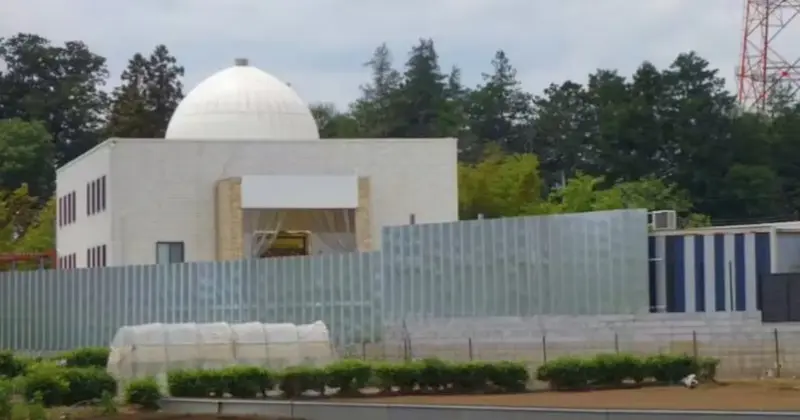
In early June this year, the news of Pakistan’s illegal construction of a mosque in Japan’s Kawagoe made headlines. The 4,500 sq meter mosque was built on an urbanisation control area without explicit permission. The structure inaugurated earlier in the year by Pakistan’s ambassador to Japan now awaits imminent demolition. This turned out to be a highly embarrassing episode for Pakistan and also attracted the wrath of the local community who not only perceived it as an encroachment on forest land but also a brazen attempt to subjugate local culture.
This sensitivity and consequent resistance of the Japanese towards attempts at Islamisation is not a recent phenomenon. A few months back Sanseito party’s Umemura Mizuho proudly proclaimed that any Muslim who wishes to be buried should either repatriate their remains back to their home country or oblige to be cremated as it is a practice followed by 99 per cent of the Japanese population. The debate arose over sanctioning new burial grounds to accommodate the needs of a growing Muslim population in the country.
Asserting that Japan is a burial country, she argued that allocating more lands for burial hurts national principles and public sentiments equally. It is easy to perceive her remarks as Xenophobic which would not be an entirely false observation as Japan still lives under the impact of its 17th century isolationist policies brought in by the Tokugawa shogunate to protect its sovereignty and keep Catholic Missionaries at bay. The residual effects of these historical events still maintain a visible grip on the people. The society is inward looking and often views foreigners with a certain degree of skepticism if not suspicion.
For an individual to be considered as a part of the larger society, a certain degree of ‘Japaneseness’ in private and social behaviour is expected. The distinction between a native and an outsider on Japanese soil is clear and more often than not, foreigners who’ve even spent their entire lives in the country report being still treated and considered as outsiders. The merits and demerits of this approach in today’s highly globalised world could be a topic for another debate, but there is a high probability that this so-called extreme social stance which also converts into staunch immigration policies has saved Japan from UK, Germany and France style Islamisation until now.
But what about the future? Is Japan’s grounding and pride in its own identity enough to save the country from aggressive attempts at Islamisation? Data tells us that Japan is now home to roughly 4,20,000 muslims. The number has almost doubled from the 2,30,000 in 2019. The number of mosques has increased from only 15 in 1999 to over 113 as of 2021. Some are confirming to the faith owing to marriage while some are converting out of their own volition. The locals are clearly displeased over this rapidly developing shift.
However, liberal voices counter this displeasure by urging the Japanese to perceive Muslims not based on their religion but as individuals and humans. However, does the Muslim population also want to be perceived as humans first or does their religious identity come first for them? The fervent attempts to build mosques, collectively demand for burial rights, dress in a religiously appropriate fashion, generate a demand for halal products and live in ghetto-like close knit communities by refusing to freely mingle with the local population tells another story.
Today, every country which believes in protecting its cultural identity should be increasingly worried of unwavering attempts to propagate Islam. Islamisation does not restrict itself at promoting its own religious beliefs but comes with an obvious cost of subjugation of native culture. Cities stop looking like themselves anymore, spaces are encroached at an alarming speed and before anyone realises, the native population is pushed in a corner and is rendered more vulnerable than ever.
In many cases Islamisation translates into the locals losing the primary right over their land. Before swaying too much in the favour of voices that call for secularism, we should remember that what happened in Kashmir is not a location specific phenomenon and can be virtually replicated in any corner of the world. Today, Japan is putting up a resistance to Islamisation as it is perceived to be inherently opposing to the essence of being Japanese.
The fundamental belief is that two highly contrasting approaches to life cannot continue being a part of the same social structure and to avoid this friction, those who choose to live in Japan must adhere to the Japanese way of life. The current political environment in the country is also conducive to this resistance. However, data tells us that Islam is growing numerically and in society, the faction that has the strength of numbers generally wins. Many countries till date have fallen prey to Islamisation that presents itself under the garb of secularism and Japan needs to be alert, constantly.