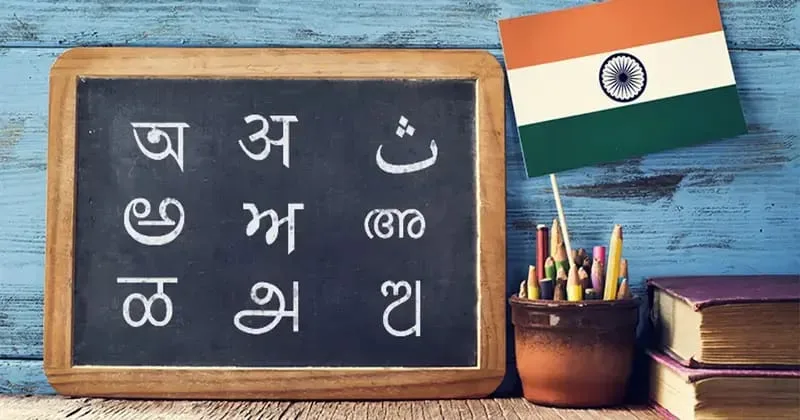
Bharat’s higher education landscape is undergoing a significant transformation with a growing focus on providing higher studies and professional courses in regional languages. This marks a pivotal shift aimed at making education more accessible and inclusive for students who are more comfortable learning in their mother tongue. By moving beyond the long-standing dominance of English, leading universities and institutions are now actively developing curricula and resources to strengthen regional languages, foster deeper understanding, and unlock the academic potential of a wider student demographic. This report explores the key initiatives and landmark developments in this crucial area. This report compiles nine key initiatives and developments by leading universities and higher educational institutions to offer higher studies and courses in regional languages.
First Marathi-medium B.Tech batch graduates from PCCOE, Pune, with strong placements
On June 1, 2025, the Pimpri Chinchwad College of Engineering (PCCOE) in Pune celebrated the graduation of the first-ever batch of B.Tech students instructed in Marathi. This initiative, backed by the AICTE, focused on teaching core engineering subjects in the regional language while keeping technical terms in English. The programme successfully debunked concerns about regional-language instruction, as the graduates’ performance and employability were on par with their English-medium counterparts. Notably, over 40 of the 66 students (approximately 60%) secured jobs with salaries ranging from Rs 5 lakh to Rs 10 lakh per annum, demonstrating the program’s effectiveness and the students’ readiness for the workforce.
AICTE to provide Engineering textbooks in 12 regional languages
The All India Council for Technical Education (AICTE) announced plans on April 8, 2025, to make engineering textbooks available in 12 Indian languages by 2026. This extensive project, led by AICTE Chairman Prof. T. G. Sitharam, aims to provide textbooks for both diploma and degree courses in languages like Hindi, Tamil, Telugu, and Bengali. Over 600 books for the first and second years are already available on the e-KUMBH portal, with 40-50 books for the third year currently in progress. The books are created using AI-assisted translation, which is then refined by subject experts to ensure accuracy and adherence to a standard curriculum. This initiative is a key step in fulfilling the National Education Policy (NEP) 2020’s vision of promoting mother-tongue education.
Engineering course admissions in regional languages on the rise
Between 2022 and 2023, engineering courses offered in regional languages saw a significant increase in admissions, particularly in Tamil Nadu, Andhra Pradesh, and Uttar Pradesh. In the 2021-22 academic year, AICTE had approved 1,140 B.Tech seats across 18 colleges in 11 languages, but only 233 were filled. The following year, however, the initiative expanded to 22 colleges, and the number of filled seats nearly tripled to 683. This positive trend shows a growing interest and acceptance of engineering programs in languages like Tamil, Telugu, Hindi, and Marathi.
IIT Madras offers Python programming in Tamil
On April 11, 2024, IIT Madras announced that it would offer its Python programming course in Tamil, a major step toward making technical education more accessible. The course, titled “Programming, Data Structures, and Algorithms using Python,” is available on the institute’s NPTEL platform and includes complete Tamil support with video subtitles, audio tracks, transcripts, e-books, and slide decks. This initiative is designed to help students from regional-language backgrounds transition more easily into technical education, which is often taught in English. With this addition, Tamil became one of the 11 Indian languages in which NPTEL offers courses, with 174 courses now available in the language.
Chhattisgarh launches Hindi-medium medical education
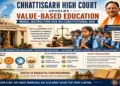
Chhattisgarh has made a landmark decision to introduce medical education in Hindi, beginning with the 2024–25 academic year. The policy, announced by CM Vishnu Deo Sai on Hindi Diwas, will be implemented in all 10 government medical colleges in the state, which will now offer the MBBS curriculum in Hindi. First-year students will be provided with Hindi-language textbooks to support their studies. This move aligns with the goals of the National Education Policy (NEP) 2020, aiming to improve comprehension for students from rural and tribal areas who often face challenges with English-medium instruction. The initiative is expected to make medical education more accessible and conceptually clear, helping students better understand complex medical terminology.
Rajasthan announces Hindi-medium MBBS
Following in the footsteps of Madhya Pradesh and Chhattisgarh, Rajasthan announced that it would offer MBBS education in Hindi from the 2024-25 academic year. The announcement, made on Hindi Diwas (September 14, 2024), specified that the initiative would first be implemented at two state medical colleges: Dr. Sampurnanand Medical College in Jodhpur and Barmer Medical College. The state also committed to providing Hindi-language textbooks and study materials for first-year students to support the transition.
Engineering courses in Tamil offered in Chennai
On June 16, 2023, Tamil Nadu’s Higher Education Minister announced that major Chennai institutions, including the College of Engineering, Guindy (CEG), would offer Computer Science & Engineering (CSE), Electronics & Communication Engineering (ECE), and Electrical & Electronics Engineering (EEE) entirely in Tamil. This move was made to boost academic accessibility for Tamil-medium students. These graduates are expected to have comparable placement opportunities, and they will also be eligible for government job reservations for Tamil-medium students, enhancing their career prospects.
Three Haryana colleges to offer Hindi-medium B.Tech courses
Three government technical universities in Haryana received permission from AICTE to offer B.Tech programs in Hindi starting in the 2021-22 academic year. A total of 210 seats were allotted to J.C. Bose University, Deen Bandhu Chhotu Ram University, and Guru Jambheshwar University. This formal approval aligned with NEP 2020’s goal of making higher education more accessible in mother tongues. While students and faculty had already been informally using a mix of Hindi and English in classes, this AICTE ruling officially permitted Hindi to be used for both instruction and assessments.
IIT-BHU prepares to launch Hindi-medium B.Tech programme
On September 2, 2021, Professor Pramod Kumar Jain, Director of the Indian Institute of Technology (IIT)–Banaras Hindu University (BHU), announced that the institute was preparing to offer its entire first-year B.Tech programme in Hindi. This initiative positioned IIT-BHU to become the first IIT in the country to offer an engineering programme in Hindi. Professor Jain noted that teaching in regional languages would broaden student participation and help foster local entrepreneurship, reinforcing both accessibility and a sense of linguistic pride.
The initiatives by universities and educational bodies across Bharat mark a significant and positive shift in the country’s higher education landscape. By offering engineering, medical, and other professional courses in regional languages like Hindi, Marathi, and Tamil, institutions are directly addressing the linguistic barriers that have long prevented many students from pursuing higher education.
These developments, from AICTE’s provision of textbooks in 12 languages to IIT-BHU’s pilot B.Tech programme in Hindi, demonstrate a commitment to the goals of the National Education Policy (NEP) 2020. They are not just about translating curriculum but also about empowering students from diverse linguistic backgrounds, fostering local entrepreneurship, and creating a more inclusive and equitable education system. The successful graduation of the first Marathi-medium B.Tech batch with strong placements proves that regional-language instruction does not compromise quality, paving the way for future expansions and a more linguistically diverse academic environment in Bharat.