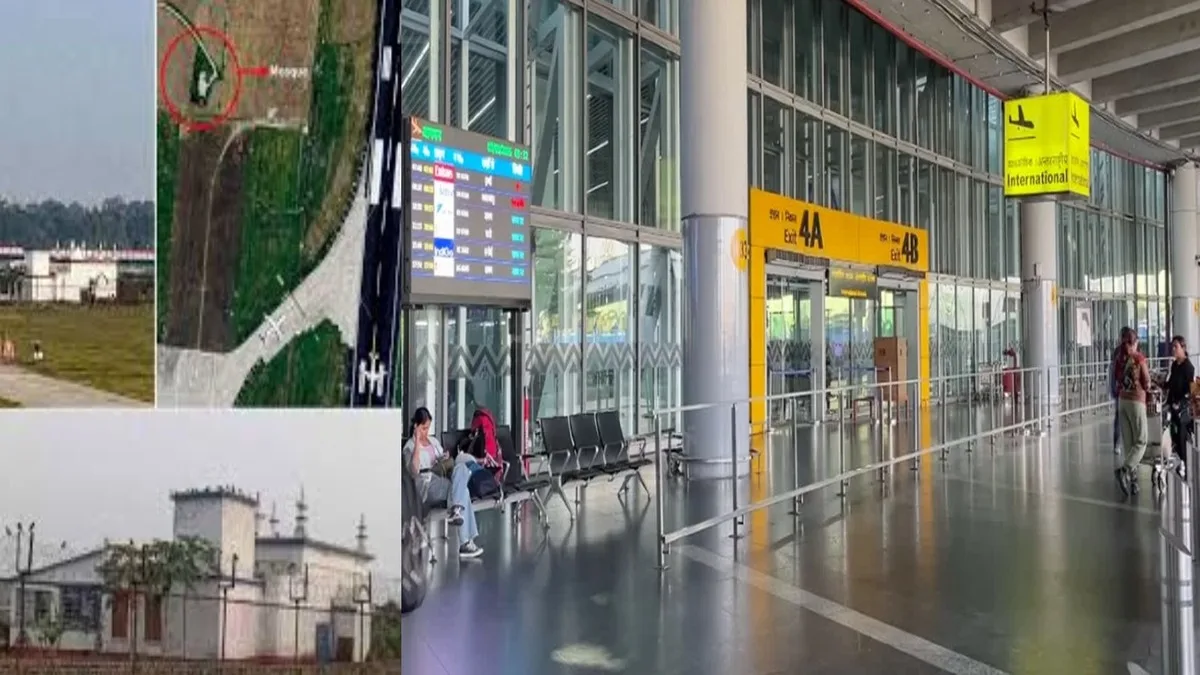
KOLKATA: The right to worship cannot be examined in isolation from the security requirements of one of India’s busiest airports.
That was the immediate context before the Calcutta High Court on October 1, when Justice Krishna Rao declined to grant interim permission for worshippers to enter the Bankra Mosque situated within the operational area of Netaji Subhas Chandra Bose International Airport in Kolkata.
The proceedings arise from Bankra Masjid Committee (Airport) & Anr. v. Union of India & Ors., in which the mosque committee challenged restrictions imposed on access to the place of worship. The litigation has been pending before the High Court since September.
Public access to the mosque was stopped in July after airport authorities raised concerns over permitting persons into a highly sensitive operational zone. The mosque, also known as the Gauripur Jama Masjid, is more than a century old and predates the airport itself. It is situated close to the airport’s secondary runway.
Appearing for the petitioners, Senior Advocate Kishore Dutta submitted that worshippers had earlier been allowed to enter after undergoing security checks. According to the committee, devotees were screened before being taken to the mosque in a vehicle arranged under the supervision of the CISF.
The petitioners therefore sought restoration of access pending final adjudication of the case.
The authorities opposed any interim relaxation.
Additional Solicitor General Dhiraj Trivedi placed national-security concerns before the Court and referred to previous instances in which unauthorised persons had allegedly entered sensitive areas of the airport, including the apron. The recent flydubai incident was also referred to during arguments as part of the wider concern over aviation security.
The location of the mosque makes the issue particularly sensitive.
Earlier reports place it approximately 165 metres from the secondary runway. Aviation authorities have long maintained that its position complicates both security arrangements and the full utilisation of the runway. Access to an airport’s operational area ordinarily involves security requirements considerably more stringent than those applicable to a public place outside the airport perimeter.
Against that background, the High Court declined to pass an interim direction allowing prayers to resume.
The order at this stage does not finally determine the mosque committee’s legal rights, nor does it amount to a final adjudication on whether access can ever be restored under an alternative security arrangement. The Court has simply declined to disturb the existing restriction pending further consideration of the matter. The case is scheduled to be heard again on October 7.
Significantly, relocation also surfaced during the hearing. The petitioners indicated that they were not opposed in principle to moving the mosque to another suitable location, while contending that any such exercise ought to be undertaken systematically rather than by abruptly stopping access to worshippers.
That possibility may ultimately offer a practical resolution.
The mosque’s historical existence is not seriously in dispute. It stood in the area decades before the modern airport expanded around it. But an airport today is also critical national infrastructure governed by security standards that bear little resemblance to those prevailing when the structure first came into existence.
The legal question therefore need not be framed as one of faith versus the State.
The more immediate issue is whether unrestricted or specially facilitated civilian access can safely continue inside a tightly controlled aviation zone when security agencies themselves have raised objections.
For now, the Calcutta High Court has chosen caution.