
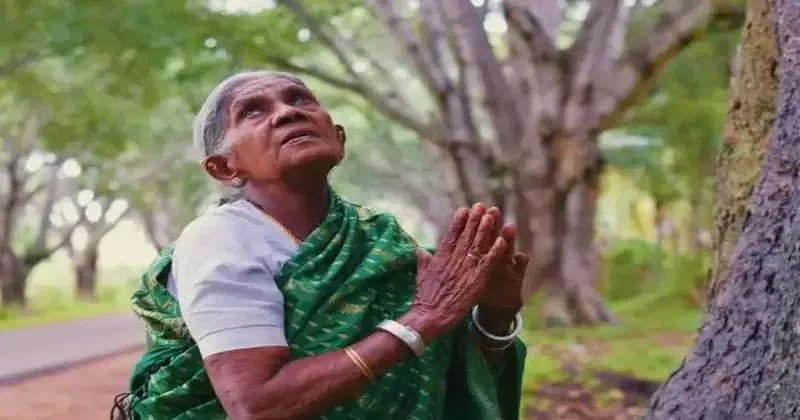
At a time when climate change, deforestation, and environmental degradation dominate global discussions, the inspiring life of Saalumarada Thimmakka stands as a timeless reminder that one determined individual can transform an entire landscape. Without wealth, formal education, or government support, this humble woman from Karnataka dedicated her life to planting and nurturing hundreds of banyan trees along barren roadsides. Her extraordinary contribution to environmental conservation eventually earned her the Padma Shri in 2019, making her one of India’s most celebrated environmentalists.
Saalumarada Thimmakka was born into a poor family in Karnataka and spent her early life working as a daily wage labourer. Because of financial hardships, she never had the opportunity to attend school. She married Bikkala Chikkayya, and together they lived a simple life sustained by hard work and modest earnings. The couple faced a deep personal sorrow, they were unable to have children. While society often looked upon childlessness with sympathy or criticism, Thimmakka and her husband chose not to let it define their lives. Instead, they transformed their grief into a lifelong mission of serving nature.
Determined to create a meaningful legacy, the couple decided that if they could not raise children, they would raise trees instead. They began collecting banyan saplings from nearby areas and planting them along a barren stretch of road near their village. Without any financial assistance or organised support, they relied solely on their determination and hard work. What started as a small personal effort gradually evolved into one of India’s most inspiring environmental movements led by ordinary citizens.
A Labour of Love
Planting the saplings was only the beginning. Every day, Thimmakka and her husband carried pots of water over long distances to nourish the young trees, especially during the hot summer months. They fenced each sapling with thorny bushes to protect it from grazing cattle and regularly cleared weeds to ensure healthy growth. Every tree received the same care, patience, and affection that parents would give their own children. Their commitment continued for years, even as they struggled with poverty and physically demanding work.
Transforming a Barren Road into a Green Corridor
Year after year, the couple continued planting more banyan trees during the monsoon season. Over time, hundreds of saplings grew into magnificent trees, transforming what had once been a dry and barren roadside into a lush green avenue. The sprawling banyans began offering shade to travellers, shelter to birds and wildlife, protection against soil erosion, and cleaner air for surrounding communities. Their work demonstrated how sustained individual effort could bring lasting environmental change without large-scale funding or government programmes.
The Significance of the Banyan Tree
The banyan tree is one of India’s most revered and ecologically valuable trees. Known for its vast canopy and long lifespan, it provides shelter to numerous species of birds, insects, and small animals. Its extensive root system helps prevent soil erosion, while its dense foliage improves air quality and moderates local temperatures. By choosing to plant banyan trees, Thimmakka ensured that her efforts would continue benefiting people and the environment for generations.
For many years, Thimmakka quietly continued her work without expecting recognition. As the remarkable story of the woman who had planted and nurtured hundreds of banyan trees spread across the country, environmentalists, journalists, and government officials began acknowledging her extraordinary contribution. She received several prestigious honours, including the Karnataka Rajyotsava Award and the National Citizens Award. In 2019, the Government of India honoured her with the Padma Shri, recognising her lifelong dedication to environmental conservation. The award brought national attention to her inspiring journey and highlighted the power of individual action in protecting nature.
Following the Padma Shri, Saalumarada Thimmakka became an inspiration for millions of people across India. Schools, colleges, environmental organisations, and community groups began sharing her story to encourage tree plantation and environmental stewardship. Her life proved that one does not need wealth, education, or political influence to create lasting change. Through determination, compassion, and consistent effort, an ordinary woman became a national icon and a symbol of grassroots conservation.
As India faces challenges such as climate change, deforestation, air pollution, and water scarcity, Thimmakka’s life offers valuable lessons. Her journey reminds us that environmental conservation is not solely the responsibility of governments or organisations; every citizen has a role to play. Planting trees is important, but nurturing them until they mature is what truly creates a lasting impact. Her example encourages communities to think beyond short-term campaigns and commit to long-term care for nature.
Saalumarada Thimmakka’s remarkable journey from a humble village labourer to a Padma Shri awardee is a testament to the transformative power of compassion and perseverance. The green avenue she created continues to provide shade, cleaner air, and ecological benefits, while her life inspires millions to believe that even a single individual can make an extraordinary difference to the world.