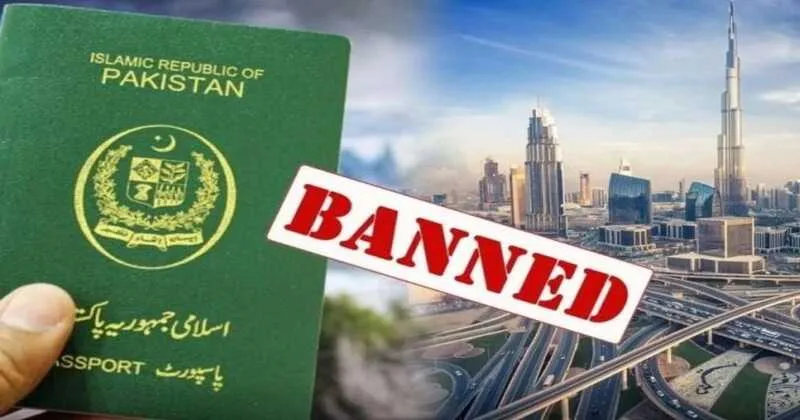
The United Arab Emirates(UAE), has escalated a quiet, but visible and significant diplomatic fissure with Pakistan. Abu Dhabi has imposed a silent ban on the visas for Pakistanis. Though there are no official statements, traders, investors and businessmen from Pakistan, have expressed steep concerns regarding the visa rejection or non-approval by the UAE. This silent ban on visas for Pakistanis, reflects deepening rift between Abu Dhabi and Islamabad in recent years, and the dissatisfaction of UAE towards Pakistan. For instance, the UAE, a few months ago, suddenly insisted Pakistan to repay the debt of USD 3.5 billion.
Pakistani investors, traders and businessmen have reiterated that they have been hit by a silent visa ban on Pakistani citizens. The traders are claiming that the visa ban by the UAE has significantly hit the international trade and other business activities of Pakistan. The traders also assert this as a “serious challenge”, as Pakistan is significantly dependent on West Asia for the remittances and exports.
The silent visa restrictions by the UAE can further deepen the economic problems of Pakistan, which is hitherto entangled in a steep crisis, with soaring inflation, scarce forex reserves and escalating external debt burden. The ban on traders will further deplete the sources of income to Pakistan, thus pushing the country into utter crisis.
Shahid Anwar, Former Secretary General of the Federation of Pakistan Chambers of Commerce and Industry(FPCCI), told private media platforms that there appears to be a noticeable gap between the official position and the experience reported by many Pakistani business travellers.
Pakistani owners with solid and long-standing connections in Dubai, Sharjah and Abu Dhabi also are raising similar concerns about not being able to secure visas, said Shaukat, President of the Rawalpindi Chamber of Commerce and Industry. Ismail Suttar, Founder and Chairman of the Salt Manufacturers Association of Pakistan said that the UAE’s visa restrictions on Pakistan are leading to uncertainty among businesses dependent on the UAE markets.
Zia ul Arfeen, member of the Karachi Chamber of Commerce and Industry (KCCI), reached out to the UAE officials and sent a letter to the UAE Consul General over the matter. However, he said that he did not receive any response, regarding the visa delay or silent restrictions on the Pakistani traders and businessmen. Meanwhile, aviation consultants also reported that due to lack of visa approval there is a significant decline in Pakistanis visiting the UAE.
Historically, the United Arab Emirates(UAE) and Pakistan have shared solid diplomatic relations. However, in recent years, Abu Dhabi is distancing itself from Islamabad and is taking a hard position. It is said that this action of UAE, is mainly due to Pakistan’s increasing inclination towards Saudi Arabia. For example, recently, Islamabad inked a nuclear deal with Riyadh. Immediately, Abu Dhabi reacted by insisting Pakistan to suddenly repay its 3.5 billion debt.
Owing to the debt repayment pressure of the UAE, Pakistan tried to build a fake narrative claiming it as a routine bilateral repayment process rather than any diplomatic rift or debt burden. However, the fissure between Abu Dhabi and Islamabad was significantly evident. Pakistan aims to portray the UAE as a long-standing and trusted partner. However, the dissatisfaction of the UAE is more visible than ever before. The visa restrictions are the latest in the row.
The UAE has not issued any official statement regarding the ban of visas for Pakistanis. However, its quiet actions send a deeper message. The UAE is Pakistan’s third largest trading partner with bilateral trade roughly valued at USD 11 billion. Abu Dhabi and West Asia also acts as a transhipment gateway for Pakistan, to further export its commodities to Europe and Africa.
However, the recent silent visa ban on Pakistan, overarchingly, affects the Pakistani economy which is heavily dependent on West Asia for trade and refueling of the ruptured domestic economy. A substantial portion of the remittances originates from Gulf countries, with the UAE accounting for nearly USD 9billion. Thus, if UAE continues a silent ban on visas for Pakistanis, in terms of rendering new visas or renewals, that could affect future remittance inflows, adding deep pressure to the fragile and bankrupt exchequer of Pakistan. The visa ban move of Abu Dhabi also mirrors the growing derailment of Pakistan’s diplomatic and strategic credibility in the UAE and West Asia.
