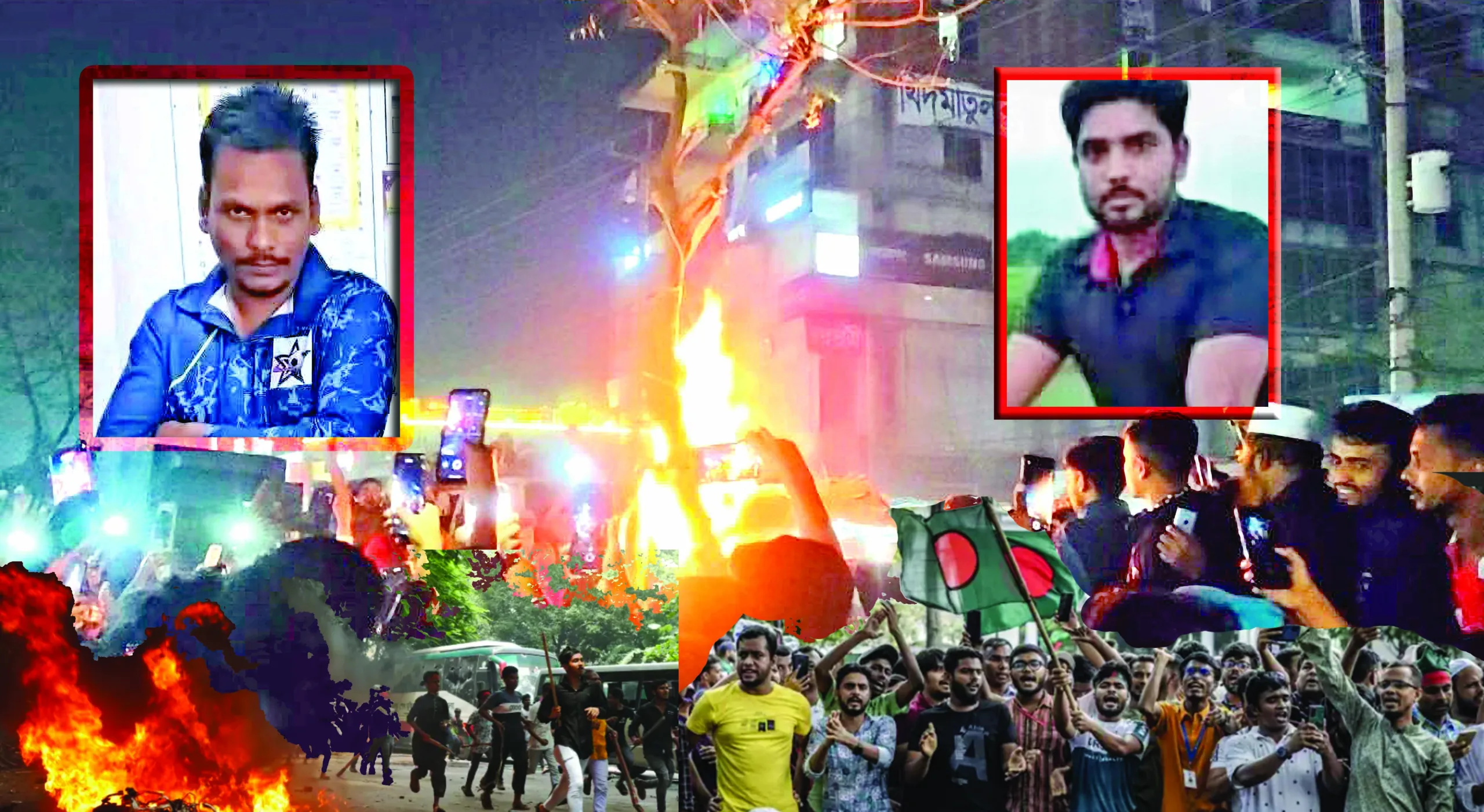
Bangladesh was not born from religious hatred. It was born of bloodshed against tyranny, of a linguistic movement that defied theological absolutism, and of a liberation war that rejected the very idea that faith should determine citizenship. Yet today, that founding promise is being burned – quite literally – on roadsides, factory gates, and public squares, as Islamist mobs lynch citizens not for crimes proven in law, but for identities condemned by ideology. The gruesome lynching and immolation of Hindu youth Dipu Chandra Das is not an isolated atrocity. It is a warning flare from a nation standing at the edge of an abyss.
The murder of 27-year-old garment worker Dipu Chandra Das in Bhaluka, Mymensingh, was not spontaneous rage. It was ritualised violence, carried out with impunity, recorded with pride, and celebrated online by extremists who now feel emboldened to claim public space, public institutions, and even the authority to decide who deserves to live.
Systemic Failure of Law, Order
This lynching of Hindus in Bangladesh is not an aberration. It is part of a disturbing and growing pattern of violence against Hindus and other minorities that has intensified since the ousting of the previous government in August 2024. According to a report by Centre for Democracy, Pluralism and Human Rights, Bangladesh saw 2,200 incidents of violence against Hindus in 2024, up sharply from 302 in 2023 and just 47 in 2022, including assaults, threats, temple desecrations, and mob attacks.
Additionally, minority rights groups documented over 2,400 incidents of violence against religious minorities between August 2024 and July 2025, including murders, rape, looting, and temple attacks. In July 2025, the Gangachara Hindu neighbourhood attack saw homes looted and vandalised, forcing families to flee in fear.
Blasphemy accusations have long been the most lethal weapon in the Islamist arsenal across South Asia. In Pakistan, they have lynched Christians, Ahmadis, Hindus, Bahais, and Shia Muslims alike – often later proven innocent, often after police complicity. In Afghanistan, they became instruments of totalitarian religious rule. That same weapon has now been unsheathed in Bangladesh, not by accident, but by design. The false charge of “insulting Islam” levelled against Dipu Chandra Das fits a familiar pattern: fabricate an accusation, incite a mob, paralyse law enforcement through fear or collusion, and execute the victim publicly as a message to all minorities — submit, flee, or die.
What makes Dipu’s murder especially chilling is not only its brutality, but its symbolism. He was a garment worker – the backbone of Bangladesh’s economy, a representative of the country’s labouring poor. He was seized from his workplace. He was not killed in secrecy, but on a highway, before cameras, with police present. This was not chaos. This was theatre – designed to terrorise, to normalise barbarism, and to announce that Islamist street power now rivals, and in some places replaces, the authority of the state.
The lynching of Dipu Chandra Das, therefore, demands to be understood not merely as a crime, but as a political event. It exposes the accelerating Islamisation of mob justice, the shrinking space for minorities, journalists, and dissenters, and the alarming paralysis or complicity of institutions tasked with protecting citizens. Most dangerously, it signals that Bangladesh is beginning to resemble the very societies its founders once resisted: where faith is weaponised, mobs rule the streets, and silence becomes the price of survival.
During the last few days, following the murder of notoriously anti-India and anti-Hindu activist Osman Hadi, Bangladesh is witnessing spine-chilling notoriety of Islamists who not only went on attacking leading newspaper offices in Dhaka and hunt for journalists with agenda of assassination, an innocent Hindu youth – Dipu Chandra Das fell victim of these jihadist thugs, who lynched and set him on fire by bringing false allegations of blasphemy – a common phenomenon in Pakistan.
Agencies Respond To Blasphemy Charges
The chilling video of Dipu Chandra Das being mercilessly beaten to death and his body set on fire triggered nationwide outrage. In contrast, some of the Islamists posted a video on social media, showing the police handing Dipu over to the rabid mob, who murdered him while chanting jihadist slogans: “Nara-e-Takbir, Allahu Akbar”.
West’s Hypocrisy & Double Standards
Bangladesh has witnessed heightened international attention following the death of Sharif Osman Hadi, a radical Islamist student leader where global human rights platforms were swift and vocal in condemning his death. However, this response stands in stark contrast to their silence on the brutal lynching of
Hindu youth Dipu Chandra Das, for which no major international human rights body has issued a statement.
Sharif Osman Hadi had earlier openly challenged India’s territorial integrity by sharing a provocative “Greater Bangladesh” map on social media, envisioning the inclusion of India’s seven northeastern states, West Bengal, and parts of eastern India. Despite such extremist posturing, his death evoked immediate global concern, while Dipu Chandra Das burnt alive by a mob on false allegations of blasphemy received no international attention.
This selective outrage exposes a troubling double standard in global human rights advocacy, where moral condemnation appears to depend on ideology rather than the gravity of the crime.
While the killer gang of Islamists claimed to have murdered Dipu Chandra Das for committing blasphemy by “insulting the prophet of Islam”, it was later revealed by the investigation agencies, including the Rapid Action Battalion (RAB) that the allegations were “totally false” and the innocent Hindu youth had fell victim of dispute with his fellow Muslim workers at the readymade garment factory, where he was working.
Mymensingh Additional Superintendent of Police (Administration) Abdullah Al Mamun told me over the phone that there is no “truth” to the claims of blasphemy that Islamists and a section of social media accounts brought against Dipu. Bhaluka Model Police Station Officer-in-Charge Mohammad Jahidul Islam also said there was no evidence that Dipu had insulted religion.
At a recent press briefing, Mymensingh RAB Company Commander Md Shamsuzzaman said no one present at the scene could confirm hearing Dipu make any religiously offensive remarks. “Even if the deceased had posted something online, that would have been traceable. We found nothing”, he said.
Selective Vocabulary of International Media
While the local press in Bangladesh maintains total silence in investigating the case of this gruesome incident, primarily due to extreme repressive acts adopted by the current regime led by Muhammad Yunus, international media, such as the New York Times (NYT), have already published a report on the matter. But this report too faces criticism as the NYT could not resist making his murder about Bharat’s “Hindu vigilantes” – a courtesy never extended in reverse. In my opinion, the selective vocabulary, strategic omissions, and refusal to name Islamism as the motivating ideology in the NYT article expose a pattern of protective framing that serves ideology over truth. The piece performs a rhetorical manoeuvre so common in coverage of ‘South Asian’ religious violence that it has become almost ritualistic. Rather than focusing on the specific horror before them – a man murdered for blasphemy in a Muslim-majority nation – the reporters immediately pivot to what they term “a wider pattern of religious intolerance in the South Asia region”. This framing is not journalism. The most charitable definition would call it moral laundering. The purpose is to dilute the particular barbarism of Dipu Chandra Das’s killing by subsuming it within a generalised narrative of regional dysfunction in which all parties are equally culpable.
Radical Islam: A Global Threat
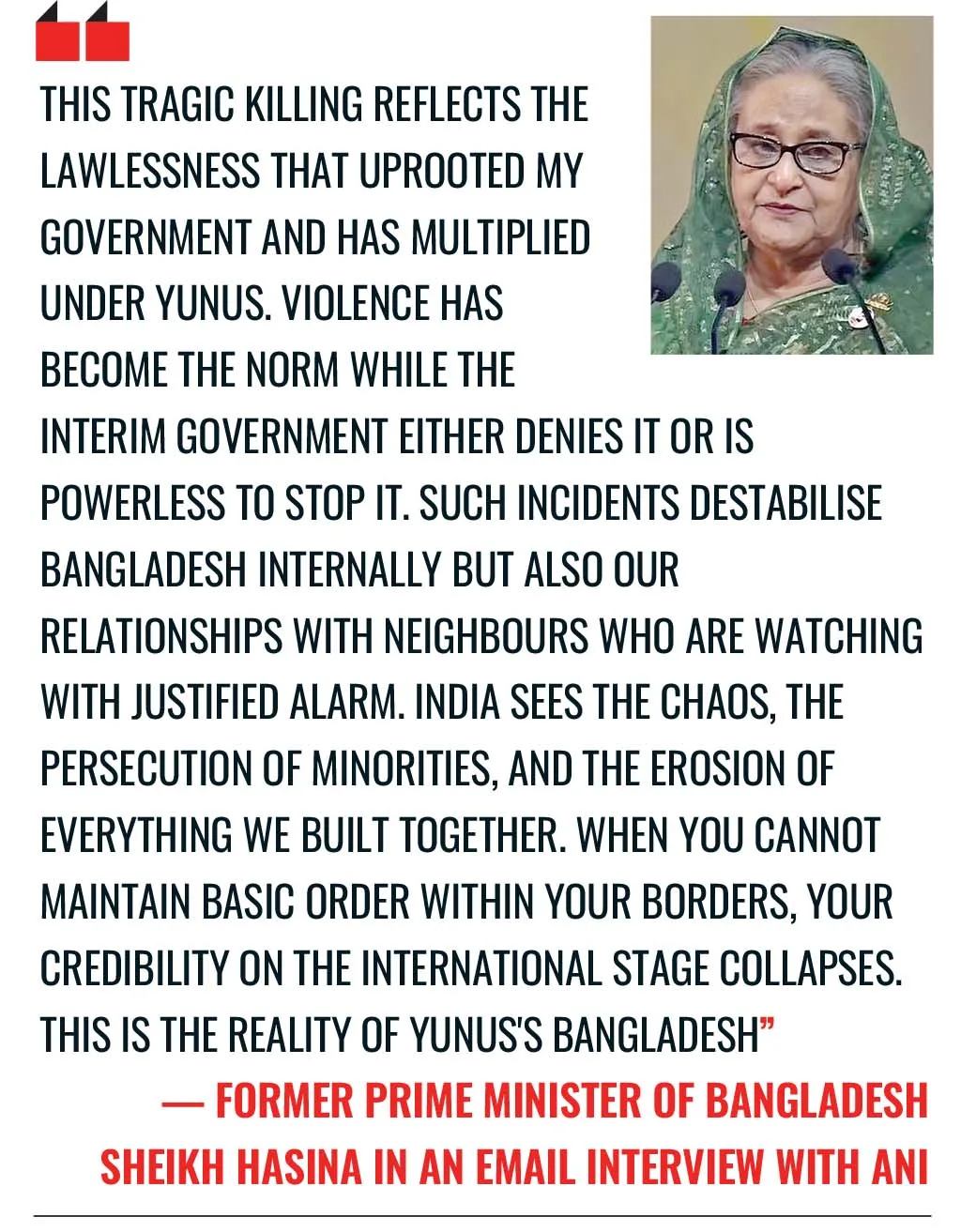
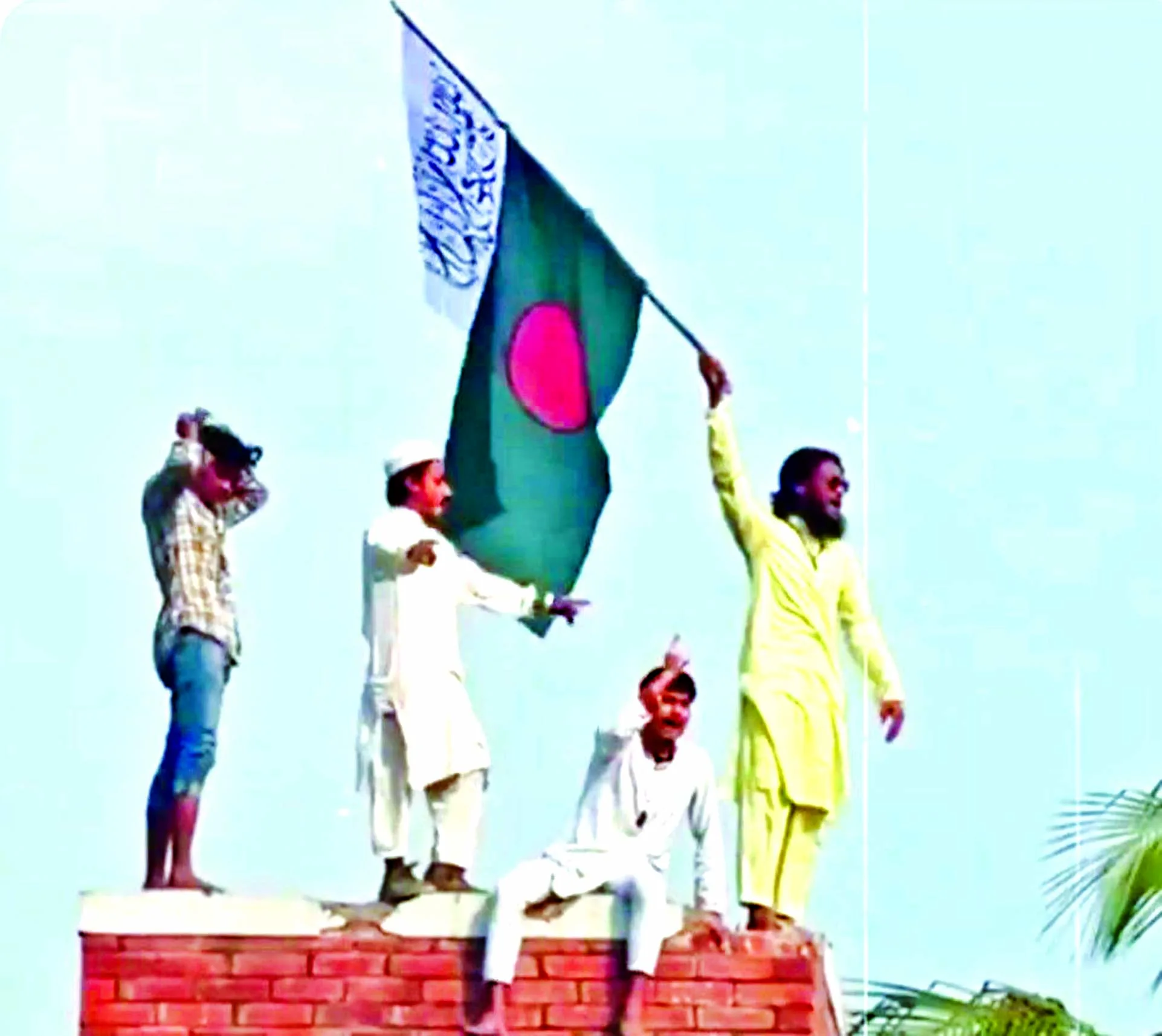
Islamic radicalism has emerged as a global concern, with Bangladesh and Pakistan reflecting a dangerous pattern seen across the world from attacks on minorities and cultural symbols to the misuse of religion for political control. In Bangladesh, this threat has deepened under the Yunus-led interim regime, which has reduced democracy to a hollow ritual. State machinery is being openly mocked as mobs rule the streets and extremists act with impunity.
The Family Recalls Horror
The deceased Dipu Chandra was the son of Rabi Chandra Das of Mokamiakanda village in Banihala Union of Tarakanda Upazila. His brother, Opu Chandra Das, filed a case on December 19, 2025, against 140 to 150 unidentified persons. Rabi Das gave a detailed account of the events of that day in a media interview. He said, “We first learned about my son’s fate from Facebook. Rumours started circulating among our acquaintances. Half an hour after the incident, a relative came and informed me that they had taken my son away and tied him to a tree”.
Burnt Alive for Belief: VHP Slams Targeted Anti-Hindu Violence in Bangladesh
Alok Kumar, International President of Vishwa Hindu Parishad (VHP) expressed deep anguish and strong condemnation over the brutal killing of a Hindu youth, Dipu Chandra Das.
Alok Kumar said that as per reports, Dipu Chandra Das had posted that ‘all Gods are the same with different names’. This is interpreted as blasphemy and for this he was burnt alive. Such stand is dangerous as it challenges the very foundations of secularism in India. He questioned why self-proclaimed secular forces, sections of the international media, and human rights platforms across the world are maintaining a stoic silence on this issue. He further stated that exiled Bangladeshi author and human rights activist Taslima Nasreen has publicly stated that Dipu Chandra Das was falsely accused of blasphemy and was abandoned by the police despite being under their protection. This reflects a complete and deliberate collapse of the rule of law and a grave abdication of state responsibility in Bangladesh, he said.
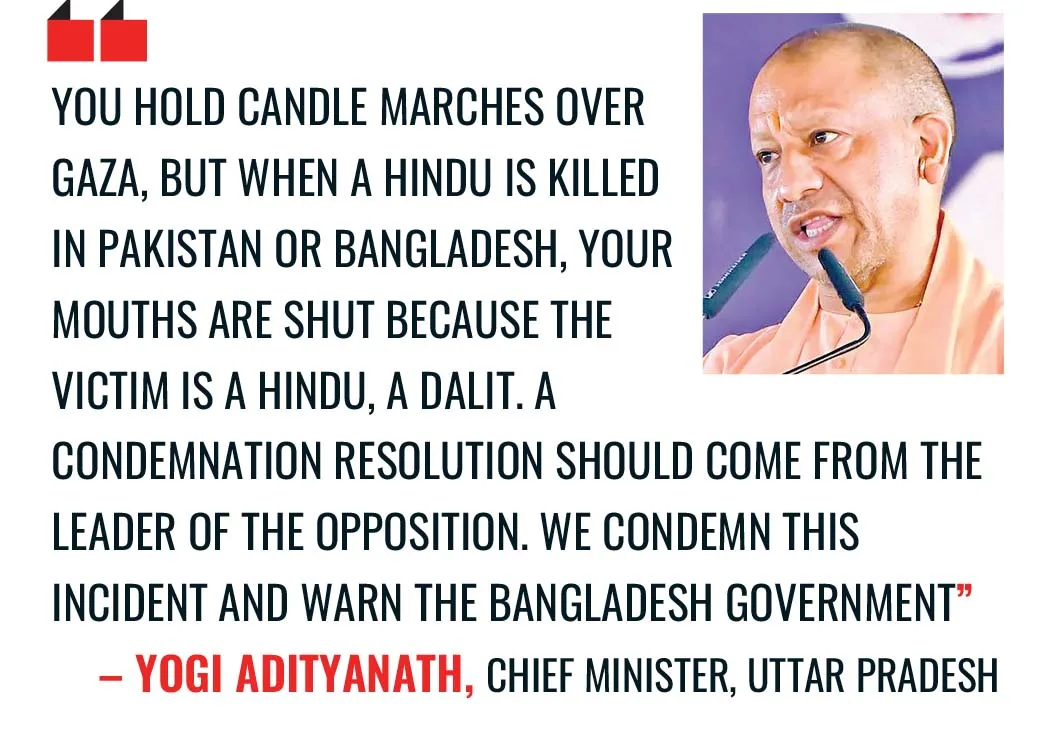
Alok Kumar said that Bangladesh is currently passing through a grave phase of uncertainty, lawlessness and anarchy. In this disturbing atmosphere, radical and fundamentalist elements have unleashed unchecked violence against Hindus, Sikhs and other minority communities. He emphasised that this alarming situation is a matter of serious concern for the entire world. It is the moral and humanitarian responsibility of the international community to take immediate and effective steps to ensure the safety of minorities and the protection of human rights in Bangladesh. Alok Kumar further stated that Bharat cannot and should not remain a silent spectator in such circumstances. Bharat has a long and proud tradition of standing with oppressed and persecuted communities across the world. VHP strongly urges the Government of Bharat to take all possible diplomatic, political and humanitarian measures to ensure the safety, security and dignity of Hindus and other minorities in Bangladesh.
He categorically demanded the immediate withdrawal of the Nobel Peace Prize conferred upon Muhammad Yunus, stating that any leadership which fails to protect minorities and maintain law and order has no moral right to enjoy international recognition or legitimacy.
Describing the murder, Dipu’s father said, “After beating him to death, they hung his body from a tree and set it on fire. Then they tied the burnt head and body with a rope and left it outside so that everyone could witness the brutality. The sight was extremely horrific”.
Dipu’s father also raised questions about the security of religious minorities in Bangladesh. Rabilal said, “Even after this incident, the Government has not contacted us in any way. They haven’t even given us any assurance of security. We haven’t received any condolences from anyone”.
Eyewitness Accounts
Eyewitnesses and factory workers are too scared to speak up, reports Dhaka’s leading Bangla daily Prothom Alo. The newspaper attempted to learn about the incident by speaking to at least 10 workers in front of the factory, but no one was willing to talk. Some said they went home early that day. Others said they didn’t come to the factory that day. One worker, on condition of anonymity, said that the factory authorities have forbidden them from talking about the matter. CCTV footage from the factory shows that around 8:30 PM on December 18, a group of people attempted to force their way through the factory gate. At one point, they broke through the pocket gate and took Dipu Chandra Das away. Questions have arisen about how so many people gathered outside the factory gate during an incident that occurred inside.
Abu Taher (50), who has been running a grocery store in front of the factory for 12 years, told Prothom Alo, “At the time of the incident, I came out of the mosque and saw a commotion of people in front of the factory. We didn’t understand who gathered the outsiders. Killing a man like that was not right”.
Islamists Further Emboldened
The violence continued with Islamist mobs attempting to storm the Indian High Commission in Dhaka and consulates in other cities. Subsequently, due to acute security concerns, the Indian High Commission was forced to suspend issuing visas to Bangladeshi nationals for an indefinite period.
Jihadists were even seen storming the National Parliament complex on December 20 – an act unthinkable in any functioning democracy. Within less than 48 hours of Dipu’s murder, in Bangladesh’s Jhenaidah district, a Hindu rickshaw puller named Gopal alias Govinda Biswas, was falsely accused of being a Bharatiya spy simply for wearing a spiritual wristband and chanting “Jai Ma Durga“. This reflects a chilling reality: Hindu identity itself is now being criminalised. Such a well-orchestrated series of incidents generates genuine questions in the minds of the people – why are Islamists in Bangladesh posing direct threats to the Bengali identity, and if such notoriety indicates the alarming fact of Bangladesh racing towards a Caliphate?
This was not mob justice – it was ideological terror because such attacks echo patterns seen in Pakistan and Afghanistan, where blasphemy accusations are weaponised to terrorise minorities and silence dissent. Bangladesh is now sliding down the same path.
Assault On Bengali Civilisation
This assault on minorities is inseparable from the assault on Bengali culture. Islamists reject music, dance, poetry, women’s public participation, and linguistic nationalism – all pillars of Bengali identity. Groups like Hizb-ut-Tahrir openly call for dismantling nation-states in favour of a Caliphate. The current interim regime under Muhammad Yunus has failed – or refused – to act. Despite his international reputation, Yunus presides over a system where radical groups operate with impunity. Western silence is particularly striking given extensive US documentation warning about jihadist expansion in South Asia.
What is unfolding is not merely an assault on Hindus, it is an assault on Bengali civilisation itself. Islamists who burn bodies today will burn books tomorrow. Those who silence journalists will soon silence poets, musicians, women, and reformist Muslims. History offers no ambiguity here: wherever blasphemy mobs are indulged, societies descend into fear, intellectual stagnation, and perpetual violence. Pakistan did not fall into this abyss by accident, neither did Afghanistan. Bangladesh is now being pushed along the same conveyor belt of ideological extremism. The silence – or evasive moral equivalence – of parts of the international media only accelerates this descent. By refusing to name Islamist ideology as the driver of such violence, global institutions enable it. By reframing clear cases of jihadist terror as “regional intolerance”, they erase victims and embolden perpetrators. There can be no moral clarity without intellectual honesty. Dipu Chandra Das was not killed by “society”, he was killed by Islamist extremists.
The interim regime under Muhammad Yunus will ultimately be judged not by its international accolades but by whether it defended the defenseless at home. A State that cannot protect its minorities cannot protect its sovereignty. A nation that allows mobs to decide guilt cannot claim to be governed by law. And a society that tolerates the burning of innocent citizens cannot pretend that the fire will stop there.