






Since Independence, the Nehruvian policy had forced Bharat to adopt a socialist growth model rather than a Hindu approach to economic development.
According to this strategy, private entrepreneurship was subject to the harsh license raj, which only encouraged red tape and corruption, while the public sector was supposed to play a major part in the economy. The role of private investments was restricted by the Communist planned economic model. When compared to its rivals, this paradigm produced years of flat or poor GDP growth rates and failed to pull Bharat out of poverty. When questioned about the colossal failure of decades of low growth rates, the narrative—or rather, the explanation—was to denigrate and blame the nation’s Hindus.
Conspiracy to Humiliate Hindus
Since Bharat is moving towards decolonisation under the Narendra Modi administration, this stigmatising term Hindu rate of growth needs to be eliminated. Bharat’s economy grew very slowly as a result of Nehruvian economic policy, frequently falling short of the rate of population growth. As a result, Western nations made fun of our growth pace, which isn’t even faster than the Hindu population growth rate. The epithet “Hindu” was added to denigrate our Hindu community for embracing a socialist economy rather than the free market that Western nations advocate.
Awe-Inspiring Economic History
From the end of the first millennium BC to the onset of British administration in Bharat, our nation had one of the biggest economies in the world. The majority of the Bharatiya subcontinent was united by the Mauryan Empire by 300 BC, which led to improved trade and commerce, better agricultural output, and security. Bharat accounted for 30 per cent of the global GDP between 1 and 1000 AD. Bharat saw deindustrialisation and the end of several craft industries following the arrival of the British. Global industrial output fell from 25 per cent in 1750 to two per cent in 1900, and its proportion of the world economy fell from 24.4 per cent in 1700 to three per cent in 1947. Britain’s exploitation of Bharat provided the funds for its 200-year growth.
Analysis by Angus Maddison
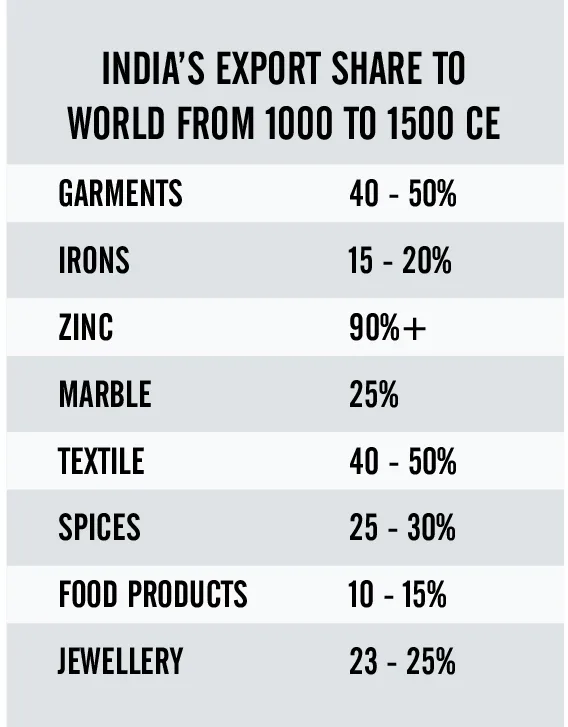
It is crucial to cite the work of Angus Maddison, a renowned economist with expertise in quantitative macroeconomic history, in order to comprehend this. His most well-known study, The World Economy-A Millennial Perspective, which was released by the OECD Organisation, shocked the West when it discovered Bharat’s economic domination throughout both ancient and modern global history. According to Angus Maddison’s research, Bharat’s GDP accounted for almost 30 per cent of the world’s total. The Purchasing Power Parity approach was used for the estimations in order to take comparable pricing and possible changes in exchange rates into consideration. Approximately 11 per cent of the market was accounted for by Western Europe, which includes the majority of the former Roman area.
This seems unbelievable, especially considering how little we know about our nation’s economy because of years of invasions and conflicts waged by Bharatiya generations to stave off foreign occupation. Even yet, this is a truly amazing piece of work if we ignore the approximations because of the great distance in time and antiquity.
Angus Maddison’s writings also discuss the domination of Bharatiya traders who operated throughout West Asia and East Asia, as well as Roman officials’ complaints about their nation’s current account imbalance (deficit) with Bharat. This could be attributed to Hindu economics, or what some refer to as the “Third Way.” The former is credited to Dr MG Bokare, while the latter was created by Dattopant Thengadi. Bokare claims that the Holy Vedas, which discuss markets, supply, demand, and other economic concepts, are embodied in Hindu economics.
In essence, the Western paradigm of traditional capitalism or Marxism is rejected by this Third Way. It does not adhere to any Keynesian ideas or Adam Smith’s approach. The intriguing aspect of this situation is that Bokare and Thengadi were diametrically opposed ideologues. Nonetheless, they both thought that democracy and the Hindu economic system were in harmony. Bokare has even written about how early exposure to Western economists has indoctrinated Bharatiyas. Like Marxian or Keynesian economics, Hindu economics is seen by many as a separate school of economics. It encompasses opposing philosophies such as socialism and capitalism.
The shortcomings of the Western model of development have been acknowledged by many Western economists. The fall of the Soviet Union and the deterioration of the US and Europe have demonstrated that the development models of capitalism and Marxism are inadequate. Many believe that the West is losing the balance of power, both economically and otherwise. Bharat is ahead of the curve thanks to several of its excellent measures throughout the past 11 years of Hindu thinking based governance.
Current Economic Status
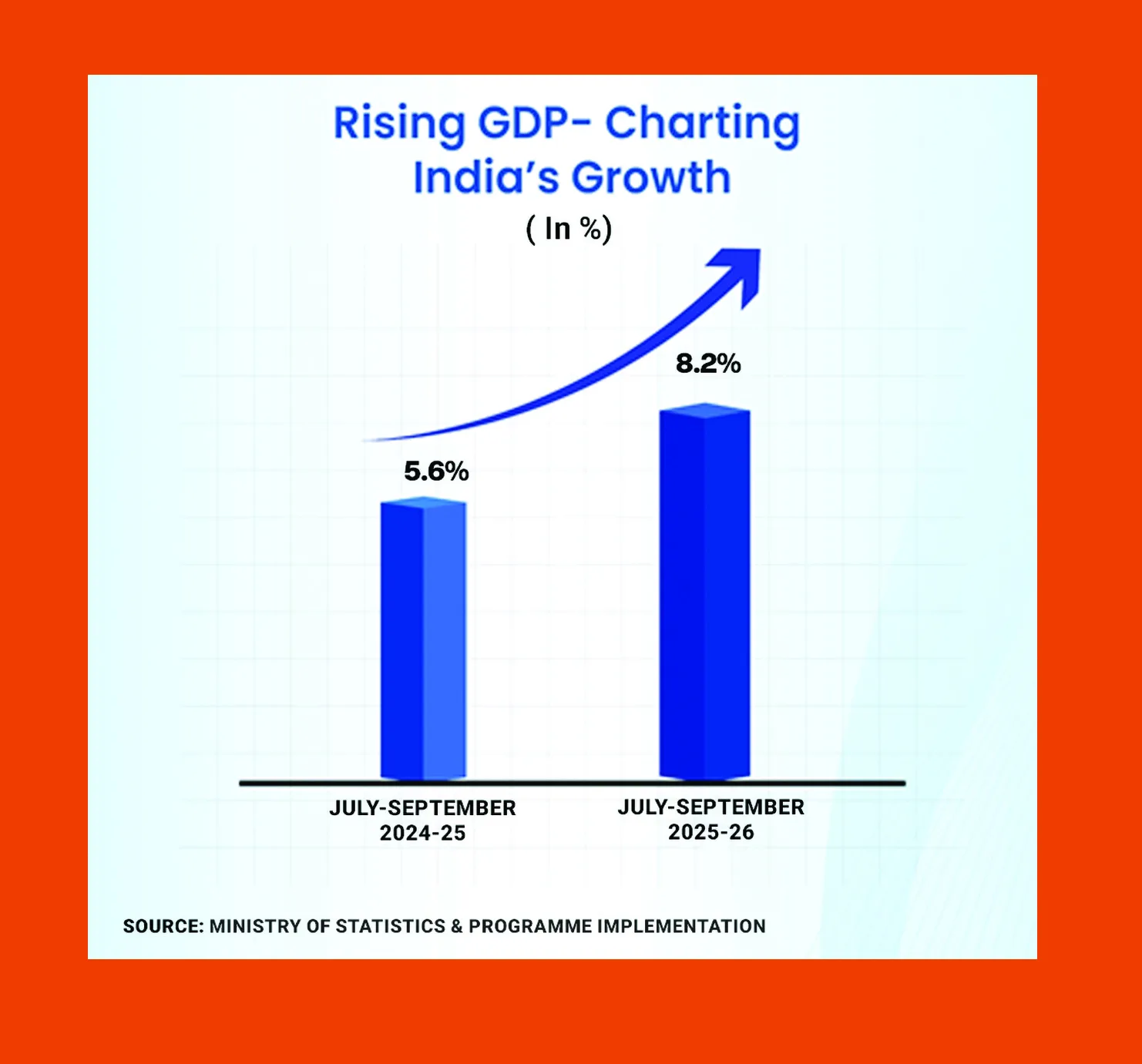
Driven by domestic reforms and global positioning under the Aatmanirbhar Bharat vision, Bharat’s economy grew to become the fourth largest in the world in 2025 under Hindu ideological Government. With real GDP expanding at a rate of 6.5 per cent and nominal GDP tripling from Rs 106.57 lakh crore (2014–15) to Rs 331.03 lakh crore (2024–25), Bharat is the major economy with the fastest rate of growth in the world. Germany’s nominal gross domestic product is currently at USD 4.6 trillion and is growing at a moderate rate. Bharat would therefore be tantalisingly close to overtaking Germany as the third-largest economy in the world by 2026–2027. These forecasts are predicated on the supposition that the computations are unaffected by unanticipated shocks.
Contribution of Sanatanis to West
The UN estimates that 18 million Bharatiyas, the bulk of whom are Hindus, currently reside abroad in North America, Europe, West Asia and other Asian countries like Malaysia and Singapore. According to economists, as a result of this expansion, Bharat’s economic might has expanded outside of their nation, making a significant impact on the world economy. The political and economic environments of both America and Europe are being significantly shaped by the Bharatiya Hindu diaspora. Bharatiya immigrants are among the fastest-growing immigrant groups, and they have made significant economic and political contributions to their new countries.
For example, the Bharatiya diaspora in the US has advanced significantly in a number of areas, including business, academics, technology, and medical. “I think America has benefited immensely from talented Indians that have come to America,” Elon Musk stated in a recently ended interview.
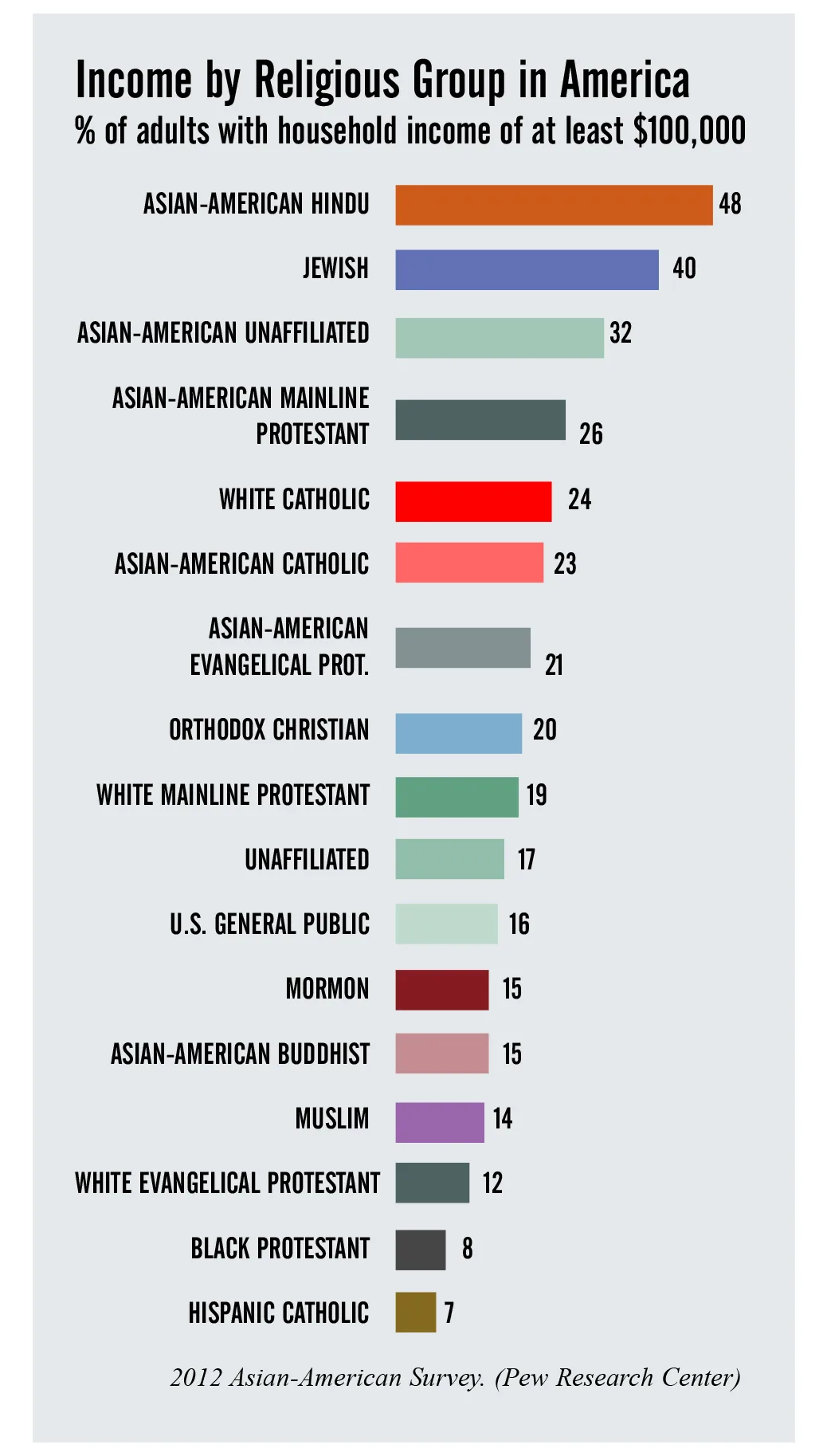
According to the most recent Impact Report by Indiaspora, a US-based non-profit organisation, Bharatiya Americans, primarily Hindus, are progressively being nominated to top public service posts, holding over 4.4 per cent of the jobs, despite the diaspora making up only 1.5 per cent of the US population. The impact of the diaspora has been impressive in recent years, ranging from driving economic growth to holding leadership positions in businesses. They provide the US federal treasury with $300 billion in tax revenue each year.
Currently, chief executives of Bharatiya Hindu descent run sixteen of the Fortune 500 firms, which employ 2.5 million people worldwide and generate around 978 billion in revenue. According to the most recent Indiaspora Impact report, 72 of the 648 unicorn businesses in the US are run by Hindu entrepreneurs of Bharatiya descent and employ more than 55,000 people. This accounts for 11 per cent of all unicorns in the nation. Tech and serial entrepreneurs have carved out niches for the globe through startups like Rippling and Lacework.
Bharat, which has a large Hindu population, has become a net exporter of talent, while the US has historically been a place of many chances. It should come as no surprise that 25 per cent of overseas students at US universities are Bharatiya. Approximately 270,000 Bharatiya students from prestigious Bharatiya colleges contribute their own viewpoints and academic skills to those institutions.















Comments