





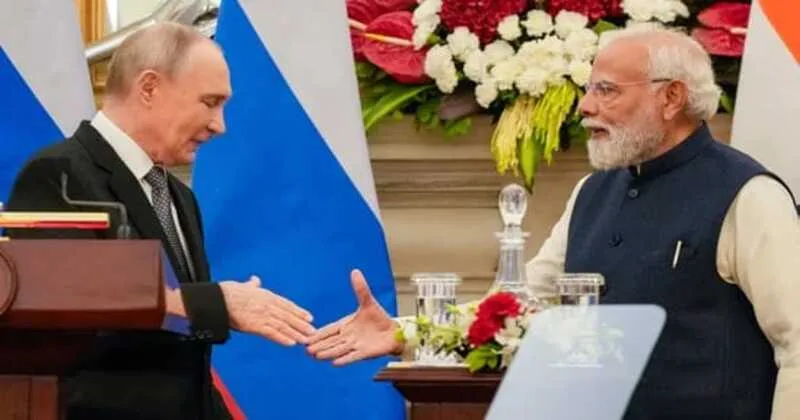
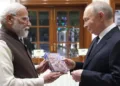
Prime Minister Narendra Modi on December 5 signalled Pakistan’s role in global terror networks without naming the country, stating that the recent terrorist attacks in Pahalgam and Moscow’s Crocus City Hall originated from the same source. Emphasising the long-standing convergence between New Delhi and Moscow on counterterrorism, Modi underlined that India and Russia have consistently stood together in confronting terrorism. During the annual summit, Modi and Russian President Vladimir Putin held extensive discussions on cross-border terrorism and reaffirmed their shared resolve to combat terrorism in all its forms. The talks covered a wide spectrum of issues, including the movement of terrorists across borders, terror financing mechanisms, extremist networks, and the provision of safe havens to militant groups.
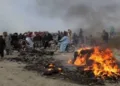
Addressing the media after the summit, Modi stressed that terrorism constitutes a direct assault on human civilisation and universal values. He noted that attacks in geographically distant locations often share common ideological and operational roots, reinforcing the need for unified international action. According to Modi, only collective global resolve can effectively counter the threat posed by terrorism. The summit took place against the backdrop of significant terror attacks in both countries. The March 2024 assault on Moscow’s Crocus City Hall, which killed nearly 150 unarmed civilians, was carried out by supporters of the Islamic State’s Afghan affiliate, IS-Vilayat Khorasan. Media had earlier reported that the mastermind behind the attack was a Tajik national who is believed to have entered Pakistan from Afghanistan prior to orchestrating the assault.
Both sides also strongly condemned the terrorist attack in Pahalgam, J&K, on April 22, 2025, which claimed civilian lives, as well as the Crocus City Hall massacre. India and Russia described these attacks as criminal and unjustifiable acts of violence, irrespective of the ideological, religious, or political narratives used to legitimise them. In a joint statement issued after the summit, the two countries reiterated their determination to expand counterterrorism cooperation at both bilateral and multilateral levels. This cooperation will extend to tackling extremism, transnational organised crime, money laundering, terror financing, and illicit drug trafficking, which were identified as interconnected threats undermining global security.
The joint statement emphasised the need for decisive action against all terrorist organisations and individuals listed by the United Nations, including Al Qaeda, ISIS/Daesh, and their affiliates. India and Russia called for sustained efforts to eliminate terrorist safe havens, curb the spread of extremist ideology, dismantle financial networks that sustain terrorism, and sever links between terrorist groups and transnational criminal syndicates. Special attention was also drawn to preventing the cross-border movement of terrorists, including foreign terrorist fighters. Both countries underlined the importance of pursuing the fight against terrorism without double standards or hidden agendas, firmly anchored in international law and the principles of the United Nations Charter. They stressed that selective approaches or political expediency in counterterrorism undermine global efforts and embolden extremist forces.
India and Russia further highlighted the necessity of fully and effectively implementing relevant resolutions of the United Nations Security Council and the UN General Assembly. They reaffirmed their support for the balanced and comprehensive execution of the UN Global Counter-Terrorism Strategy, viewing it as a crucial framework for coordinated international action.The summit underscored the enduring alignment between New Delhi and Moscow on security matters, signalling a continued partnership in addressing one of the most pressing threats to global peace and stability.




Comments