





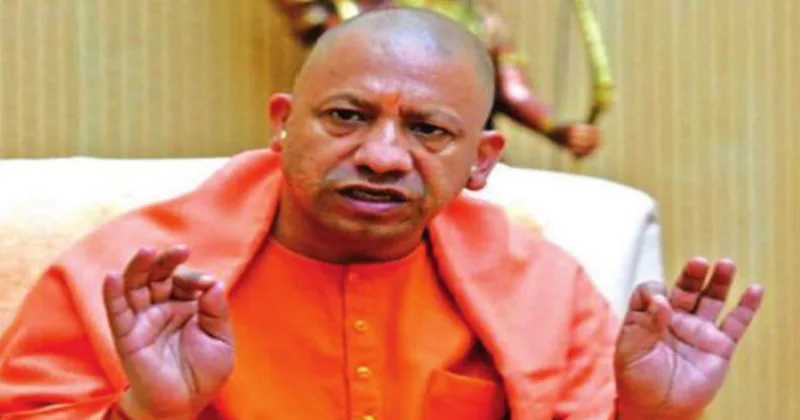
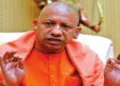
LUCKNOW: In a decision that has earned praise across the nation, the Uttar Pradesh government has announced the inclusion of Tamil, Malayalam, Kannada, and Telugu in its vocational education curriculum. Chief Minister Yogi Adityanath said the step aims to strengthen cultural unity, promote linguistic harmony, and open up new opportunities for students to learn diverse Indian languages. The announcement comes at a time when language debates frequently highlight regional differences across India. By incorporating southern languages into the education framework of North India’s largest state, the Uttar Pradesh government has conveyed a strong message of national unity and cultural inclusiveness, values that have long formed the foundation of India’s civilizational identity.
While many states are still grappling with debates over language priorities in education, Uttar Pradesh has chosen a different path. Instead of limiting students to regional or Hindi-medium options, the state government is enabling them to learn Dravidian languages, a significant gesture toward national integration.
Chief Minister Adityanath emphasised that India’s linguistic diversity should be seen as a strength rather than a division. “Every Indian language represents a cultural treasure. Learning them enhances our mutual respect and understanding,” he said. Officials from the state’s Vocational Education and Skill Development Department added that the inclusion of these languages will be integrated with practical skill-based modules, helping students communicate and collaborate across regions. Also, the initiative aligns with the National Education Policy (NEP) 2020. It encourages multilingualism and the teaching of Indian languages to strengthen national unity. Experts say the policy could benefit Uttar Pradesh students who migrate to southern states for jobs or education.
Language proficiency often becomes a barrier for inter-state mobility. By learning Tamil, Malayalam, Kannada, or Telugu, students will not only gain linguistic knowledge but also expand their employment prospects in India’s rapidly growing southern economies, such as Tamil Nadu, Kerala, Karnataka, and Telangana.
The Uttar Pradesh government’s decision has drawn praise from across social and political circles. Many have lauded Yogi Adityanath for taking a progressive and inclusive stance when several regions are witnessing linguistic polarization. While chief ministers in other states often find themselves at the center of controversies over language identity, sometimes turning it into a political battleground.
By promoting southern Indian languages in northern schools, the move highlights that India’s strength lies in its cultural coexistence. It also highlights Uttar Pradesh’s growing commitment to implementing the NEP’s vision in “letter and spirit.”
At present, India’s Constitution recognizes 22 official languages. Yet, regional tensions over language policies such as debates on Hindi imposition or mother-tongue instruction led to friction. In this context, Uttar Pradesh’s inclusive initiative represents a constructive model. Instead of imposing a language, it offers students the freedom to learn multiple Indian languages, promoting mutual respect and empathy across states.
Yogi Adityanath’s government has repeatedly emphasized that education should go beyond classroom learning and contribute to nation-building. CM Yogi’s vision of “Ek Bharat, Shreshtha Bharat” (One India, Great India) is also supported under this. Rather than allowing language to become a source of conflict, the UP-CM Yogi Adityanath administration has turned it into a tool for connection and opportunity.









Comments