





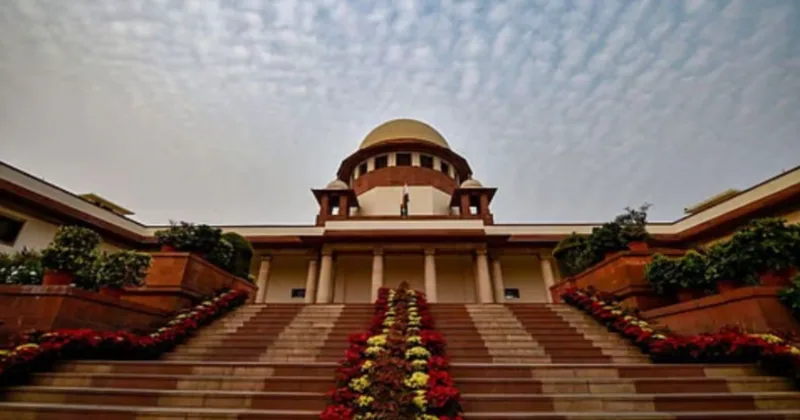
The Supreme Court on Dec 4, issued a set of important directions aimed at easing the burden on Booth Level Officers (BLOs) assigned to carry out the Election Commission of India’s (ECI) Special Intensive Revision (SIR). While affirming that government employees deputed by State Governments or State Election Commissions are legally required to perform SIR duties, the Court noted that the rising pressure on BLOs cannot be ignored and that states must intervene to prevent further distress.
A bench of Chief Justice of India Surya Kant and Justice Joymalya Bagchi made the observations while hearing a petition filed by Tamil actor Vijay’s political party, the Tamilaga Vetri Kazhagam (TVK). The petition sought directions to prevent coercive action under Section 32 of the Representation of the People Act, under which several FIRs have reportedly been filed in Uttar Pradesh and other states against BLOs for alleged lapses during the revision process.
During the hearing, Senior Advocate Gopal Sankaranarayanan, appearing for TVK, pointed out that BLOs, many of whom are schoolteachers, anganwadi workers or junior clerks are working extremely long hours. He argued that the heavy pressure, coupled with threats of suspension or disciplinary action, was causing severe mental distress.
Responding to these concerns, the Supreme Court acknowledged the growing difficulties faced by frontline election staff and called upon State governments to take proactive measures. The bench said that if BLOs were overburdened, States may deploy additional personnel to assist them so that the SIR process does not impose “unreasonable working hours” or excessive physical strain.
However, it reiterated that withdrawal of existing staff is not permissible unless replacement personnel are provided. “The Election Commission cannot function without the support of State officers,” CJI Surya Kant observed, stressing that the duty is statutory and cannot be abandoned midway.
Senior Advocate Kapil Sibal, appearing in the matter, highlighted the “unrealistic” one-month timeline for completing the Special Intensive Revision in Uttar Pradesh, arguing that it was contributing to high levels of pressure and fear among BLOs. The ECI, represented by Senior Advocate Maninder Singh, countered that criminal action was initiated only in cases where officers showed deliberate reluctance to perform statutory duties.
Emphasising balance, the Supreme Court concluded that while the SIR process must continue without disruption to protect the integrity of electoral rolls, State governments bear a clear responsibility to ensure their officers are not driven into exhaustion or distress. The bench said that with proper staffing support, the voter registration and revision process can proceed smoothly without compromising the health or dignity of BLOs.
















Comments