





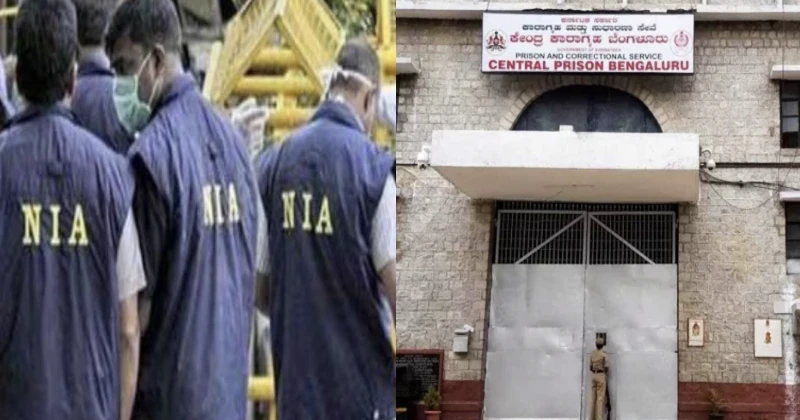
BENGALURU: The National Investigation Agency (NIA) has intensified its probe into the recent car blast in Delhi, with fresh suspicions emerging about a possible link to a mobile phone used by a suspected terrorist lodged in Bengaluru’s high-security Parappana Agrahara Central Prison. The agency, which has already carried out multi-state raids since the blast, returned to the Bengaluru jail for a second round of inspection, signalling the seriousness of the potential connection.
The development comes days after a video showing suspected terrorists and rowdy sheeters freely using mobile phones inside Parappana Agrahara went viral, raising serious questions about the security and surveillance systems within Karnataka’s most prominent prison. The video showed terror accused Juhad Hamid Shakeel Manna holding a mobile phone, an incident that had already triggered embarrassment for the state government.
Shortly after NIA officials conducted an initial inquiry inside the jail following the viral video, an I-20 car explosion took place near Delhi’s Red Fort a highly sensitive and protected zone. Investigators are now examining whether communications made from inside Bengaluru prison could have played any role in planning, coordinating, or triggering the blast.
According to sources, the NIA team once again conducted a thorough inspection inside Parappana Agrahara on Tuesday and interrogated Juhad Hamid Shakeel Manna, a suspected Lashkar-e-Taiba operative. Officials are said to have retrieved several documents and digital traces indicating whom Manna had contacted while inside the prison and what conversations occurred using the illegally possessed mobile phone.
The agency has also questioned him specifically about the Delhi blast, probing whether he had any direct or indirect links with those involved in the attack. Sources indicate that investigators are closely analysing call records, communication logs, and potential handlers who may have been in touch with the terror suspect.
The NIA’s renewed visit suggests that preliminary findings from the earlier raid raised concerns strong enough to warrant a deeper investigation.
Viral video exposes vip culture inside jail.
The controversy erupted after a video surfaced showing Manna casually using a mobile phone inside the high-security facility. The footage also included visuals of rowdy sheeters enjoying amenities that are prohibited for prisoners. The incident led to widespread criticism of the jail administration.
Former senior police officer S.K. Umesh, who served in Bengaluru for 35 years, expressed concern, noting that irregularities in jails were not new. However, he stressed that allowing terror suspects to use mobile phones is an alarming failure.
“Such VIP facilities inside the jail create insecurity in the eyes of the country,” he said, adding that enabling communication for a high-risk inmate like Manna could have dangerous consequences.
The allegations gained further momentum after reports claimed that Manna had been trying to influence youths and possibly recruit them for ISIS—a matter that had already placed him under scrutiny by national agencies.
Questions are also being raised about whether information about earlier raids inside the barracks was leaked in advance, allowing inmates to hide or destroy crucial evidence. While jail authorities have denied the allegations, the NIA is reportedly investigating the possibility of internal support or corruption among the prison staff.
The Delhi blast, which killed 13 people and injured more than 30, is being treated as a major terror attack. The explosion occurred near the Red Fort area, triggering nationwide security alerts. The NIA has been conducting searches across several states, seizing documents, digital devices, and other materials suspected to be linked to the planning of the attack.
















Comments