





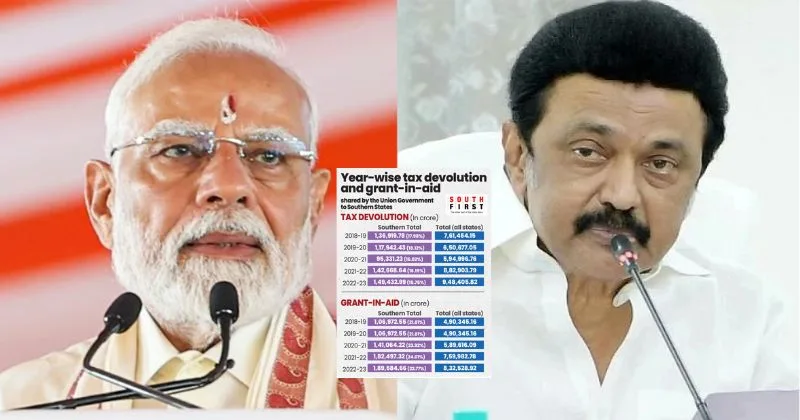
Chennai: A recurring political narrative pushed by the DMK and its allies—that the Union government is diverting Tamil Nadu’s rightful GST and tax revenues to North Indian states like Bihar and Uttar Pradesh—has been contradicted by official data from successive Finance Commissions and Tamil Nadu’s own state budget documents. A closer analysis reveals that the state’s share in central taxes began declining decades before the BJP came to power, challenging the DMK’s persistent claims of fiscal injustice.
For months, DMK leaders and its digital ecosystem have accused the Modi-led government of “robbing Tamil Nadu to fund northern states.” However, as highlighted by political analyst Ideaman Mahadevan in The Commune, these accusations appear to be more political rhetoric than economic reality. He argues that the DMK uses these claims to mask governance failures, deflect attention from law-and-order lapses, and frame the BJP as an adversary betraying Tamil Nadu.
Under the Dravidian model governance, Stalin led DMK government had borrowed huge amount in the last four years (since 2021). If asked reasons for their huge borrowings, the standard reply from DMK government always would be “the Centre isn’t releasing Tamil Nadu’s rightful share and blames the BJP”. It is nothing but a blaming game to shield their handling funds. It is highly dependent on TASMAC liquor revenue and tax collections. TN Finance Minister Thangam Thennarasu leveled charges that the Centre had reduced Tamil Nadu’s share in central taxes, dropping it from 7.931 per cent to 4.079 per cent.
According to Mahadevan, “as always, DMK mixes in a little truth with its lies. Yes, at one time Tamil Nadu’s tax devolution share was 7.9 per cent. Yes, it is now 4 per cent. However, what the finance minister did NOT explain is when and how this reduction occurred as distorting or hiding the truth is also a lie”.
The data suggests otherwise. Tamil Nadu’s share of central tax devolution stood at about 7 per cent during the 9th Finance Commission (1990–95). The decline started soon after, well before the BJP assumed power at the Centre. The subsequent Finance Commission recommendations paint a clear picture:
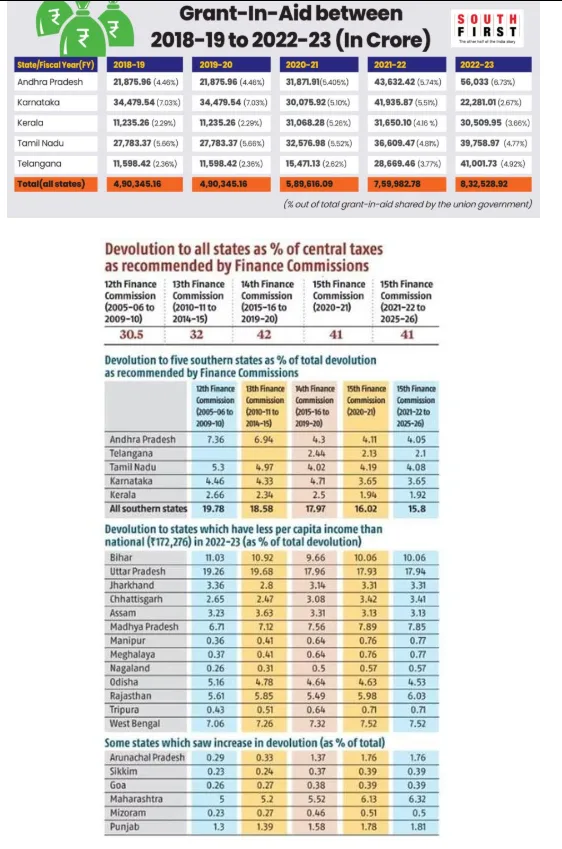
- 12th Finance Commission (2005–10): 5.3 per cent
- 13th Finance Commission (2010–15): 4.97 per cent
- 14th Finance Commission (2015–20): 4.02 per cent
- 15th Finance Commission (2020–25): 4.08 per cent
The state’s share declined from 7 per cent to around 5 per cent during the UPA era—when the DMK was part of the central government—and continued its downward trajectory into the 4% range.
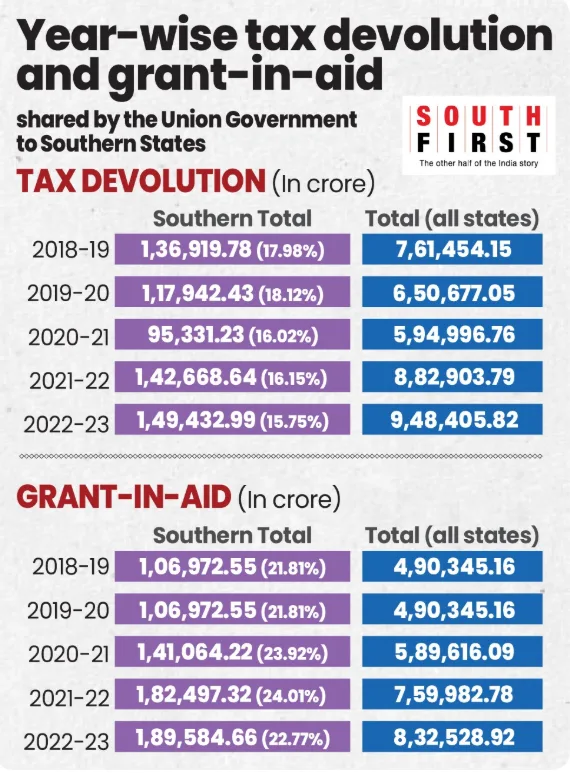
From above figures, it can be noticed clearly the decline started during the UPA regime in which Congress and DMK were allies. More particularly, when the DMK, which was in power at the Centre for nearly 25 years, including 15 consecutive years from 1999 to 2014, the share of TN began decreasing. Tactfully concealing this fact, it now accuses BJP of taking away of GST tax collections diverting it to Bihar and other Northern states. When tasting power with Congress, it never raised why TN share was downsized and bothered only getting plume portfolios.
Despite this, the DMK has repeatedly blamed the Union government for “starving” the state of funds. Tamil Nadu Finance Minister Thangam Thennarasu has claimed the Centre slashed the state’s share drastically, but analysts argue that such statements omit critical context. While the percentage share declined, the overall pool of funds devolved to states rose sharply under the Modi government—from 30.5 per cent to 41 per cent, a historic increase benefiting all states, including Tamil Nadu.
Interestingly, Tamil Nadu’s own budget records reflect a different reality from the DMK’s public statements. This year, the state is set to receive a record Rs 80,000 crore from the Centre—higher than previous projections. During Congress rule, both Bihar and Uttar Pradesh received their constitutionally mandated higher shares without any protest from the DMK, despite being coalition partners at the time.
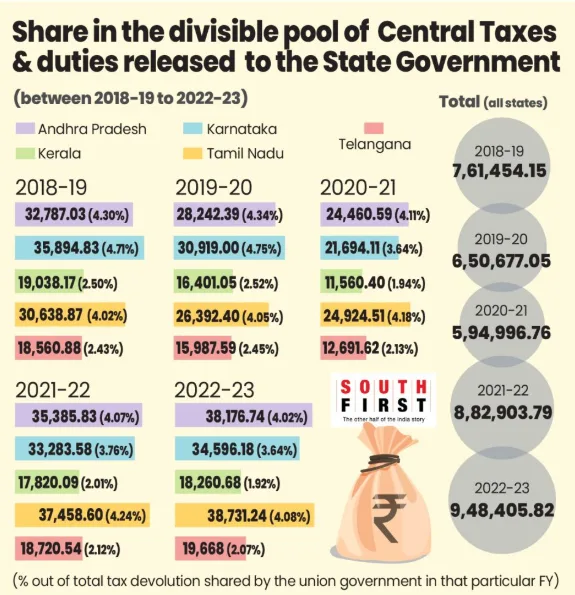
Political observers point out that the DMK selectively highlights Bihar and UP in its accusations to reinforce its longstanding “North vs South” political narrative. However, states ruled by the BJP—such as Gujarat, Madhya Pradesh, and even Karnataka—have also seen drops in their share, indicating a formula-based outcome, not political bias.
The party’s oft-repeated claim that “for every Rs 1 Tamil Nadu gives, only 29 paise returns” has also come under scrutiny. When Union Finance Minister Nirmala Sitharaman publicly challenged the DMK to provide the calculations behind the figure, the state government offered no clarification.
Analysts argue that the stability of the devolution formula, its constitutional basis, and the long-term decline predating the BJP raise serious questions about the DMK’s charges. Critics say the narrative appears designed more to fuel political grievance than to reflect fiscal reality.














Comments