





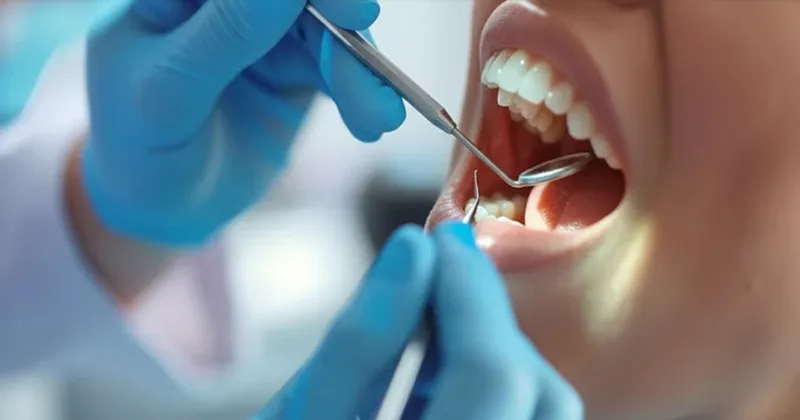
Oral cancer has long been a public health challenge in India, but in recent years doctors and researchers have noticed something worrying them, is rising number of cases among women, especially in certain parts of southern and northeastern India. While the disease has been widely studied in men, oral cancer in women has remained less understood, even though many women in rural areas consume tobacco infused with betel quid, gutka and similar products. This long-standing gap in research made it difficult to fully understand how the disease develops in women and how their cancers differ from those in men.
A group of Indian scientists has now taken a major step toward closing this gap. In this study, researchers have identified as a unique cancer-causing driver gene mutation in women oral cancer patients from southern India. Their findings could change how doctors understand, diagnose and treat oral cancer among women in high-risk regions like Karnataka.
Women Centric Approach to Cancer Research
This study is the result of a collaboration between the Jawaharlal Nehru Centre for Advanced Scientific Research (JNCASR) in Bengaluru, the BRIC National Institute of Biomedical Genomics (NIBMG) in Kalyani and doctors from the Sri Devraj Urs Academy of Higher Education and Research (SDUAHER) in Kolar. Led by Prof. Tapas K. Kundu of JNCASR, the research team decided to focus solely on female patients with an approach rarely taken in oral cancer research.
The scientists wanted to answer an important question: What makes oral cancer in Indian women biologically different? To explore this, they studied patients from the Kolar district in Karnataka, where a unique form of tobacco chewing called Kaddipudi, is commonly used by women. This habit has been linked to a high incidence of oral cancer in the region.
How the Study Was Conducted and What are its Finding
The team carried out whole exome sequencing (WES) and copy number array by profiling on samples collected from 38 female patients. Each patient tumor sample and blood sample was collected, thus allowing researchers to compare healthy and cancerous tissues at the genetic level.
This detailed sequencing helped the scientists in identifying changes in DNA that might be contributing to cancer development. After analysing the data researchers identified ten significant genes that were mutated in the women. Two genes in particular stood out:
- TP53: a well known tumor suppressor gene frequently mutated in many cancers.
- CASP8: a gene involved in programmed cell death.
While TP53 mutations were expected, the discovery regarding CASP8 was particularly striking. The team found that CASP8 behaved as a unique driver mutation in these female patients. The driver mutation is one which directly contributes to the start and growth of cancer. Although CASP8 has been studied before where the form of mutation identified is different from what has been observed in previous oral cancer research which was largely focused on male patients.
Combination of TP53 and CASP8 mutations appeared to be dangerous. Patients with both mutations have shown a sign of a more aggressive and potentially lethal form of oral cancer. This observation is important because it suggests that certain women may be biologically prone towards faster growing tumors, if they carry this genetic pattern. The researchers also suggested that a larger patient group is needed to confirm these findings.
Role of AI in Understanding Tumor Behaviour
Beyond genetic sequencing, the research team used artificial intelligence, specifically deep learning models, to analyse digital images of tumor tissues. This AI assisted examination revealed something new, the patients could be divided into two groups based on their immune responses inside the tumor.
This means that different women may respond differently to treatments depending on how their immune system interacts with the cancer. For example, one group might benefit more from immunotherapy, while another might require a different treatment strategy. Discoveries like this open the door to more personalized medicine, where treatment is tailored to the biology of each patient rather than following a one size fits all model.
Why This Study Matters
- It highlights the need for women focused cancer studies. Most cancer datasets around the world have mores male patients than female in oral cancer research. This creates blind spots. By focusing on women, the study uncovers differences that would otherwise remain hidden.
- It identifies a new driver for mutation linked to women in southern India. Understanding such regional and gender specific variations will help in designing better screening programs and support in early detection.
- It offers new scientific clues for future treatment. CASP8 mutations drive cancer in these patients, then the therapies will be targeted on defined pathway, which offer better results.
- It strengthens the case for AI guided precision medicine. AI is helping researchers to classify tumor types more effectively, which may one day help doctors choose the right therapy faster.
Step Towards Better Care of Women
Even though the study involved only 38 women, it provides a strong foundation for future research. The team is now working to understand the molecular mechanisms behind the CASP8 mutation and how it interacts with TP53. This deeper investigation may help uncover why the disease becomes so aggressive in certain women and how these pathways can be blocked.
The researchers has acknowledged that larger clinical studies are needed. India’s oral cancer landscape is diverse different regions have different habits, diets and risk factors. Expanding the study to include more women from various states could help build a more accurate national picture.
This research marks a chapter in India’s scientific journey. It reflects how neglected groups such as women with oral cancer can be focused to have meaningful discoveries. This study also support the importance of combining advanced technologies like genomics and AI with traditional clinical observation.
India continues to face one of the highest oral cancer burdens in the world, findings like these offer hope for future. They pave the way for early diagnosis, targeted therapies and better survival chances for thousands of women who are at risk.
The findings from this study are not the final answer, but they are a critical beginning. By bringing women to the centre of cancer research, Indian scientists have shown that new perspectives can reveal new truths and possibly new solutions for one of the country’s most persistent health challenges.
The findings from this study are not the final answer, but they are a critical beginning. By bringing women to the centre of cancer research, Indian scientists have shown that new perspectives can reveal new truths and possibly new solutions for one of the country’s most persistent health challenges.















Comments